Mattress protectors and heat
The most common hidden heat source in a bed is a layer most people forgot they installed, and never take off because nothing ever went wrong.
By Stephen V. · Specs last verified · Prices live as of October 25, 2026
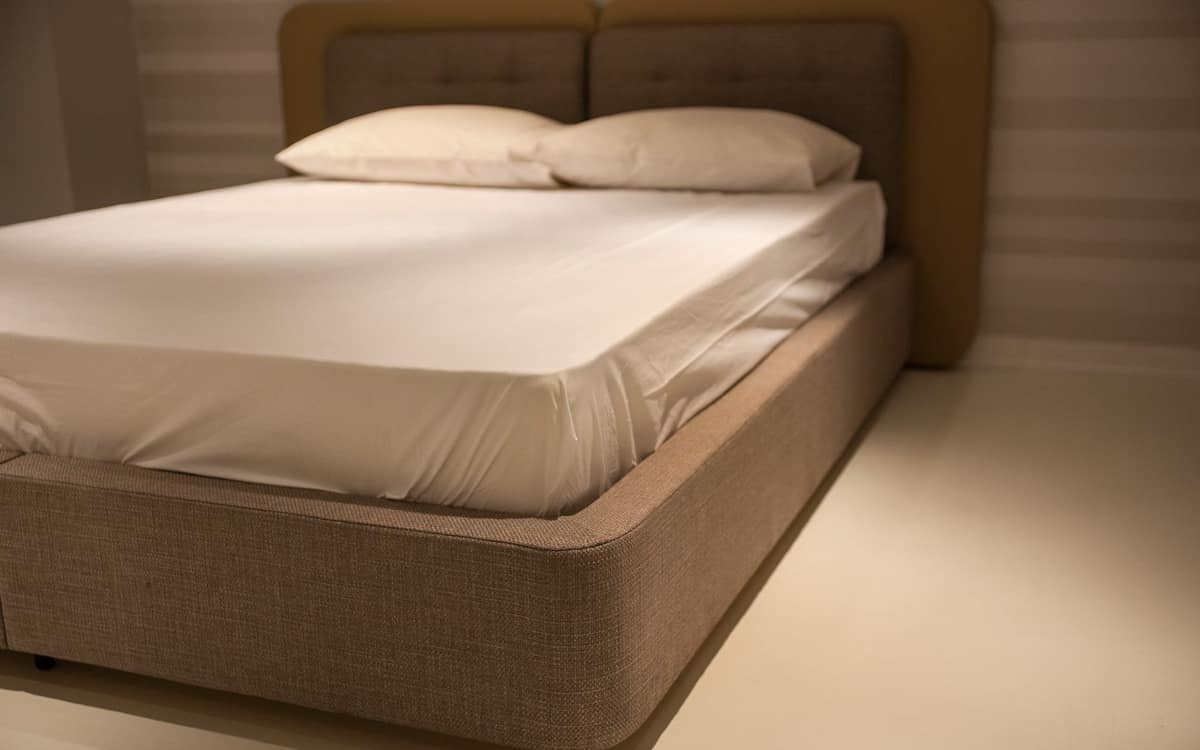
Usually yes, if it is waterproof. Waterproofing works by putting a continuous plastic film between you and the mattress, and a film that stops water also stops air and slows water vapor. If you do not need the protection, taking the protector off is a free change that people often feel the first night.
How a waterproof protector traps heat
The waterproof part of almost every protector is a thin polyurethane film laminated to a fabric backing. Polyurethane is a plastic, and a continuous sheet of it is by definition an air barrier — there are no gaps, because gaps would let liquid through. That single design requirement is what costs you.
Two things happen as a result. The first is that convection through the mattress surface effectively stops: air can no longer move in and out of the layers under you as you shift around, so the small amount of pumping a normal bed does is gone. The second, and the one people actually notice, is about moisture. You lose water through your skin all night even when you are not visibly sweating. Normally that vapor passes into the bedding and the mattress and evaporates away, and evaporation carries far more heat than conduction does. A film slows that down, so the moisture stays in the layer above it, next to you.
The sensation this produces is specific and recognizable: not a hot room, but a clammy patch under your hips and back that gets worse through the night and is still damp in the morning. If that describes your bed, check what is on the mattress before you spend money on anything else.
A dorm mattress with a vinyl cover can produce the same clammy patch with no protector on it at all, and what to put over one is on cooling bedding for a dorm room.
Breathable is a real claim, and a relative one
Better protectors use a membrane rated for moisture vapor transmission, so water vapor passes while liquid water does not — the same principle as a breathable rain jacket. This genuinely helps. It does not make the protector thermally neutral. A breathable membrane is still a large step down in airflow from no membrane at all, in the same way a breathable jacket is still warmer than a shirt.
The other variable is the face fabric. A protector with a viscose or cotton top absorbs moisture into the fiber and holds it away from your skin. A polyester top does not, so sweat sits on the surface. Where a seller publishes a GSM figure for the face fabric, a higher number means more material and more insulation. Most do not publish it, and where the figure is absent we say so rather than guessing.
When the protector is worth the heat
There are good reasons to accept the trade, and it is worth being honest that they usually outrank a degree of warmth:
- Children, incontinence, or anyone unwell. A ruined mattress costs far more than a slightly warmer night, and no fabric arrangement survives a real spill. On a child’s bed, put an absorbent quilted pad over the protector so they are lying on cotton rather than on film — the rest of that build is on kids and toddlers who sleep hot.
- Allergen encasement. Zip-around encasements exist to shut dust mites in or out, and they only work if they are continuous. This is a medical-adjacent choice and a doctor is the right person to advise on it, not us.
- A warranty that requires one. Some mattress warranties are void if the mattress is stained. Read yours before removing anything.
- An expensive mattress you intend to keep for a decade. Body oils and sweat degrade foam over years, and a protector is cheap insurance.
If none of those apply to you, the protector is doing nothing except adding a layer. Take it off for a week and see. It is the only experiment on this site that costs nothing.
If you need one, how to lose the least
| Choice | Cooler option | Warmer option |
|---|---|---|
| Waterproofing | None, or splash-resistant only | Full polyurethane film |
| Membrane type | Rated breathable membrane | Unrated vinyl or PVC |
| Face fabric | Cotton or viscose, low GSM | Polyester, high GSM, quilted |
| Construction | Fitted, top surface only | Zip-around full encasement |
| Quilting | Flat, unquilted | Pillow-top or padded |
The fourth row matters more than people expect. A fitted protector covers the top surface and the sides; a full encasement wraps the whole mattress, which means the underside and the edges stop breathing too. Unless you need the encasement for allergens, the fitted version does the spill job at a lower thermal cost.
If you have decided you need one, the protectors that charge the smallest heat penalty — ranked on coverage, face fabric and whether anything is stuffed between the two — are on our mattress protector picks.
Also worth knowing: a good quilted pad and a protector do overlapping jobs. If you are buying both, you are stacking two layers where one would do. Our ranked picks, including the waterproof option we would choose, are on the best cooling mattress pads, and the three-way distinction is on topper vs pad vs protector.
The order to do this in
Take the protector off if you do not need it. If you do need it, replace an old vinyl one with a breathable membrane and a natural-fiber face. Then move on to the layers that can actually help — the pad, the sheets, the top layer — in the cost order set out on what to fix first. A protector is never the thing that cools your bed. It is only ever the thing that was quietly making it worse.
Common questions
Do mattress protectors make you sleep hot?
Waterproof ones usually do. The waterproofing is a continuous plastic film, and a film that blocks liquid also blocks airflow and slows water vapor, so moisture stays in the layer next to you instead of evaporating away. Non-waterproof quilted protectors add far less heat because air still moves through them.
Is there such a thing as a cooling mattress protector?
There are protectors that cost you less heat than others, which is not the same claim. Look for a rated breathable membrane rather than plain vinyl, a cotton or viscose face fabric rather than polyester, a fitted design rather than a full zip encasement, and no added quilting or pillow-top.
Should I take my mattress protector off if I sleep hot?
If you do not need it for spills, allergens or a warranty condition, yes — try a week without it. It is the only change in this category that costs nothing, and a clammy patch under your hips that is still damp in the morning is the classic sign that the membrane is the problem.
Do I need both a mattress pad and a protector?
Usually not. They sit in the same place and their jobs overlap, so buying both means stacking two layers where one would do. A quilted pad with light water resistance covers most households; a full waterproof protector is for real spill risk.
Are bamboo mattress protectors cooler?
The face fabric is cooler than polyester because viscose absorbs moisture into the fiber rather than leaving it on the surface. If the protector is still waterproof, the membrane underneath is doing the same thing it always does. Bamboo on the label improves the layer you touch, not the barrier below it.
Read next
- Cooling Mattress ToppersToppers, pads and protectors — three different products people buy interchangeably.
- The best mattress protectors for hot sleepersWaterproofing always costs breathability. The protectors that charge the smallest heat penalty.
- Topper vs mattress pad vs protectorThree products, one shelf, three different jobs. The disambiguation page.
- The best cooling mattress pads for hot sleepersThin, washable, barely insulating. Usually the right buy where a topper is not.
- The best cooling mattress coversOne phrase, four products. What a cooling mattress cover actually is, and which to buy.
- How to stop sleeping hot: what to fix firstThe decision guide. Five steps in cost order, and how to know when to stop.
Try the cheap thing first
Work down this list in order. Each step costs more than the one above it, and most people stop before the bottom. Replacing a mattress to fix a problem your sheets were causing is the most expensive mistake in this category.
- 1Pillowcase, then pillowUnder $20 to start
- 2Sheets$25-$60
- 3Top layer$30-$90
- 4Topper or pad$30-$300
- 5The mattress$200-$900
Before any of it: work out which one is actually your problem. If your bedroom is 78°F, none of these will save you.