Guide
The best bedroom temperature for sleep
The target bedroom temperature, and why the room comes before any bedding.
Overheating at night is a heat-transfer problem, and it has four possible causes. Diagnose it before you spend anything — the fix is usually cheaper than the one you were about to buy.
By Stephen V. · Specs last verified · Prices live as of October 25, 2026
Your body has to lose heat to fall asleep. Core temperature drops by roughly one to two degrees Fahrenheit in the hour or so around sleep onset, and it stays down through the night. If that heat cannot get out, you do not just feel warm — you take longer to fall asleep and you wake more often. That is the entire mechanism, and it is why “I sleep badly” and “I sleep hot” are so often the same sentence.
Heat leaves you by four routes: conduction into whatever you touch, convection into moving air, radiation to cooler surfaces around you, and evaporation of sweat. A bed interferes with all four. It presses insulating material against you, it stops air moving, it wraps you in surfaces at your own temperature, and it traps the humidity that evaporation needs to escape into.
That framing is useful because it tells you what to check. Every product on this site attacks one of those four routes, and buying the wrong one is how people end up with a drawer of cooling gadgets and the same problem.
Sleep research consistently puts the comfortable range for most people somewhere around 60-68°F. If your bedroom is in the high seventies, nothing you put on the bed will rescue the night, because every passive mechanism depends on somewhere cooler for the heat to go. Humidity matters just as much: at high relative humidity, sweat cannot evaporate, and evaporation is by far your most powerful cooling route.
Check this first because it is free to check and because it invalidates everything else. How to stay cool at night covers the room-level fixes in cost order, including the ones that work without air conditioning.
A comforter's warmth is almost entirely its loft— the thickness of still air it holds — and not its fabric. People buy a lighter-feeling duvet cover and keep the same 700-gram insert underneath it, then wonder why nothing changed. This is the second cheapest thing to fix and the one most often skipped. See cooling blankets and comforters.
Memory foam is temperature-sensitive by design: it softens as it warms, which is exactly how it conforms to you. The consequence is that the longer you lie still, the more closely it wraps you, and the less of your surface is exposed to air. If your problem started when you bought a foam mattress or a foam topper, you have found your cause. Why your mattress sleeps hot goes through the constructions in detail.
Sheets and pillowcases are the last layer and the cheapest to change, which is why we recommend starting there when you are not sure. A dense sateen or a brushed microfiber sheet actively works against you; an open percale weave does not. Cooling sheetscovers this. The one layer closer still is what you wear to bed, which follows the same fiber rules plus one more — how much of you it covers — and it has its own page on the best cooling pajamas.
The expensive purchase is the one people make first, because it is the one with the biggest marketing budget behind it. Replacing a $900 mattress to solve a problem that was actually a $30 sheet set and a fan is the most common expensive mistake in this category, and it is one we would rather talk you out of than earn a commission on.
The reverse also holds, and we will say it plainly: if you have worked all the way down the ladder and you are still overheating, the honest answer is that passive bedding has a ceiling. It can stop the bed from being hotter than the room. It cannot make the bed cooler than the room. Only a powered system can do that, and it is a different kind of product with a different price.
Answer these before you buy anything. Each one points at a different part of the site.
| What you notice | Most likely cause | Where to go |
|---|---|---|
| Hot in every room, all summer, not just in bed | Room temperature and humidity | Stay cool at night |
| Fine until you get under the covers | Top-layer loft | Blankets and comforters |
| Hot where your body touches the bed; fine elsewhere | Mattress or topper surface | Why your mattress sleeps hot |
| Started when you bought a foam mattress or topper | Memory foam conforming around you | Toppers and pads |
| Waking up damp rather than just warm | Moisture, not airflow | Sheets for night sweats |
| Hot head and neck, rest of you fine | Pillow fill and pillowcase | Cooling pillows |
| One of you is hot, the other is cold | Shared top layer | Comforter vs duvet |
If more than one line describes you, work down the escalation ladder in cost order rather than trying to solve everything at once. You will usually find the problem two or three steps in.
Shopping for someone else, or timing a bigger purchase? The gift guides re-explain our picks for a buyer who does not have the problem, and the Black Friday and Cyber Monday page says what historically discounts in this category and what is worth waiting for.
If you’re drenched most nights, or it started suddenly, that’s worth raising with a doctor — it’s outside what bedding can fix, and outside what we cover.
Two room-level problems come up more than any other and neither is solved by bedding. If the hot room is upstairs, there are three stacking physical reasons for that and the worst of them peaks after you go to bed — why your upstairs bedroom is so hot works through the fixes in order of cost. And if you already own a fan, where you put it changes the result more than the fan does: fan placement covers the exhaust setup, the ceiling fan direction most people have wrong, and the indoor temperature above which a fan starts working against you.
One fiber sits outside the usual cooling argument and gets asked about constantly. Wool is sold as temperature-regulating, the best controlled trial on it found no bedding effect at all, and the wool industry’s own research sells it on insulation — so whether it belongs in a hot bed depends entirely on whether you wake up damp or merely warm. Is wool good for hot sleepers works through the evidence and the one spec that decides it.
Guide
The target bedroom temperature, and why the room comes before any bedding.
Guide
The two-duvet method and split fixes for a mismatched-temperature couple.

Guide
Free and cheap ways to sleep cool in a hot room with no AC.
Best overall
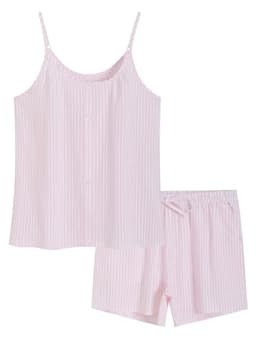
Latuza Women's Cotton Seersucker Cami and Shorts Pajama Set
Less cloth beats better cloth. Men's and women's pajamas ranked on coverage, fiber and cling.
Price as of October 25, 2026. #ad How we’re funded
Best blanket gift
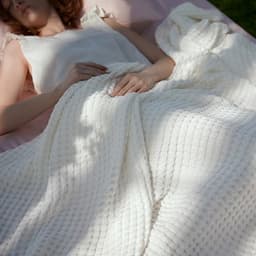
Bedsure Cooling Waffle-Weave Blanket, Cotton and Bamboo Rayon
Gifts that genuinely help a hot sleeper, from pillowcases to a bed fan.
Guide
What discounts, what doesn't, what to wait for — and today's live prices on our top picks.
Best gift under $50
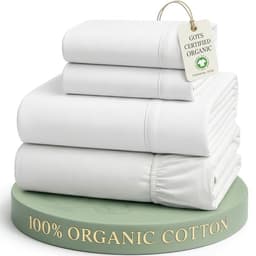
LANE LINEN 100% Organic Cotton Percale Sheet Set
Six gifts under $50 that genuinely help a hot sleeper, plus the cheap one to avoid.
Price as of October 25, 2026. #ad How we’re funded
Best gift under $150
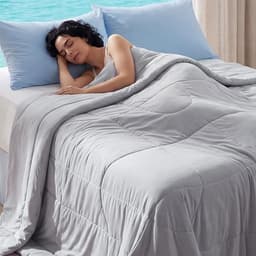
Bedsure Dual-Sided Cooling Comforter
Seven gifts between $50 and $150 that earn their price, and the engineered pillow to skip.
Best splurge
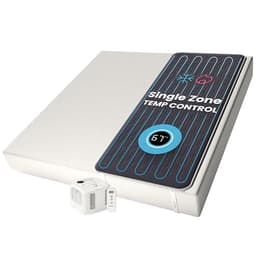
Chilipad Cube Bed Cooling System, Water-Cooled Mattress Pad
Powered cooling, real latex and specialist bedding — the gifts where a big budget actually changes something.
Price as of October 25, 2026. #ad How we’re funded
Best gift for a mismatched couple
Bedsure Dual-Sided Cooling Comforter
Gifts that end the thermostat war by splitting the bed, not compromising it.
Best gift for night sweats
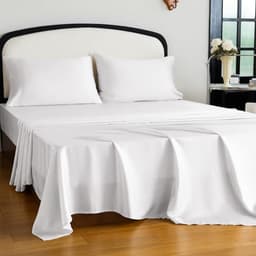
Homilay Tencel Lyocell Cooling Sheets, 16-Inch Deep Pocket
Gifts chosen for dryness rather than cold, for the person who wakes up drenched.
Guide
The decision guide. Five steps in cost order, and how to know when to stop.
Guide
Room-level fixes, free first. Air movement, humidity and heat that arrived hours ago.
Guide
The physics of foam conforming, and why 'gel infused' does less than it sounds.
Guide
Fabric and layering for heavy overnight sweating. Bedding only, no medical content.
Best sheets
LANE LINEN 100% Organic Cotton Percale Sheet Set
The cheap cooling buys that beat the expensive ones, across the whole bed.
Price as of October 25, 2026. #ad How we’re funded
Guide
Separate a hot-bedroom cause from a body cause — and fix what bedding can.

Guide
Damp air blocks sweat from evaporating — the fabric and room fixes that unstick it.
Guide
Rank every bedding fiber by the two things that cool: airflow and wicking.
Comparison
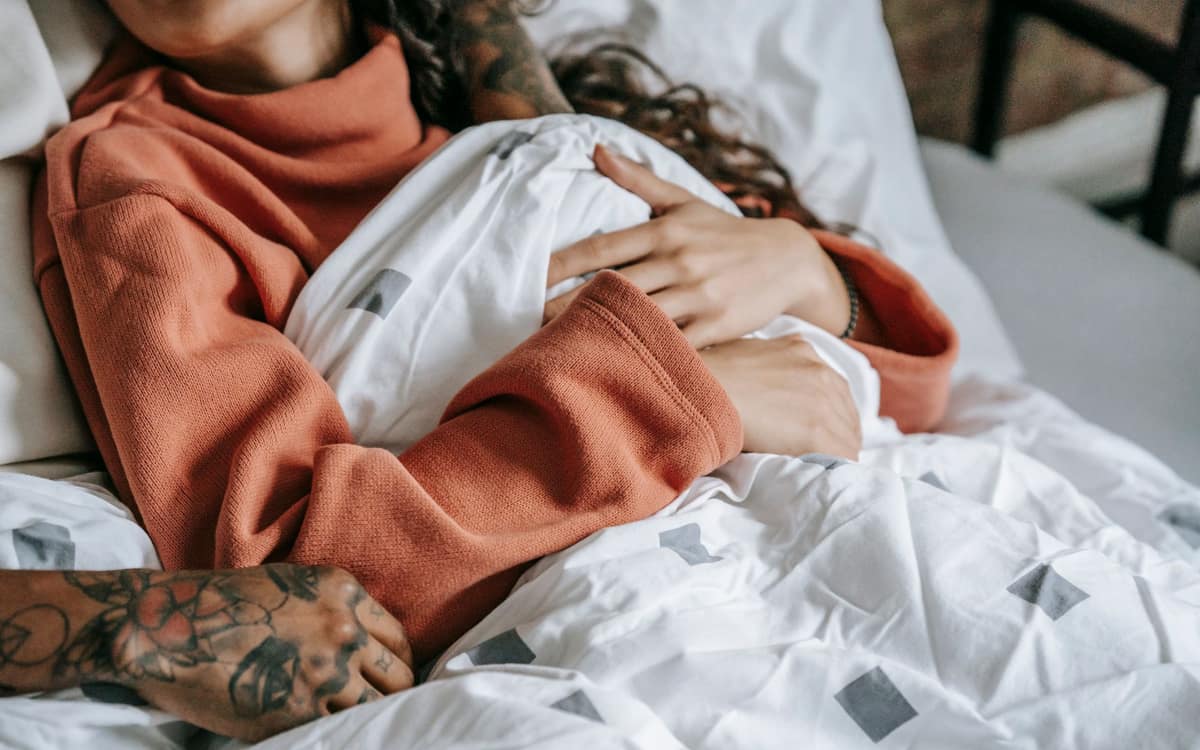
What the two labels actually describe, how to tell which you are, and why it changes what you buy.
Guide
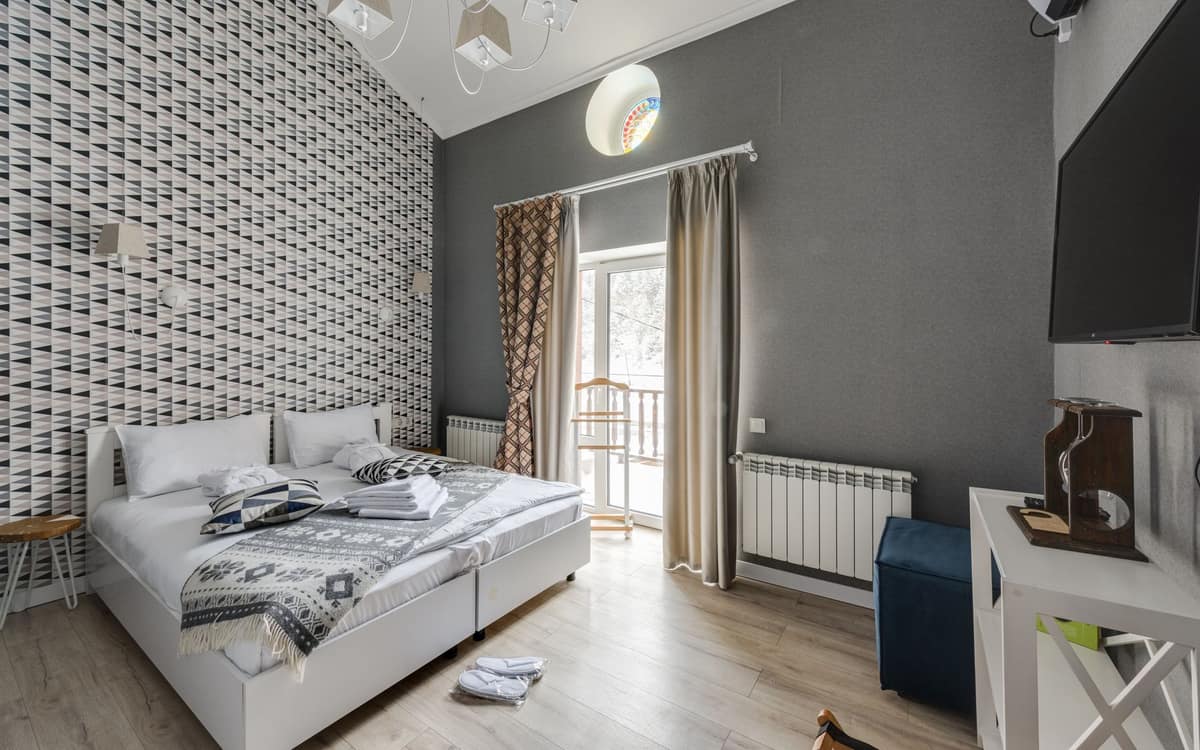
Why cold months make hot sleepers worse, and the free fixes before you buy anything.
Best layer over a vinyl mattress
LEISURE TOWN Cotton Quilted Fitted Mattress Pad
A vinyl dorm mattress traps sweat. The Twin XL pad, sheets and blanket that help, and the topper to skip.
Guide
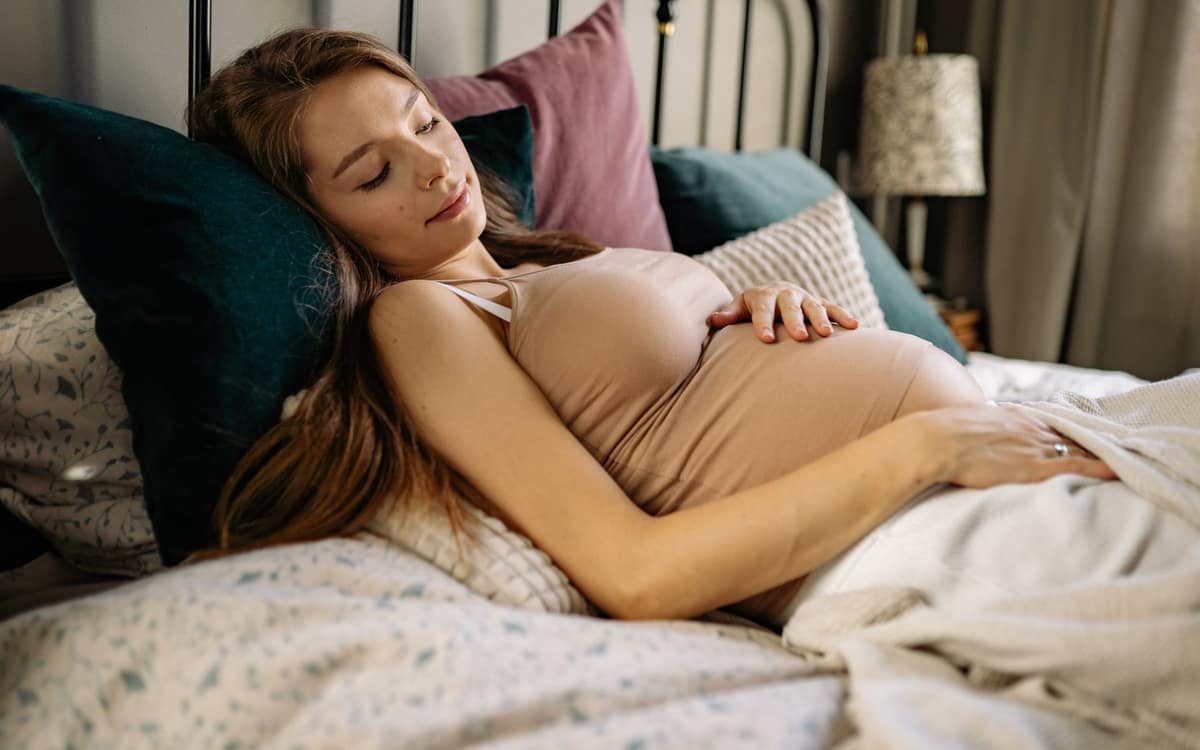
Feeling warmer is normal in pregnancy. How to keep a side-sleeping, body-pillow bed cool.
Best sheets for a child's bed
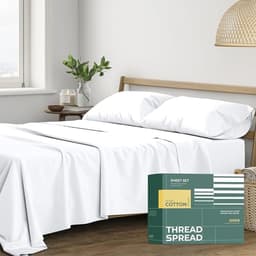
THREAD SPREAD Organic Cotton Percale Weave Sheet Set
Kids sweat less efficiently than adults, so the room and the layer count do more than any cooling fabric. Plus the crib rule that comes first.
Best layer over a factory RV mattress
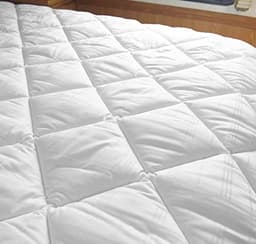
AB Lifestyles RV Short Queen Mattress Pad 60 x 75, Fits Mattresses Up to 7 Inches Deep
A short queen is 60 by 75 inches, not 60 by 80. The RV-size pad and sheets that fit a thin camper mattress, and the cooling sheet to skip.
Price as of October 25, 2026. #ad How we’re funded
Guide
Stack effect, roof heat and the attic releasing stored heat after sunset — why the top floor runs hottest, and the fixes ranked by what they cost.
Guide
Fans cool people, not rooms. The exhaust setup, the cross-breeze setup, ceiling fan direction, and the indoor temperature above which a fan makes things worse.
Comparison
What Q-Max is, which standard produces it, why two listings quoting 0.5 may not be comparable, and the four cold-touch products in our registry ranked on what the number is worth.
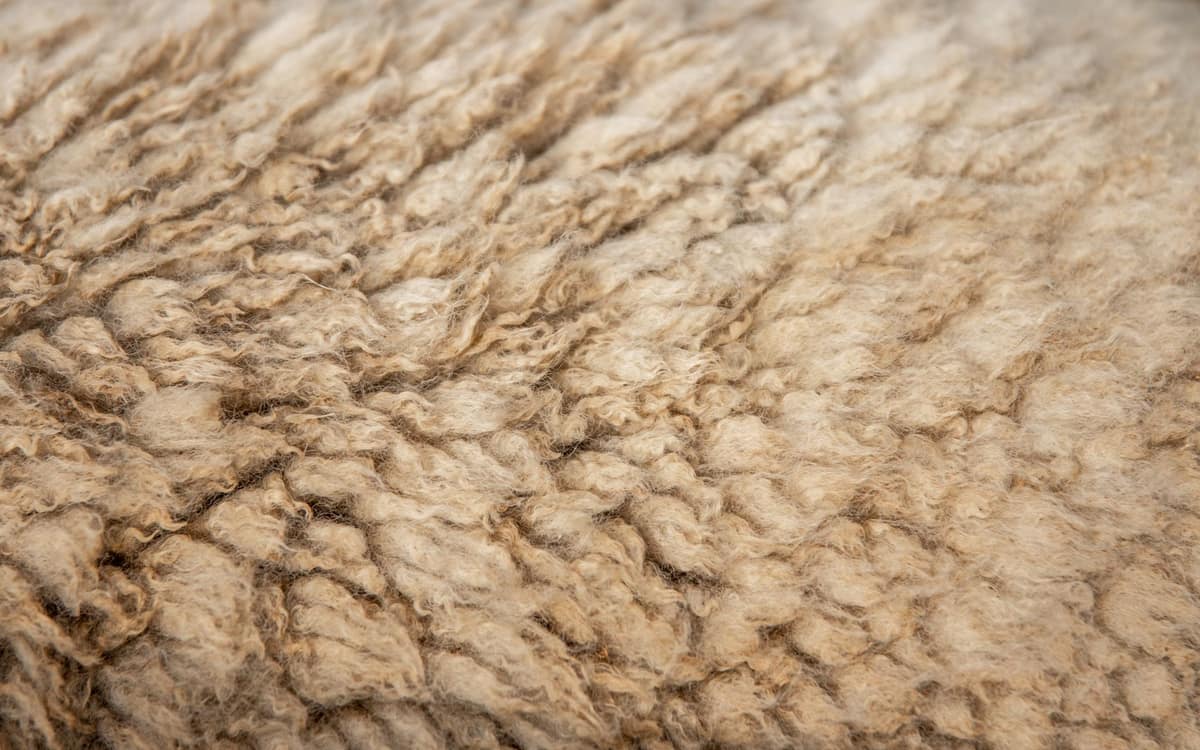
Guide
Wool buffers moisture, not heat. The one construction that works in a warm room, and the evidence behind the claim.
Layer 1: the sheets
LANE LINEN 100% Organic Cotton Percale Sheet Set
Five layers, five different heat routes, in spending order. The whole bed, with the live total.
Price as of October 25, 2026. #ad How we’re funded
Guide
Always the same hour, for three stacking reasons — and one of them is why your cooling blanket stopped working.
Work down this list in order. Each step costs more than the one above it, and most people stop before the bottom. Replacing a mattress to fix a problem your sheets were causing is the most expensive mistake in this category.
Before any of it: work out which one is actually your problem. If your bedroom is 78°F, none of these will save you.
Your body needs to shed heat to fall and stay asleep, and a bed interferes with all four routes heat uses to leave you: contact, air movement, radiation and evaporation of sweat. The four things to check, in order, are your room temperature and humidity, the loft of what is on top of you, the surface you lie on, and the sheets against your skin.
Most guidance puts the comfortable range around 60 to 68 degrees Fahrenheit for the majority of people. The exact number matters less than the direction: above the mid-seventies, passive bedding cannot help you much, because every passive cooling mechanism needs somewhere cooler for the heat to go.
If you feel hot specifically where your body contacts the bed and cooler elsewhere, it is the mattress or topper surface. If you feel hot all over as soon as you get under the covers, it is the top layer. If you wake up damp rather than warm, it is a moisture problem and the sheets are the place to start.
Bedding can stop the bed from being hotter than the room, which for most people is the actual complaint. It cannot make the bed cooler than the room — no passive fabric can. If the room itself is the problem, fix that first, and if you have already done everything else, a powered cooling system is the only category that genuinely removes heat from the bed.
Both, depending on the mechanism. Open weaves and absorbent fibers genuinely change how heat and sweat leave your skin and keep working all night. Cold-touch coated fabrics feel cool for a few minutes and then match your skin temperature. Reading which mechanism a product uses tells you more than the price does.