Start with the disclosure, because it changes how you should read the rest of this page.
The best-known cooling mattress brands are not buyable through our links. We read nine competitor roundups ranking for these terms while researching this site. Across every one of them, the recommended cooling mattresses were Helix, Saatva, Nectar, DreamCloud, Brooklyn Bedding, Nolah, Bear, WinkBeds, Amerisleep, Puffy, Avocado and Leesa — and every single link was direct to the brand. Not one of those publications linked a flagship cooling mattress to Amazon, because those brands do not sell their flagship models there.
Amazon is our only retailer. We have not joined a mattress affiliate program, and we do not build tracking links for programs we have not joined. So we have two honest options: write a roundup of beds we cannot link and pretend the buy button exists, or tell you plainly what the situation is and rank only what you can actually buy through us. We picked the second.
If a Saatva or a Helix is what you want, buy it directly from them. We earn nothing from that and you should do it anyway if it is the right bed. What follows is a genuinely useful thing we can do: explain which construction actually sleeps cool, and rank the Amazon-buyable beds on that basis.
The one specification that matters: coils or no coils
A pocket-coil core is mostly empty space — springs with air between them, and that air can move. An all-foam core is a solid block of polyurethane with no convection path through it at all. That single structural difference does more for mattress temperature than every other feature in a listing combined.
Everything else you will read about — gel infusion, copper, graphite, green tea, cool-touch covers, phase-change quilting — is a second-order effect layered on top of that primary fact. They change how long the surface takes to warm up. Coils change where the heat goes.
This is why every mattress we recommend below is a hybrid, and why the one all-foam bed on the list is in the skip slot despite being a perfectly competent mattress.
The comfort layer matters second
Above the coils sits the layer you actually touch, and its material decides how the surface behaves. Memory foam is viscoelastic: it softens as it warms, which is how it conforms, and which means it wraps more of you as the night goes on. Latex is elastic: it springs back, it is open-celled, and it never forms the deepening hollow that foam does. A latex comfort layer over pocket coils is the classic cool-sleeping construction and it predates the entire “cooling mattress” category.
The mechanism is covered in detail on why your mattress sleeps hot, and the constructions are compared on what mattress sleeps coolest.
What Amazon listings do not tell you
Coil count and coil gauge are the two specifications that distinguish one hybrid from another, and almost no Amazon mattress listing publishes either. Nor do they publish foam density, latex type, or the thickness of individual layers. We have marked all of those “Not published” below rather than estimating.
That absence is why we rank on construction type rather than pretending to compare models precisely. A page that gave you a decimal score for each of these beds would be inventing a precision the underlying data does not support.
Please try the cheaper things first
A mattress is the most expensive and most disruptive fix available, and for most people who describe themselves as hot sleepers it is not the cause. Sheets, top layer and pillow together cost under $100 and solve it more often than not. Work down the ladder before you get here, and read mattress vs topperbefore you commit — the topper wins that comparison more often than the mattress industry would like.
Constructions, ranked
Mattress constructions by thermal behavior. Our read of how each construction works, not a measurement.| Construction | Core airflow | Surface behavior | Buyable on Amazon | Sleeps |
|---|
| Innerspring, open coils | High | Firm, minimal contour | Yes, widely | Coolest |
| Latex over pocket coils | High | Contours and springs back | Yes, limited choice | Cool |
| Pocket coils + foam comfort layer | Moderate to high | Contours, softens with heat | Yes, widely | Cool to neutral |
| All latex | Moderate — open cell, pin-cored | Contours and springs back | Rarely | Neutral |
| All memory foam | None | Wraps more over the night | Yes, widely | Warmest |
The upgrade path, stated plainly
Every product link on this site routes through a configuration entry rather than being written into the page. If we join a mattress program in future, the beds that currently have no buy button get one with a one-line change and no rewriting of anything you are reading. Until that happens, this page recommends what it can actually stand behind and says so about the rest.
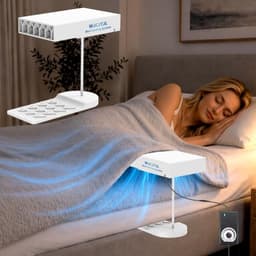
If you want the cheapest genuine improvement to a hot bed you already own rather than a new one, the honest answer is not on this page at all — it is an under-sheet fan at around $70, which is the only category on this site that removes heat rather than slowing it down.
If you have decided a new bed is the answer, it is the one purchase on this site worth timing: mattresses are the product class with a documented Black Friday pattern. What that pattern is, what it is not, and how to judge an Amazon strikethrough is on our Black Friday and Cyber Monday page.
Who the bed has to work for
Two things change what a hot sleeper should buy here more than any cooling feature does, and both come down to how far you sink. A heavier body settles further into the same comfort layer, which increases how much skin is pressed against insulation — the ranking for that case is on cooling mattresses for heavy people. And sleeping position decides both your contact area and the firmness you need: stomach sleepers have the largest area of skin against the bed of anyone, which is covered on cooling mattresses for stomach sleepers, and side sleepers have the smallest, on cooling mattresses for side sleepers.
If back pain is part of why you are replacing the bed, read cooling mattresses for back pain before buying firmer on instinct. The best randomised evidence on mattress firmness points the other way from the usual advice.
And if two of you share the bed, the ranking changes again, because the construction that hides your partner’s movement best is also the one that traps heat best. Which way to resolve that, and the one fix that cools a single side of the mattress, are on cooling mattresses for couples.
One last thing, for anyone looking at a yellowed bed and wondering whether it is done. A sweat stain is cosmetic, it comes out of a mattress with patience rather than with water, and the step that matters is the one most people skip afterwards. The method, and the agents to keep away from a thing you cannot rinse, are on how to get sweat stains out of a mattress.