How to stop sleeping hot: what to fix first
Five steps in cost order, with the check at each stage that tells you whether to spend the next amount. Most people stop at step two.
By Stephen V. · Specs last verified · Prices live as of October 25, 2026
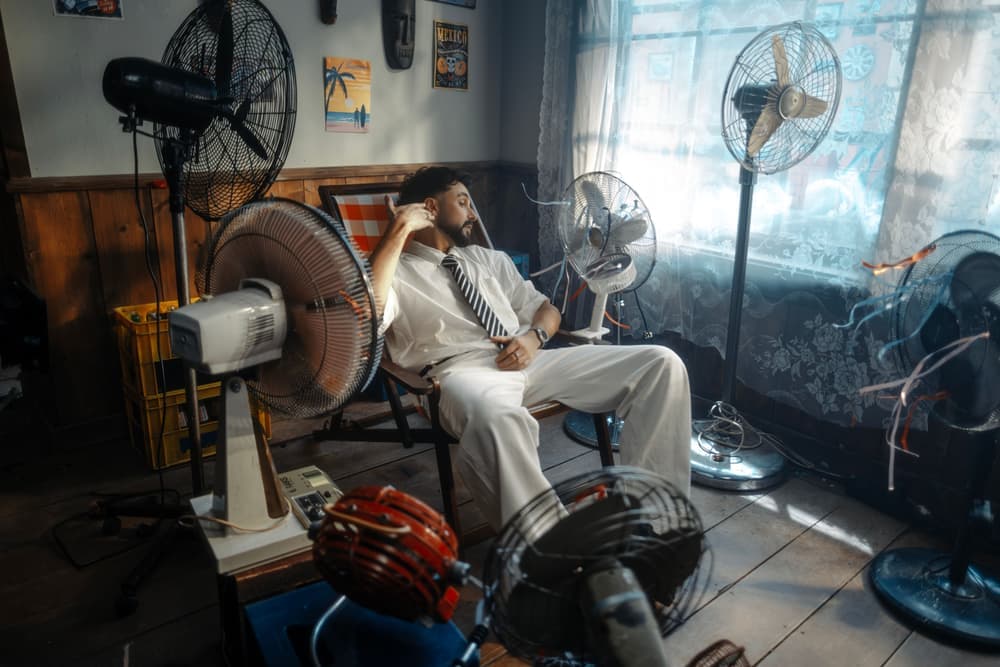
Fix things in cost order: the room first because it is free, then your pillowcase and pillow, then your sheets, then your top layer, then the mattress surface, and only then the mattress itself. At each step, give it a week before deciding. Most people find the cause within the first three, well under $100.
This is the page the rest of the site hangs off. If you only read one thing here, read this one. It exists because the expensive purchase is the one with the marketing budget behind it, and it is almost never the right first move.
Step 0 — the room. Free.
Put a cheap thermometer on the nightstand and read it at 3am, not at bedtime. Rooms drift, and the number you care about is the one at the hour you keep waking up. If it is above roughly 75°F, stop reading about bedding — every passive product on this site works by moving heat somewhere cooler, and in a hot room there is nowhere cooler to move it to.
The free and near-free room fixes, in order: close blinds during the day so the room does not bank heat, open windows on both sides of the house once the outside air drops below the inside air, and put a fan where it moves air across you rather than at the ceiling. Full detail on how to stay cool at night, including what works without air conditioning.
The check: if fixing the room solved it, you are done and you have spent nothing.
Step 1 — pillowcase, then pillow. $15-$60.
Your head and neck have high blood flow and are in continuous contact with one small piece of fabric all night. It is the highest heat flux per square inch of any part of the bed, and the cheapest to change. Start with the case: a viscose or lyocell pillowcase is under $20.
If the case is not enough, the pillow itself is the problem, and it usually means a solid memory foam block. A solid foam pillow is a sealed insulating slab under the hottest part of you. Shredded fill, latex or buckwheat all leave air gaps that a solid block does not. See cooling pillows.
The check: if you wake up with a hot head and neck but the rest of you is comfortable, this step is your whole problem.
Step 2 — sheets. $25-$60.
Sheets touch more of you than anything else, for eight hours. The rule is weave first, fiber second: percale, linen or waffle if you wake hot and dry; lyocell or viscose if you wake damp. Avoid brushed microfiber, which is napped polyester and behaves as insulation regardless of what the listing says.
Buy two sets rather than one expensive set. A damp sheet does not behave like the fabric you paid for. See cooling sheets.
The check: most people who describe themselves as hot sleepers stop here. If steps 0 through 2 have not fixed it, the problem is structural rather than superficial, and the remaining steps get more expensive.
Step 3 — what is on top of you. $30-$90.
Comforter warmth is loft, not fabric. If you are fine until you get under the covers, the insert is too thick for your room, and no duvet cover will change that. Swap to a lightweight insert, or in summer to a waffle blanket with nothing over it. If you share a bed with someone who runs cold, two separate top layers is the fix that actually works. See cooling blankets.
Step 4 — the mattress surface. $30-$300.
If you are hot specifically where your body contacts the bed, the mattress surface is the cause and a topper or pad can change it without replacing the mattress. Be careful here, because this is the step where people most often make things worse: adding three inches of gel memory foam to fix a heat problem adds three inches of insulation. A thin fiber pad, or latex if you also need pressure relief, is the right shape of answer. See toppers and pads and, before you buy, the difference between a topper, a pad and a protector.
If you are not sure step 2 is finished before you move on to this one, cooling sheets vs a cooling mattress pad sorts it by symptom.
Step 5 — the mattress. $200-$900.
Last, because it is the most expensive and the most disruptive, and because the four cheaper steps solve it for most people. If you get here, the single specification that matters is coils versus no coils: a pocket-coil core is mostly empty space, an all-foam core is solid. Everything else in a mattress listing is second order. See cooling mattresses, which is also honest about the fact that the best-known cooling mattress brands are sold direct and we have no link to them. It is also the one step worth timing: mattresses are the product class with a documented Black Friday pattern, and our Black Friday page says which steps to buy now and which to wait on.
If you finish the ladder and you are still hot
Then passive bedding has run out of road, and that is a real limit rather than a failure to find the right product. A fabric can only slow heat down or move it a short distance. A powered system — a bed fan at around $70, or a water-circulating pad from roughly $200 — is the only category that actually transports heat out of the bed. See bed cooling systems.
If you’re drenched most nights, or it started suddenly, that’s worth raising with a doctor — it’s outside what bedding can fix, and outside what we cover.
Everything on this ladder, and the rest of the problem-first guides behind it, is indexed on the sleeping hot hub.
Once you know which layer is yours, the full five-layer build — one product per heat route, in spending order, with the live total — is on the best cooling bed setup.
Common questions
How do I stop sleeping hot?
Work in cost order. Check the room temperature at 3am first because it is free and because it invalidates everything else if it is too high. Then change your pillowcase and pillow, then your sheets, then your top layer, then the mattress surface, and only then the mattress. Give each change about a week before moving on.
What is the cheapest thing that actually helps?
Moving air across you with a fan, which costs nothing if you own one, followed by a lyocell or viscose pillowcase for under $20. Your head and neck have high blood flow and touch one small piece of fabric all night, so that is the highest-leverage cheap change on the bed.
Should I buy a cooling mattress or a cooling topper first?
A topper or pad first, essentially always. It costs a fraction as much, it can be returned easily, and if it fixes the problem you have learned that the mattress surface was the cause without spending mattress money. Just avoid adding thick gel memory foam, which adds insulation.
How long should I give each change before deciding?
About a week. Night-to-night variation in room temperature, humidity and your own sleep is large enough that a single night tells you very little, and new bedding also needs a wash and a break-in before it behaves the way it will.
Sources
Read next
- Sleeping HotWhy you overheat at night, and what to fix first — cheapest change before most expensive.
- Cooling SheetsThe cheapest change that actually works. Weave and fiber decide everything.
- Cooling mattress vs cooling topperSurface problem or structural problem? The test, before you spend $500.
- The best bedroom temperature for sleepThe target bedroom temperature, and why the room comes before any bedding.
- The best cooling gifts for someone who sleeps hotGifts that genuinely help a hot sleeper, from pillowcases to a bed fan.
- The best cooling bedding on a budgetThe cheap cooling buys that beat the expensive ones, across the whole bed.
Try the cheap thing first
Work down this list in order. Each step costs more than the one above it, and most people stop before the bottom. Replacing a mattress to fix a problem your sheets were causing is the most expensive mistake in this category.
- 1Pillowcase, then pillowUnder $20 to start
- 2Sheets$25-$60
- 3Top layer$30-$90
- 4Topper or pad$30-$300
- 5The mattress$200-$900
Before any of it: work out which one is actually your problem. If your bedroom is 78°F, none of these will save you.