Bed bases, airflow and heat
Every guide to a hot mattress talks about what is on top of it. The surface underneath decides whether the heat you put in has anywhere to go.
By Stephen V. · Specs last verified · Prices live as of October 25, 2026
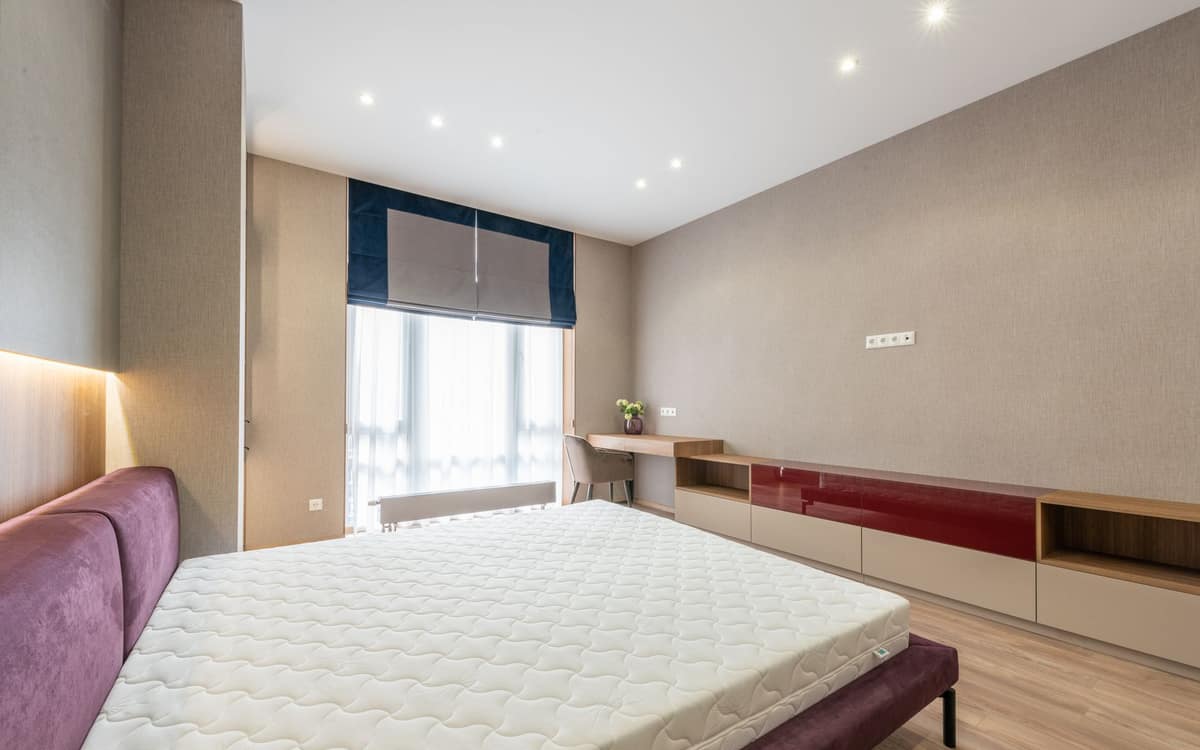
It can, and it is the cheapest thing to check. A mattress on a solid platform, a storage base or the floor can only lose heat and moisture upwards, through you. A slatted base with gaps of roughly three inches lets the underside breathe, and swapping to one is often free.
A mattress is a two-sided object
Most advice about a hot bed treats the mattress as though only its top surface exists. But heat and water vapor move in all directions through it, and over a night a meaningful amount travels downwards — away from you, which is exactly where you want it to go.
Whether it can keep going depends on what is under there. If the underside is open to moving air, heat dissipates and moisture evaporates, and the mattress starts each night from a genuinely cool, dry baseline. If the underside is pressed against a continuous surface, both accumulate in the lower part of the mattress and the only route out is back up through the layer you are lying on.
The effect is cumulative rather than dramatic. One night on a sealed base is barely different. A month of it means a mattress that never fully dries out and never fully cools between nights, and people describe that as the mattress getting hotter over time, which in a real sense it has.
What each kind of base does
| Base | Underside airflow | Moisture risk | Verdict for a hot sleeper |
|---|---|---|---|
| Slats with roughly 3in gaps | Good | Low | The target. Cheap and effective. |
| Sprung or divan base | Moderate | Low to moderate | Fine; the sprung layer holds some air. |
| Solid platform, no gaps | Poor | Moderate | Common in modern beds and a real cost. |
| Storage base with drawers | Very poor | High | The worst common case — sealed underneath. |
| Mattress on the floor | None | High | Avoid. Condensation gathers underneath. |
| Adjustable base | Varies | Low to moderate | Usually slatted or perforated; check yours. |
Slat spacing matters in both directions. Too wide and an all-foam mattress sags into the gaps and develops permanent dips, which most manufacturers warn about and some warranties exclude. Somewhere around three inches is the usual guidance, and it is worth checking your mattress documentation rather than assuming, because the requirement varies by construction.
The floor is the case people get wrong
Putting a mattress on the floor sounds like it should be the coolest option — the floor is cold, after all, and cold surfaces draw heat away. For the first hour that is true, and it is why the arrangement feels good initially.
The problem is water. All night you push warm, moist air down into the mattress. When it reaches the cool floor it condenses, exactly the way a cold window fogs, and the moisture has nowhere to evaporate to because it is sealed between two flat surfaces. In practice people find a damp patch, and eventually mildew, on the underside of a floor-laid mattress. A damp mattress is also a worse thermal performer, because wet material conducts heat differently and stays cold and clammy rather than dry and cool.
If a mattress has to be on the floor, lift it against a wall for a few hours regularly so the underside dries. The related humidity mechanism is on humidity and sleeping hot.
How much does it actually matter?
Less than your sheets, and less than the room. It would be dishonest to sell this as the hidden cause of everyone's hot bed — the base is a contributing factor, not usually the main one, and the ordering on what to fix first still holds.
It matters most in three specific cases. All-foam mattresses, because foam is a poor conductor with no internal air channels, so the little dissipation it gets through the underside is proportionally more important — the construction difference is on hybrid vs memory foam. Storage beds with drawers, which seal the underside almost completely. And humid climates or rooms, where the condensation problem arrives much faster.
It is also worth checking simply because it can be free. If you already own a slatted frame and have a solid board laid across it — a very common fix for a sagging mattress — removing the board costs nothing and restores the airflow. Likewise, a bed pushed hard into a corner has two sides against walls; pulling it out a few inches helps the perimeter breathe.
What to do
- Look underneath. Most people have never checked what their mattress is actually resting on, and the answer takes ten seconds to find.
- Remove any solid board laid over slats, unless it is there because the slats are too widely spaced — in which case add slats rather than a board.
- Check slat spacing against your mattress documentation before changing anything, since too wide will void some warranties and cause dips.
- Stand a floor-laid mattress up regularly to dry the underside, and get it onto a frame when you can.
- Do not buy a new base to fix a hot bed. This is a check, not a purchase recommendation. If the mattress construction is the problem, the mattress is the problem, and the cheaper interventions come first.
Common questions
Does a bed base affect how hot a mattress sleeps?
It contributes. Heat and moisture travel downwards through a mattress as well as upwards, and a base that seals the underside means both accumulate instead of dissipating. It is rarely the main cause of a hot bed, but it is one of the few you can often fix for nothing.
Are slatted bed bases cooler than solid platforms?
Yes. Gaps between slats let air move across the underside so heat dissipates and moisture evaporates between nights. A solid platform blocks that, and a storage base with drawers blocks it almost completely. Slat gaps of around three inches are the usual target, but check your mattress documentation.
Is it bad to put a mattress on the floor?
For temperature and for the mattress, yes. It feels cool at first because the floor draws heat away, but the warm moist air you push downwards condenses against the cold floor and has nowhere to evaporate to. Damp undersides and eventually mildew are the common result.
Will changing my bed frame fix a mattress that sleeps hot?
On its own, usually not. Treat it as a free check rather than a purchase: remove a solid board laid over slats, pull the bed out of a corner, get a floor mattress onto a frame. If the mattress construction is what traps heat, no base will fix that.
How far apart should bed slats be?
Around three inches is the common guidance, and the requirement varies by mattress type — all-foam mattresses in particular sag into gaps that are too wide, which causes permanent dips and voids some warranties. Check what your mattress manufacturer specifies before adding or removing slats.
Read next
- Cooling MattressesThe most expensive fix, and the one most people should try last.
- Why your mattress sleeps hotThe physics of foam conforming, and why 'gel infused' does less than it sounds.
- How to make your mattress cooler without replacing itFix a hot bed from the outside in, ordered from free to expensive.
- Hybrid vs memory foam for hot sleepersCoils breathe, foam insulates — the mattress choice that most affects heat.
- Why humidity makes you sleep hot (and what helps)Damp air blocks sweat from evaporating — the fabric and room fixes that unstick it.
Try the cheap thing first
Work down this list in order. Each step costs more than the one above it, and most people stop before the bottom. Replacing a mattress to fix a problem your sheets were causing is the most expensive mistake in this category.
- 1Pillowcase, then pillowUnder $20 to start
- 2Sheets$25-$60
- 3Top layer$30-$90
- 4Topper or pad$30-$300
- 5The mattress$200-$900
Before any of it: work out which one is actually your problem. If your bedroom is 78°F, none of these will save you.