How to stay cool while sleeping, without air conditioning
Bedding can only stop the bed being hotter than the room. This page is about the room — ordered from free upward.
By Stephen V. · Specs last verified · Prices live as of October 25, 2026
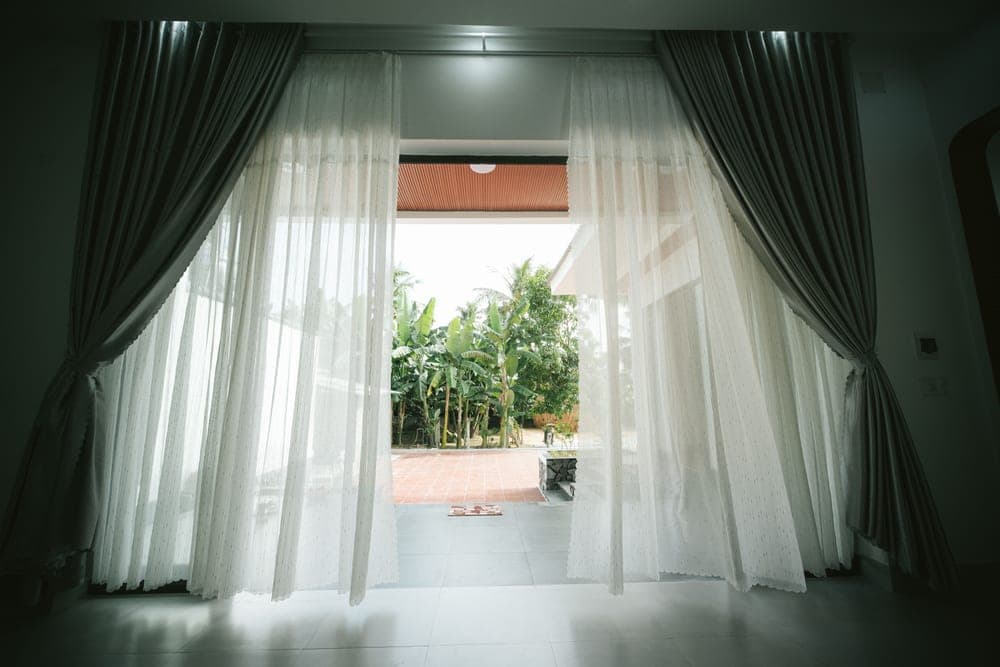
The most effective free fix is moving air across your skin, because a breeze speeds up sweat evaporation, which removes far more heat than any fabric can conduct away. After that: block sunlight during the day, cross-ventilate once outside air drops below inside air, and reduce humidity, because evaporation stalls in humid air.
Everything on this site works by moving heat from you to somewhere cooler. If the room is not cooler, there is nowhere for the heat to go, and the best sheets in the world are a rounding error. So the room comes first — and most of it is free.
Free
Move air across yourself, not around the room
A fan does not lower air temperature. It works by stripping away the thin layer of warm, humid air sitting against your skin and replacing it with drier room air, which lets sweat evaporate faster. Evaporating one gram of water absorbs roughly 2,400 joules — far more heat than conduction into a fabric can remove. This is the single most powerful cooling mechanism available to you and it costs nothing if you already own a fan.
Placement matters more than power. Aim it across the bed at body height rather than at the ceiling or the wall. A ceiling fan on its summer setting pushes air down over you, which is right; on the winter setting it pulls air up, which is not.
Stop the heat arriving in the first place
A bedroom at 3am is largely a consequence of what happened at 3pm. Solar gain through a sunlit window is enormous, and once mass in the room has absorbed it, it releases slowly for hours. Close blinds and curtains on sun-facing windows during the day — before the room gets hot, not after.
Cross-ventilate at the right moment
Opening a single window does very little; opening two on opposite sides of the space creates a pressure difference and an actual airflow path. Do it when the outside air is genuinely cooler than the inside air, which in most climates is well after sunset rather than at dusk. Opening up too early imports the heat you spent the day excluding.
Shed the top layer entirely
Sleeping under a sheet alone in summer is not a compromise; it is the correct amount of insulation for the conditions. Most people keep a comforter on the bed year-round out of habit.
Under $100
| Fix | Rough cost | What it does | Limit |
|---|---|---|---|
| Box or tower fan | $25-$60 | Air movement across skin, speeds evaporation | Adds noise; useless if room air is hotter than you |
| Blackout curtains | $25-$60 | Blocks solar gain before the room banks it | Only helps sun-facing windows |
| Window fan (exhaust) | $30-$70 | Pushes hot indoor air out overnight | Needs cooler outside air to work |
| Dehumidifier (small) | $80-$150 | Lets sweat evaporate again in humid air | Adds its own waste heat to the room |
| Under-sheet bed fan | $70-$120 | Moves air directly under the covers | Audible; still limited by room air temperature |
Humidity is the variable nobody checks
In humid air, sweat cannot evaporate, so your most powerful cooling route is disabled and you feel hot at a temperature that would otherwise be fine. If your room is 72°F and you are still soaked, humidity is the likeliest culprit and a dehumidifier will do more than any bedding purchase. The trade-off is honest: a dehumidifier dumps its own waste heat into the room, so it works best in a space you can also ventilate.
Over $100
At this point you are choosing between cooling the room and cooling the bed, and cooling the bed is usually cheaper. A window air conditioner runs $150-$400 plus installation and running cost. An under-sheet bed fan is around $70 and a water-circulating mattress pad starts around $200 — both cool only the space that matters, which is the few cubic feet you are lying in. See bed cooling systems for the honest comparison, including where they fail.
Things that do not work as well as claimed
- A bowl of ice in front of a fan.Genuinely does something for a short while and the effect is small — a few pounds of ice holds far less cooling capacity than a room's worth of air needs.
- Cold showers before bed. A warm shower actually works better: it drives blood to the skin, which then sheds heat faster once you are out. A cold shower constricts surface vessels and can slow the drop.
- The “Egyptian method” (a damp sheet).It works — evaporation is powerful — and it also raises the humidity in your immediate air, so it stops working quickly in a closed room and leaves you damp.
- Cooling sprays and gels. Menthol triggers the same nerve receptor cold does, so you feel cooler without being cooler. Pleasant, and it moves no heat.
If you’re drenched most nights, or it started suddenly, that’s worth raising with a doctor — it’s outside what bedding can fix, and outside what we cover.
If none of this is enough, the room itself may be the problem rather than your routine. An upper-floor bedroom collects the warm air of the whole house, sits under a roof that can run far hotter than the outside air, and keeps receiving that stored heat after sunset — the fixes, cheapest first, are on why your upstairs bedroom is so hot.
Once the room is doing what it can, the bed itself has five layers worth getting right, each attacking a different heat route: the best cooling bed setup.
Common questions
How do I stay cool while sleeping without AC?
Move air across yourself with a fan, which speeds sweat evaporation and is the most powerful cooling route available to your body. Then block sunlight during the day so the room does not bank heat, cross-ventilate with two openings once the outside air is genuinely cooler, and drop the humidity if it is high.
How do I stay cool sleeping without a fan?
Focus on the two things a fan is not doing: stopping heat arriving and reducing insulation. Close blinds on sun-facing windows during the day, open two windows on opposite sides of the space after the outside air cools, take the comforter off the bed entirely, and switch to an open-weave sheet such as percale or linen.
Does putting ice in front of a fan work?
A little, briefly. A few pounds of ice holds far less cooling capacity than a room of air requires, so the effect is small and short-lived. Simply pointing the fan across your body works better, because it targets the layer of air that is actually keeping you warm.
What room temperature is best for sleeping?
Most guidance puts the comfortable range around 60 to 68 degrees Fahrenheit. Humidity matters as much as the number: at high relative humidity sweat cannot evaporate, so a 72-degree room can feel far worse than a drier 75-degree one.
Does a warm shower before bed help you sleep cooler?
Yes, counter-intuitively. A warm shower drives blood toward the skin, and once you step out that increased surface blood flow sheds heat faster, which supports the core temperature drop that accompanies sleep onset. A cold shower constricts surface vessels and can work against it.
Sources
Read next
- Sleeping HotWhy you overheat at night, and what to fix first — cheapest change before most expensive.
- How to stop sleeping hot: what to fix firstThe decision guide. Five steps in cost order, and how to know when to stop.
- Bed cooling systems: what actually removes heatPowered systems: the only category that removes heat instead of slowing it.
- The best bedroom temperature for sleepThe target bedroom temperature, and why the room comes before any bedding.
- How to sleep cool without air conditioningFree and cheap ways to sleep cool in a hot room with no AC.
- Why humidity makes you sleep hot (and what helps)Damp air blocks sweat from evaporating — the fabric and room fixes that unstick it.
Try the cheap thing first
Work down this list in order. Each step costs more than the one above it, and most people stop before the bottom. Replacing a mattress to fix a problem your sheets were causing is the most expensive mistake in this category.
- 1Pillowcase, then pillowUnder $20 to start
- 2Sheets$25-$60
- 3Top layer$30-$90
- 4Topper or pad$30-$300
- 5The mattress$200-$900
Before any of it: work out which one is actually your problem. If your bedroom is 78°F, none of these will save you.