Comforter vs duvet vs quilt vs blanket
Four things people call the same thing, with four different amounts of loft — and loft is what decides how hot you get.
By Stephen V. · Specs last verified · Prices live as of October 25, 2026
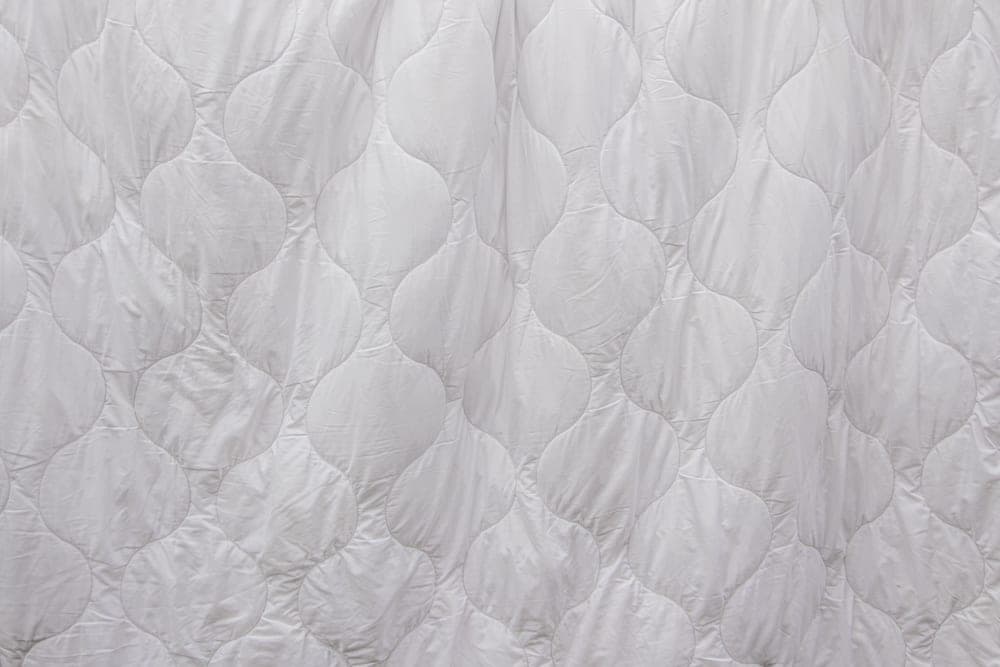
A blanket sleeps coolest, then a quilt, then a duvet insert, then a comforter — because warmth is loft, the thickness of still air the layer holds. A duvet insert and a comforter are essentially the same product; the insert goes in a washable cover and the comforter does not.
What each one actually is
Duvet insert. A filled bag with no finished outer, designed to go inside a removable cover. The insert holds the fill and therefore the warmth; the cover is washable and decorative. This is the European standard arrangement and the more practical one, because you can launder the part that touches you.
Comforter. The same filled bag with a finished decorative outer, used without a cover. Identical thermally. The practical difference is laundry: most comforters do not fit a domestic washing machine, which matters if you sweat.
Quilt. Three thin layers stitched through in a pattern. That stitching compresses the fill at every seam, so a quilt has far less loft than a comforter of the same materials, and it is correspondingly cooler. Genuinely useful for spring and fall.
Blanket.A single woven layer with no fill at all — cotton waffle, wool, cellular weave. The coolest and the most underused option in this category. In summer, one of these on its own is usually the right amount of covering.
| Blanket | Quilt | Duvet insert | Comforter | |
|---|---|---|---|---|
| Fill | None | Thin batting | Down or down-alternative | Down or down-alternative |
| Loft | Minimal | Low, compressed by stitching | Moderate to high | Moderate to high |
| Needs a cover | No | No | Yes | No |
| Machine washable | Yes | Usually | Cover yes, insert rarely | Rarely |
| Warmth | Lowest | Low to moderate | Set by fill weight | Set by fill weight |
| Best for a hot sleeper | Summer, alone | Shoulder seasons | Year-round if lightweight | Winter |
Baffle box vs box stitch
Two ways to stop the fill in an insert migrating into one corner, and the difference is worth understanding because it is a real construction spec that some listings do state.
Box stitchingsews the top face directly to the bottom face in a grid. Cheap, effective at holding fill in place, and it creates a thin cold line at every seam — the fill is compressed to nothing there.
Baffle boxconstruction inserts a vertical fabric wall between the two faces, so each chamber can loft fully and the faces are never sewn together. More expensive, more even, and warmer for the same fill weight — which for a hot sleeper is a reason to prefer box stitching, not baffle box. This is one of the few places where the cheaper construction is better for our purpose.
The two-duvet solution
If one of you sleeps hot and the other sleeps cold, no single top layer will work, because you have opposite requirements and one shared variable. The standard Scandinavian arrangement — two single-size duvets on one bed, no shared top layer — eliminates the problem rather than compromising on it.
It looks unusual to people who have not seen it, it costs less than one premium comforter, and it also ends the sheet-stealing problem. Of everything on this site, it is probably the change with the highest ratio of relationship benefit to cost.
What about down?
Down is the best insulator per unit weight there is, which is exactly why it is the wrong choice if your problem is heat. Fill power measures how many cubic inches an ounce of down lofts to — higher fill power means more warmth for less weight. For a hot sleeper, a high fill power number is a warning rather than a feature.
Down does have one genuine advantage worth naming: it breathes and manages moisture better than polyester fill. A very lightweight, low fill-weight down insert can work well for a hot sleeper. A high fill-power “luxury” one will cook you.
One more option sits outside this comparison and solves the hardest version of the problem. If two people in the bed disagree about temperature, the answer is not a better shared layer, it is two separate ones: a duvet each, sized per person rather than per mattress. That is on the Scandinavian sleep method.
Common questions
What is the difference between a duvet and a comforter?
Essentially the cover. A duvet insert is a filled bag designed to go inside a washable, removable cover; a comforter is the same filled bag with a finished decorative outer used on its own. Thermally they are the same, and the insert is more practical because you can launder the part that touches you.
Is a quilt cooler than a comforter?
Yes. A quilt is stitched through all its layers, which compresses the batting at every seam and leaves far less loft than a comforter of the same materials. Since loft is what makes a layer warm, less loft means a cooler layer.
Is baffle box or box stitch better for hot sleepers?
Box stitch, unusually. Baffle box construction lets each chamber loft fully and is warmer for the same fill weight, which is exactly what a hot sleeper does not want. Box stitching compresses the fill at every seam and creates thin cool lines through the layer.
Should hot sleepers avoid down?
Not entirely, but read the numbers correctly. Down is the most efficient insulator per unit weight, so a high fill power is a warning rather than a feature. Down does breathe and handle moisture better than polyester fill, so a genuinely low fill-weight down insert can work well.
What is the two-duvet method?
Two single-size duvets on one bed, one for each person, with no shared top layer. It is the standard Scandinavian arrangement and it removes the mismatched-temperature problem entirely rather than compromising on it. It also ends sheet-stealing, and typically costs less than one premium comforter.
Read next
- Cooling BlanketsBlankets, comforters and duvet inserts. Loft is the variable, not the fabric.
- Summer bedding: how to build the bedThe whole summer bed, layer by layer, for around $70.
- Cooling blanket vs cooling sheetWhich layer to change first when you can only change one.
- The best cooling comforters and duvet insertsLightweight inserts and comforters that add the least heat, ranked honestly.
- Down vs down alternative for hot sleepersWhich fill sleeps cooler — and why fill weight decides it more than fill type.
- Waffle blanket vs cooling comforterOne barely insulates and breathes; the other is a lighter duvet. Which fits summer.
Try the cheap thing first
Work down this list in order. Each step costs more than the one above it, and most people stop before the bottom. Replacing a mattress to fix a problem your sheets were causing is the most expensive mistake in this category.
- 1Pillowcase, then pillowUnder $20 to start
- 2Sheets$25-$60
- 3Top layer$30-$90
- 4Topper or pad$30-$300
- 5The mattress$200-$900
Before any of it: work out which one is actually your problem. If your bedroom is 78°F, none of these will save you.