Waffle blanket vs cooling comforter
Both claim the summer bed, and they are not the same tool. One is a thin breathable layer that barely insulates; the other is a duvet trying to insulate less.
By Stephen V. · Specs last verified · Prices live as of October 25, 2026
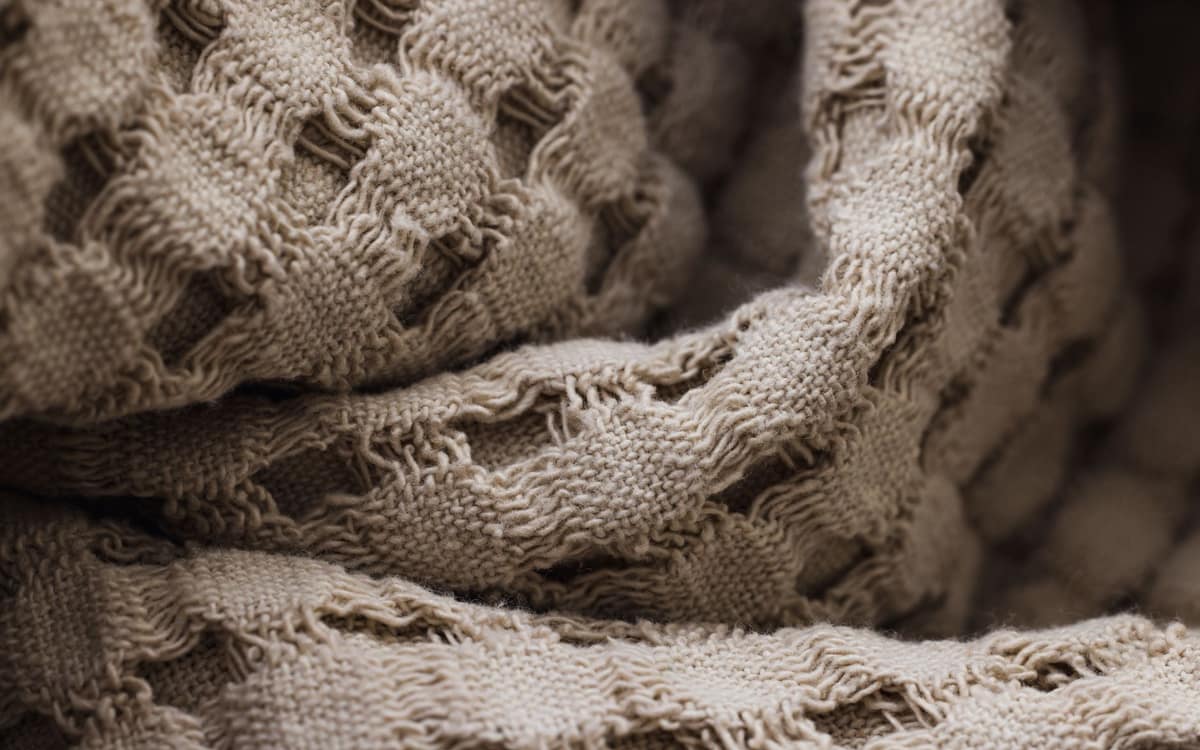
In real summer heat, a cotton waffle blanket on its own beats any cooling comforter: less loft, more airflow, and a fiber that absorbs sweat. A cooling comforter earns its place in the shoulder seasons, or for a hot sleeper in a genuinely cold room who still wants the weight and drape of a duvet. The honest answer is not to choose — own both and swap them with the season, which the summer bedding guide lays out.
They are not the same tool
Both get sold as “the cooling option,” and they solve different problems. A waffle blanket is a single woven layer with no fill: thin, breathable, and it barely insulates. A cooling comforter is a duvet — fill in a bag — engineered to insulate as little as a duvet reasonably can. One is trying to add almost no warmth; the other is trying to add less warmth. That difference decides which one you actually want on a given night.
The mechanism, because it settles the argument
Warmth is loft: the thickness of still air a layer holds against you, and everything else is secondary. A waffle blanket has minimal loft — its raised grid is mostly open air that moves rather than sits — so it traps almost nothing and lets the heat leave. A comforter is loft by definition; it is a bag of fill whose whole job is to hold a thick still layer against you. The best a “cooling” comforter can do is hold a thinnerone: a low fill weight, a breathable shell, honest construction. It cannot remove heat, because it is a passive layer with no power source — the most it offers is to add less. The ranked lightweight options, and why we grade them on how little they insulate, are on the best cooling comforters, and the way to read a warmth spec when the listing hides it is on how warm a duvet should be.
So in a hot room the waffle wins on physics: you want the layer that adds the least, and nothing adds less than a blanket that is mostly air. The comforter only becomes the better choice once the room is cold enough that you actually want some loft back — at which point “adds less heat” is a feature rather than a failure.
What each one feels like in practice
The difference you notice at 3am is contact. A comforter drapes over you and follows your body, so wherever it touches it seals a pocket of warm air against your skin — the point of it in winter and the problem with it in July. A waffle blanket does the opposite: its ridges rest on the high points and bridge the hollows, so it never lies flat and never seals. You can also throw a blanket half off a leg without waking, an adjustment a heavy comforter makes clumsier. For a sleeper whose heat comes in episodes rather than steadily, the layer you can move matters as much as the layer that insulates least.
When the comforter is the right call
There is a real case for the cooling comforter, and it is not summer. It is the hot sleeper who runs warm but sleeps in a cold bedroom — someone who needs genuine insulation to be comfortable yet overheats under a standard winter duvet. For them a cooling comforter is the correct middle: enough loft for a cold room, a breathable shell so the sweat that does happen has somewhere to go. It is also the better answer in spring and autumn, when a bare waffle blanket is a little too little and a winter comforter is far too much.
One caution on the comforter side: “cooling comforter” covers two different things. Some are genuinely lightweight inserts — low fill, breathable shell — and those are the ones worth owning. Others are ordinary-loft comforters with a slick cold-touch face stitched on, which gives you the five-minute cool sensation and the full winter warmth underneath it. Buying one for a cold room is fine, but do not mistake the cold-touch face for the reason it is cooler; the loft under it is what you feel all night.
The mismatched couple
The clearest use of both at once is a bed with one hot sleeper and one cold one. Stop hunting for a single shared layer that satisfies opposite requirements — it does not exist. Put a cotton waffle blanket on the hot partner and a comforter on the cold one, two separate top layers on one bed, and the problem disappears instead of being split down the middle. It is the Scandinavian two-duvet idea with a different tool on each side, and it costs less than one premium comforter. The full disambiguation of the top-layer types is on comforter vs duvet vs quilt.
| Cotton waffle blanket | Cooling comforter | |
|---|---|---|
| Loft | Minimal — mostly open air | Moderate — fill in a bag |
| Airflow | High — through the grid | Low — through the fill |
| Warmth added | Almost none | Less than a winter duvet, not none |
| Absorbs sweat | Yes, in cotton | Only if the shell is breathable |
| Best season | Summer, alone | Shoulder seasons, or a cold room |
| If you buy one | The hot-weather answer | The cold-room answer |
What to actually do
Own both, and treat them as seasonal rather than competing. The waffle blanket is the July layer and the cold-room hot sleeper’s spare; the cooling comforter is the shoulder-season and cold-bedroom layer. Together they cost less than a single premium “all-season” comforter and they cover more of the year, because two thin tools you can swap beat one compromise that is wrong in both directions.
Common questions
Is a waffle blanket or comforter better for summer?
For real summer heat, a cotton waffle blanket. It has minimal loft and high airflow, so it adds almost no warmth and lets heat leave, while even a cooling comforter is fill in a bag whose best case is adding less warmth than a winter one. Save the comforter for a cold room or the shoulder seasons.
Can a cooling comforter replace a blanket in summer?
Only if your bedroom is genuinely cold. A cooling comforter still insulates more than a bare waffle blanket, because it has loft and a blanket barely does. In a warm room it will be too much; in a cold room where a plain blanket is not enough, it is the better single layer.
What's the coolest single top layer?
A cotton waffle blanket used on its own. Loft is warmth, and a waffle has the least loft of any top layer while still being covering — its raised grid is mostly open air, it holds itself off your skin, and the cotton absorbs sweat. Nothing with fill in it will sleep cooler in a hot room.
Should I own both a blanket and a comforter?
Yes — it is the honest answer for most hot sleepers. A cotton waffle blanket handles summer, a lightweight cooling comforter handles the shoulder seasons and cold bedrooms, and swapping between them beats hunting for one all-season layer that is a compromise in both directions. Together they often cost less than one premium comforter.
Read next
- Cooling BlanketsBlankets, comforters and duvet inserts. Loft is the variable, not the fabric.
- The best cooling comforters and duvet insertsLightweight inserts and comforters that add the least heat, ranked honestly.
- The best waffle weave blankets for hot sleepersAiry cotton waffle blankets that beat cold-touch fabrics, ranked.
Try the cheap thing first
Work down this list in order. Each step costs more than the one above it, and most people stop before the bottom. Replacing a mattress to fix a problem your sheets were causing is the most expensive mistake in this category.
- 1Pillowcase, then pillowUnder $20 to start
- 2Sheets$25-$60
- 3Top layer$30-$90
- 4Topper or pad$30-$300
- 5The mattress$200-$900
Before any of it: work out which one is actually your problem. If your bedroom is 78°F, none of these will save you.