Getting the size and fit right
The most common reason a cooling layer goes back is not that it failed to cool. It is that the corners would not stay on.
By Stephen V. · Specs last verified · Prices live as of October 25, 2026
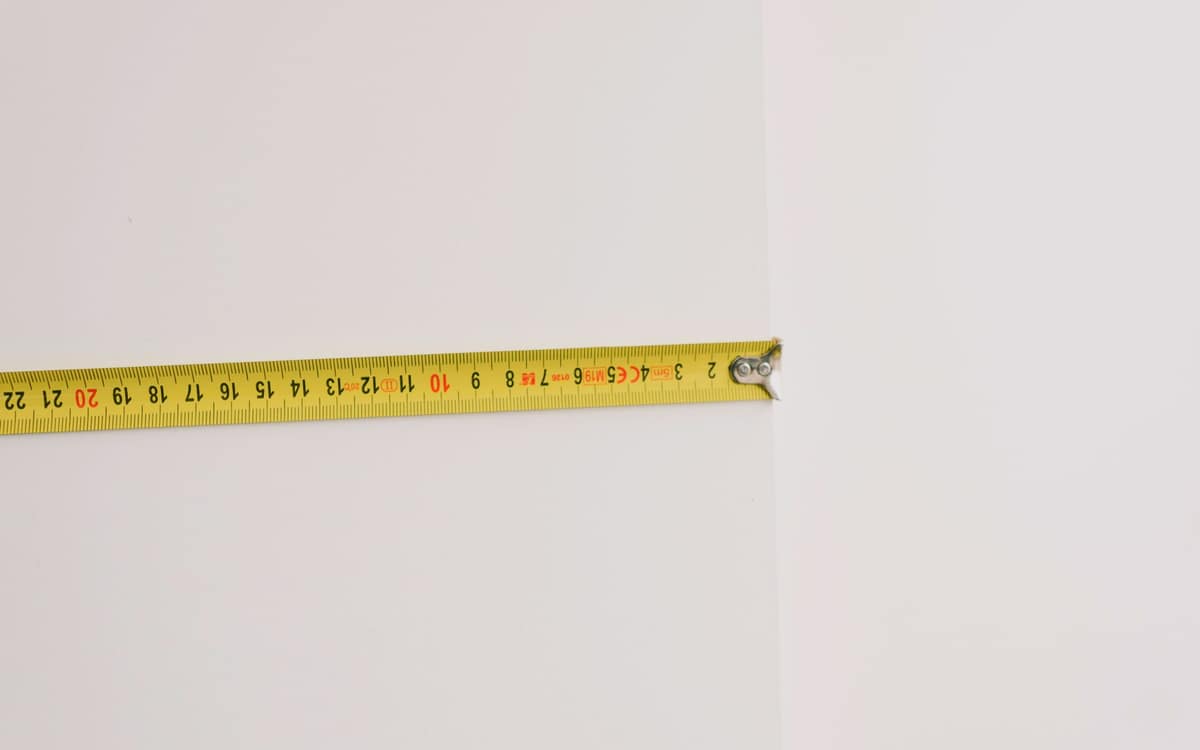
Measure the total depth of everything that will sit on the bed, not the mattress on its own. A three-inch topper turns a 12-inch mattress into a 15-inch stack, and both the topper skirt and your fitted sheet have to clear that number. Mattress size names describe length and width only — never depth.
The number that is missing from the size name
Queen tells you 60 by 80 inches. It tells you nothing about how thick the mattress is, and depth is where fit actually fails. Mattresses on the market run from about 6 inches to well past 16, and the difference between the two ends of that range is the difference between a sheet that stays on and one that pings off a corner at 3am.
So every fit decision starts with a tape measure and one honest number: the height of the mattress, plus the height of anything you are adding, measured from the base of the mattress to the top of the last layer. Write it down. It is the only figure that matters for the rest of this page.
The cascade nobody warns you about
Adding a topper does not just involve the topper. It changes the requirement for everything above it, and it is a genuine cascade:
- The topper skirt has to stretch over the mattress depth. Most are cut for a standard range and simply will not reach on a deep mattress.
- Your fitted sheet now has to cover the mattress plusthe topper. This is the step people miss, and it is why a new topper so often arrives with a sheet that no longer fits — see deep-pocket cooling sheets.
- A mattress protector, if you use one, has the same problem, and an encasement style has it worse because it has to zip around the whole thing.
- Your flat sheet and duvet get shorter in effect, because the bed is taller and there is less overhang on each side to tuck.
The practical consequence is that a cheap topper can carry an expensive tail. Budget for the sheet at the same time, or choose a thinner layer that leaves your existing bedding usable — which is one more argument for a thin pad over a thick topper when the problem is heat rather than firmness.
What deep pocket actually means
There is no standard behind the words, which is the whole problem. Different sellers use deep, extra deep and oversized for different ranges, and the only useful thing on a listing is a stated pocket depth in inches. As a rough guide to how the terms are commonly used:
| Label | Typically fits | Watch for |
|---|---|---|
| Standard | Up to about 12 in | Fails as soon as you add any topper |
| Deep pocket | About 13-16 in | The widest and vaguest of the three |
| Extra deep | About 17-21 in | Can be baggy on a thin mattress |
| Stated in inches | Whatever it says | The only version worth trusting |
A sheet that is too deep is a milder failure than one that is too shallow, but it is still a failure: excess fabric bunches under you, and a wrinkle you lie on all night is both uncomfortable and a small extra layer of insulation exactly where you did not want one.
Fit problems that get blamed on cooling
Several complaints that read as thermal failures are fit failures wearing a thermal costume:
- It slid around all night. The skirt is too loose, or the topper has no skirt and no grip. Anchoring straps or a tight-fitting pad over the top solve this; nothing about the material does.
- It bunched up and felt hot in patches. A layer that has rucked is doubled over in places, and doubled material is doubled insulation.
- The corners kept popping. Fitted sheet too shallow for the new stack height. Every pop pulls the sheet taut across the middle, which is what wakes you.
- The edges feel different from the middle. A topper cut slightly small leaves a lip of bare mattress at the perimeter, which is very noticeable if you sleep near the edge.
Two sizing cases worth knowing
Split sizes for couples. Two twin-XL layers side by side on a king base give each person their own surface, which is how you give one partner a cooling layer without imposing it on the other. It is the cleanest answer to the problem set out on cooling toppers for couples. The seam down the middle is real but sits between sleepers rather than under one.
If those two mattresses sit on an adjustable base, the sheets need the same thinking, and cooling sheets for adjustable beds covers Twin XL pairs and split king sets.
Full versus queen. These are frequently confused and are not close: a full is 54 by 75 inches, a queen is 60 by 80. A full-size layer on a queen leaves six inches of bare mattress across the width and five at the foot. Check the numbers rather than the name, especially on older beds where the naming has drifted.
Dorm Twin XL. School-supplied Twin XL mattresses are not always retail sizes and can be only 6 inches deep, and how to fit a pad and sheets to one is on cooling dorm bedding.
RV short queen. An RV bed is usually 60 by 75 inches rather than 60 by 80, and the factory mattress can be 5 or 6 inches thick, so most household pads are cut far too deep for it. What fits a camper bed is on cooling bedding for an RV or camper.
Before you order
Measure the mattress depth. Add the depth of the layer you are buying. Check the topper or pad skirt clears the mattress figure, and check your fitted sheet clears the combined figure. If it does not, order the sheet in the same basket rather than discovering it on the night. And if the added depth is what breaks your bedding, ask whether you need that thickness at all — how thick a topper should be makes the case that for heat, thinner is usually better anyway.
An adjustable base adds a constraint that has nothing to do with inches: the pad has to bend with the hinge and stay anchored while the bed changes shape, which rules out most slab toppers whatever size they come in. What works instead is on cooling toppers for adjustable beds.
Getting the size right is only half of it: the fitted sheet above the topper is the only thing clamping it down, and adding three inches to the bed is what makes an old sheet let go at 4am. The depth arithmetic, and the fixes in order of what they cost you, are on how to stop a mattress topper sliding.
Common questions
What size cooling topper do I need?
Match the length and width to your mattress size name, then check depth separately, because the size name says nothing about it. The topper skirt has to stretch over your mattress depth, and your fitted sheet has to clear the mattress and the topper together.
Will my fitted sheet still fit after adding a topper?
Only if its pocket depth covers the mattress plus the topper. A three-inch topper on a 12-inch mattress needs a sheet rated for at least 15 inches, and standard sheets usually stop around 12. This is the single most common surprise cost when buying a topper.
How deep is a deep-pocket sheet?
There is no standard, which is why the label alone is not enough. Deep pocket is commonly used for roughly 13 to 16 inches and extra deep for roughly 17 to 21, but the only reliable listings are the ones that state a pocket depth in inches. Prefer those.
Why does my mattress topper keep sliding around?
The skirt is too loose for the mattress depth, or there is no skirt at all. It is a fit problem rather than a material one. A tightly fitted pad or sheet over the top holds it, and anchor straps work on toppers that have no skirt.
Can I use two twin-XL toppers on a king bed?
Yes, and for couples who run at different temperatures it is usually the better answer. Two twin-XL layers cover a standard king almost exactly, so each side gets the surface it wants and neither partner has to accept the other's choice.
Read next
- Cooling Mattress ToppersToppers, pads and protectors — three different products people buy interchangeably.
- Deep pocket cooling sheets for thick mattresses and toppersMeasure your mattress-plus-topper stack and buy a sheet that stays put.
- How thick a cooling topper should you buyMatch topper depth to the job — and know when thicker starts working against you.
- The best cooling mattress pads for hot sleepersThin, washable, barely insulating. Usually the right buy where a topper is not.
- The best cooling mattress coversOne phrase, four products. What a cooling mattress cover actually is, and which to buy.
Try the cheap thing first
Work down this list in order. Each step costs more than the one above it, and most people stop before the bottom. Replacing a mattress to fix a problem your sheets were causing is the most expensive mistake in this category.
- 1Pillowcase, then pillowUnder $20 to start
- 2Sheets$25-$60
- 3Top layer$30-$90
- 4Topper or pad$30-$300
- 5The mattress$200-$900
Before any of it: work out which one is actually your problem. If your bedroom is 78°F, none of these will save you.