Cooling pillow materials: gel foam vs latex vs shredded
One structural question decides most of it: is the fill one piece, or many?
By Stephen V. · Specs last verified · Prices live as of October 25, 2026
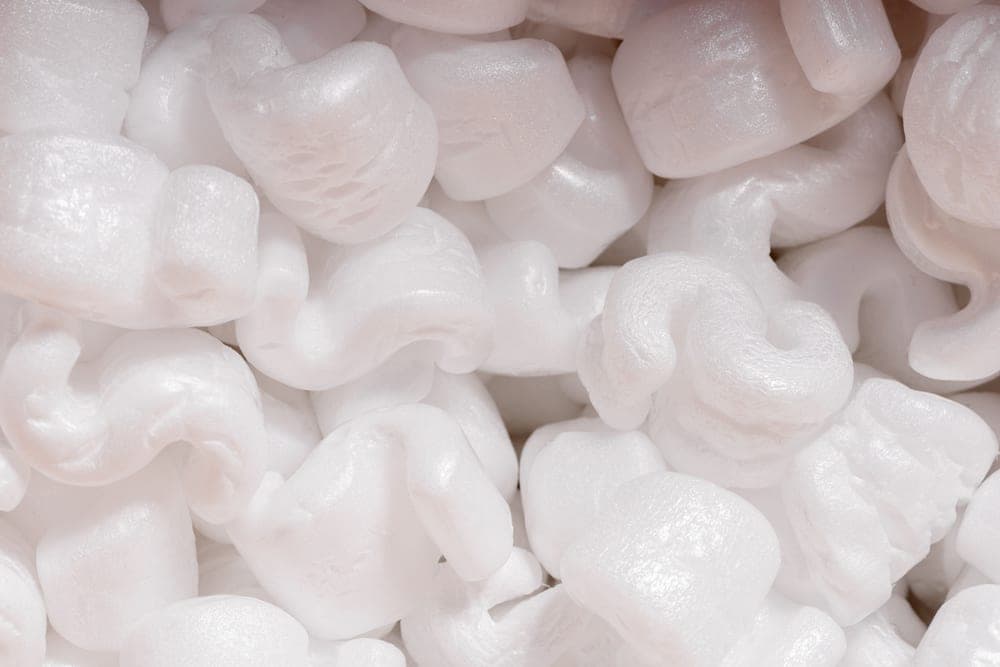
Shredded fills and buckwheat sleep coolest because the gaps between the pieces are air channels. Talalay latex is next: a single piece, but open-celled and often pin-cored. Solid gel memory foam is coolest to first touch and warmest over a night, because it is a sealed slab that softens and wraps around your head.
Every pillow fill on the market sits somewhere on one axis: how much interconnected air space is inside it, and whether that air can be exchanged when you move. Everything else — gel, copper, charcoal, bamboo covers — is a second-order effect on top of that.
Shredded memory foam
The same viscoelastic polyurethane as a solid pillow, torn into pieces. That single manufacturing difference changes the thermal behavior completely: the voids between pieces are interconnected and they get pumped when you shift position, so air actually exchanges rather than sitting still.
It also makes the pillow adjustable, because you can unzip it and remove fill. That is the most useful feature in a pillow and it is worth more than any cooling claim: a pillow set to exactly your neck height contains the least material it possibly can, which is both better alignment and less insulation.
The trade is maintenance. Shredded foam clumps and needs fluffing, and it will not hold a consistent shape the way a molded pillow does.
Talalay latex
Latex is molded as a froth and cured, so the finished material is full of interconnected cells. In the Talalay process the mold is vacuum-expanded and the latex flash-frozen before curing, which produces a lighter and more open structure than the denser Dunlop pour. Many latex pillows are also pin-cored, adding cylindrical channels through the body.
Crucially, latex is elastic rather than viscoelastic. It pushes back immediately and does not soften as it warms, so it never develops the deepening hollow memory foam does. You get consistent support all night from a material that is structurally full of air.
Costs: heavy, firm, not adjustable, and a genuine allergy consideration for a small minority.
Buckwheat hulls
The extreme case and the coolest. Hulls are rigid, irregular shells, so unlike foam pieces or down clusters they do not compress into a solid mass. The void fraction between them stays roughly constant regardless of the weight on top — which is a property nothing else in a bedroom has — and hulls flow, so you can pour some out to set the loft precisely.
It is also the biggest change in what a pillow feels like. Buckwheat is firm, it does not bounce, and it rustles when you move. A meaningful number of people try it and return it, and a meaningful number never use anything else.
Solid gel memory foam
The best-selling shape and the worst performer here. A sealed slab with no path through it, made of a material that softens as it warms and therefore wraps more of your face as the night goes on.
The gel layer is a conduction trick with a hard ceiling: it feels genuinely cold for the first few minutes because heat flows into it, and it stops the moment the gel reaches your skin temperature. Nothing carries that heat away afterwards. A ventilated version with holes drilled through is a real improvement, because it restores some convection path, and it does not change the underlying material behavior.
| Fill | Air structure | Support over the night | Adjustable | Typical price |
|---|---|---|---|---|
| Buckwheat hulls | Rigid loose fill — maximum void | Constant, very firm | Yes, pour hulls out | $30-$55 |
| Shredded memory foam | Interconnected voids, air exchanges on movement | Reshapes as you move | Yes, unzip and remove | $19-$40 |
| Talalay latex | Open cell, often pin-cored | Constant, springs back | No | $60-$210 |
| Down / feather | Loose natural clusters | Compresses flat over hours | Somewhat | $40-$120 |
| Ventilated gel foam | Solid with drilled channels | Softens and wraps | No | $30-$50 |
| Solid gel foam | Sealed slab, no path | Softens and wraps most | No | $35-$65 |
The covers
Most cooling pillows ship with a cold-touch or spacer-knit cover, and the two are different. A cold-touch (Q-Max) facefeels cold on contact and equalizes within minutes — genuinely useful for falling asleep, irrelevant by 2am. A 3D spacer knit is woven with two faces joined by vertical yarns holding an open gap between them, which is a structural airflow layer that keeps working. If a listing mentions a honeycomb or 3D cover, that is the better of the two.
If the latex column is the one you keep coming back to, the four latex pillows in our registry — two head pillows and two body pillows — are compared on what their listings actually publish, including which one names its molding process, on the best latex pillows.
Common questions
Is shredded memory foam cooler than solid memory foam?
Yes, substantially, despite being the identical material. Shredding creates interconnected voids between the pieces, and those voids get pumped when you shift position so air actually exchanges. A solid block is sealed, has no path through it, and softens as it warms so it wraps more of your head over the night.
Is a latex pillow good for hot sleepers?
Yes. Latex is open-celled and frequently pin-cored, so air moves through it, and it is elastic rather than viscoelastic, meaning it springs back instead of molding a heat-trapping hollow. It is heavy, firm and not adjustable, which are the real trade-offs rather than temperature.
Do buckwheat pillows really sleep cooler?
Yes, and by a clear margin. Buckwheat hulls are rigid, so the air spaces between them stay roughly constant no matter how much weight sits on top. The catch is entirely about feel: they are firm, they do not bounce, and they rustle when you move.
What is a 3D or honeycomb pillow cover?
A spacer knit — a fabric woven with two faces joined by vertical yarns that hold an open gap between them. Unlike a cold-touch coating, it is a structural airflow layer, so it keeps working all night rather than for the first few minutes.
Sources
Read next
- Cooling PillowsYour head has high blood flow and touches one small piece of fabric all night.
- Do cooling pillows actually work?Which pillow cooling claims survive the night, and which are five-minute effects.
- Cooling topper materials: gel foam vs latex vs fiberGel foam, latex, PCM and fiber — what each one physically does with your body heat.
- The best natural-fill cooling pillowsLatex and buckwheat pillows that cool by structure and last for years.
- Adjustable vs solid pillows: which sleeps cooler?Loose fill breathes and tunes; solid foam is consistent but hot.
Try the cheap thing first
Work down this list in order. Each step costs more than the one above it, and most people stop before the bottom. Replacing a mattress to fix a problem your sheets were causing is the most expensive mistake in this category.
- 1Pillowcase, then pillowUnder $20 to start
- 2Sheets$25-$60
- 3Top layer$30-$90
- 4Topper or pad$30-$300
- 5The mattress$200-$900
Before any of it: work out which one is actually your problem. If your bedroom is 78°F, none of these will save you.