Cooling topper materials: gel foam vs latex vs fiber
Four materials, four mechanisms, and a clear ranking that runs almost exactly opposite to sales volume.
By Stephen V. · Specs last verified · Prices live as of October 25, 2026
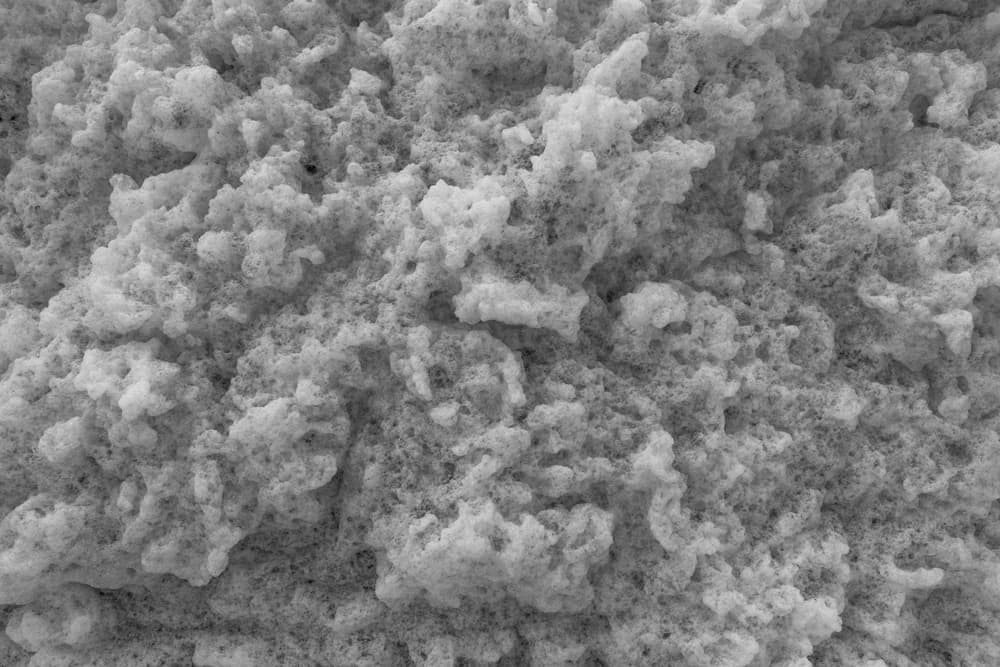
Natural latex is the best cooling topper material because its open-cell, pin-cored structure lets air move through the slab and it responds instantly instead of molding a heat-trapping hollow. Fiber pads are next because they barely insulate. Phase-change pads work until they saturate. Gel memory foam is last, despite being the most sold.
Natural latex
Latex foam is made by whipping liquid latex into a froth and curing it, which produces an interconnected open-cell structure. It is then pin-cored— molded around a grid of pins that leaves cylindrical holes through the slab. Both features are there for manufacturing reasons (curing needs heat to reach the core) and both happen to give air a route through the material.
Just as important, latex is elastic rather than viscoelastic. It pushes back immediately and returns to shape when you move, so it never forms the deepening hollow that memory foam does over a night. You get contour without progressive envelopment.
Two latex processes exist. Talalay vacuum-expands the latex in a mold and flash-freezes it, giving a lighter and more open cell structure. Dunlop pours and cures under gravity, giving a denser, firmer slab. Talalay is generally the cooler and more expensive of the two. Almost no listing says which it is.
The costs are honest ones: latex is expensive, heavy, and a genuine allergy consideration for a small number of people.
Fiber fill
Polyester or viscose fiber quilted into a thin pad. It provides almost no pressure relief, and that is exactly why it is good for hot sleepers: there is barely any material there to insulate you. It changes the surface you touch — which is often the whole problem — and it goes in the washing machine.
Fiber fill compresses permanently over time in the places you use most, so a fiber pad is a two-to-three-year product rather than a ten-year one. At $25-$70, that is a reasonable trade.
Phase-change material (PCM)
A PCM absorbs heat by changing state — typically melting — at a designed temperature, storing energy as latent heat instead of getting warmer. This is genuine thermal engineering and it is the most interesting mechanism in bedding.
It also has a hard, calculable limit. Useful capacity equals the mass of PCM times its latent heat of fusion. Once it has absorbed that much energy, it is fully melted and behaves like ordinary fabric until it re-solidifies. So the question that decides whether a PCM pad buys you twenty minutes or three hours is: how much PCM is in it? Not one listing we looked at publishes that figure, which is why we describe these as a sleep-onset aid rather than a night-long solution.
Note the difference between a PCM layer and a “cold-touch” or Q-Max surface. Q-Max measures how cold a fabric feels in the first seconds of contact; PCM stores real energy. Marketing uses both terms loosely and often together.
Gel-infused memory foam
The category leader by volume and the last one we would recommend for heat. Viscoelastic foam softens as it warms, so it wraps you more closely as the night goes on. Gel beads or a gel layer raise the foam's heat capacity, which means it takes a bit longer to warm up — a real but small effect that stops entirely once the slab reaches your temperature.
Ventilation holes are a meaningful improvement, because they restore some convection path through an otherwise solid block. If you must have memory foam, buy the ventilated version and put it on a slatted base rather than a solid platform so the underside can breathe.
| Material | Mechanism | Contour | Lasts | Price for a queen |
|---|---|---|---|---|
| Talalay latex | Open cell + pin cores | High, instant response | 10+ years | $220-$330 |
| Dunlop / egg-crate latex | Open cell + surface channels | Moderate to high | 8+ years | $100-$180 |
| Fiber pad | Very little material to insulate | Minimal | 2-3 years | $25-$70 |
| Phase-change pad | Latent heat until saturated | Minimal | 3-5 years | $30-$60 |
| Ventilated gel memory foam | Convection via holes | High, slow response | 3-5 years | $40-$90 |
| Solid gel memory foam | Heat capacity only | Moderate, slow | 3-5 years | $40-$60 |
What CertiPUR-US and GOLS actually tell you
Both appear on listings here and both are frequently misread. CertiPUR-US certifies what is notin a polyurethane foam — restricted flame retardants, heavy metals, formaldehyde, high VOC emissions. It says nothing whatsoever about performance or cooling. GOLSis the Global Organic Latex Standard and certifies organic content and processing in latex. Neither is a cooling claim, and a listing that puts either badge next to the word “cooling” is inviting you to connect two unrelated things.
Material also decides what a topper smells like out of the box: polyurethane foam off-gasses and latex does not. What to expect and how long it lasts is on why your mattress topper smells like chemicals.
Common questions
Is latex or memory foam better for hot sleepers?
Latex, clearly. Latex is open-celled and pin-cored so air moves through the slab, and it is elastic rather than viscoelastic, so it springs back instead of molding a deepening hollow around you. Memory foam softens as it warms, which increases how much of you it wraps as the night goes on.
Does gel-infused memory foam sleep cooler?
A little, and only at first. Gel raises the foam's heat capacity so it takes longer to warm up, but it gives the heat nowhere to go. Once the slab has reached your body temperature the gel contributes nothing further.
How long does a phase-change cooling pad stay cool?
It depends entirely on how much phase-change material is in it, because the usable capacity is the PCM mass times its latent heat. No listing we have found publishes that mass, which is why we treat these as a help with falling asleep rather than a solution for the whole night.
What is the difference between Talalay and Dunlop latex?
They are two molding processes. Talalay vacuum-expands the latex and flash-freezes it, producing a lighter and more open cell structure. Dunlop pours and cures under gravity, producing a denser and firmer slab. Talalay generally sleeps cooler and costs more, and most listings do not say which they are.
Does CertiPUR-US mean a foam sleeps cool?
No. CertiPUR-US certifies what is absent from the foam — restricted flame retardants, heavy metals, formaldehyde and high VOC emissions. It is a content and emissions certification and says nothing about thermal performance.
Sources
Read next
- Cooling Mattress ToppersToppers, pads and protectors — three different products people buy interchangeably.
- Are cooling mattress toppers worth it?The honest verdict: often no. When a topper helps, and when it is the cause.
- Why your mattress sleeps hotThe physics of foam conforming, and why 'gel infused' does less than it sounds.
- Latex vs gel cooling toppersStructure vs borrowed time: the two topper materials, honestly compared.
- The best latex mattress toppers for hot sleepersBreathable, supportive latex toppers ranked — and the gel-foam one to skip.
Try the cheap thing first
Work down this list in order. Each step costs more than the one above it, and most people stop before the bottom. Replacing a mattress to fix a problem your sheets were causing is the most expensive mistake in this category.
- 1Pillowcase, then pillowUnder $20 to start
- 2Sheets$25-$60
- 3Top layer$30-$90
- 4Topper or pad$30-$300
- 5The mattress$200-$900
Before any of it: work out which one is actually your problem. If your bedroom is 78°F, none of these will save you.