Skip to content
Chill & Chamber

Cooling Pillows

Pillow sizes: standard vs queen vs king

Size is width and length. Loft is height. Only one of those decides whether your neck is straight, and the other one decides whether your pillowcase fits.

By Stephen V. · Specs last verified · Prices live as of October 25, 2026

We earn a commission if you buy through our links, at no extra cost to you. It never changes what we rank or what we say — how this is funded and how we pick.

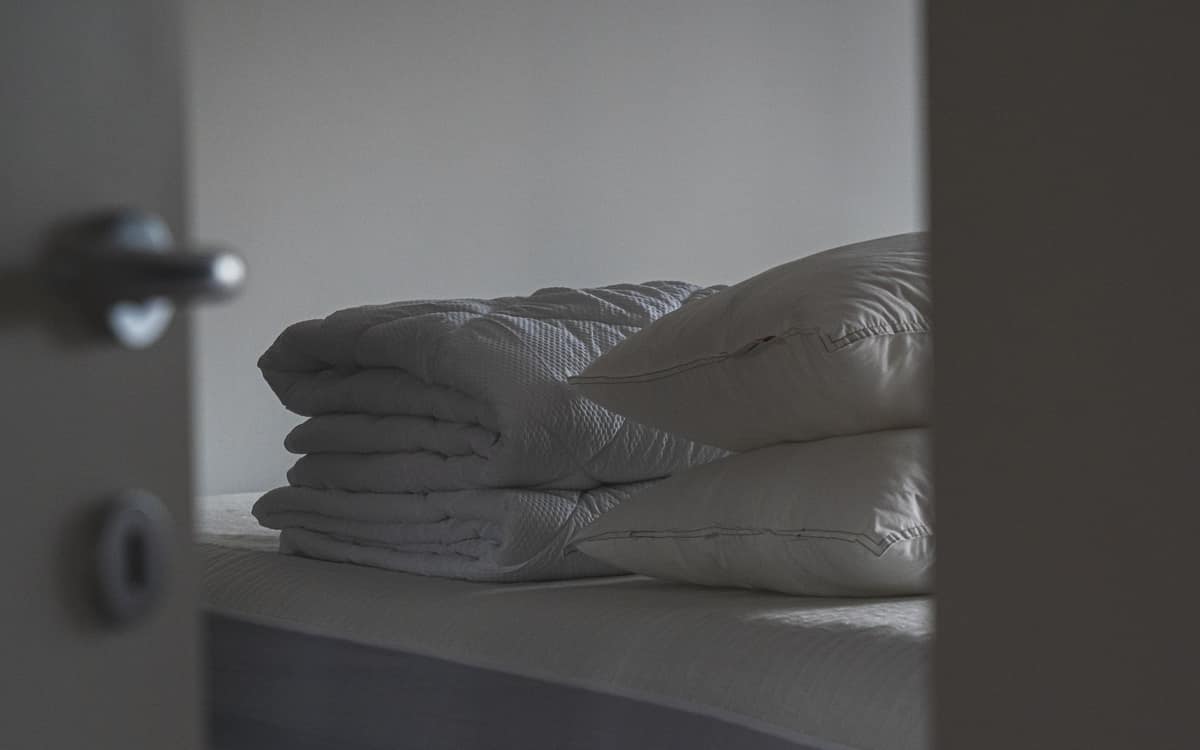
Two stacked white bed pillows beside a folded quilt on a bare mattress

A standard bed pillow is 20 x 26 inches, a super standard is 20 x 28, a queen is 20 x 30, a king is 20 x 36, a body pillow is 20 x 54 and a Euro is a decorative 26 x 26 square. All of them are 20 inches deep except the Euro, so the only thing changing is length. Buy the size that matches the pillowcases you already own, buy the loftthat matches how you sleep, and do not confuse the two — a king pillow is not a better pillow, it is a longer one, and it puts about 38 percent more warm fill next to your head.

This is one of the easier bedding questions to answer and one of the easiest to get quietly wrong, because the sizes sound like quality grades. They are not. A king pillow is not the upgrade over a queen pillow in the way a king mattress is the upgrade over a queen mattress. It is simply ten inches longer.

Every bed pillow size, in inches

These dimensions are consistent across manufacturers. The chart below follows Casper’s published pillow and pillowcase size chart, which matches the figures used across the category.

US bed pillow sizes. Pillowcases are named for the pillow they fit, so a queen case is cut for a 20 x 30 pillow.
SizeDimensionsWhat it is for
Standard20 x 26 inThe default. One across a twin, two across a full or queen
Super standard20 x 28 inTwo inches longer than standard; uncommon, and cases are hard to find
Queen20 x 30 inA longer standard. Suits queen and king beds
King20 x 36 inTwo across a king; also used lengthwise as a back support
Body20 x 54 inSide sleepers and pregnancy support, not head support
Euro26 x 26 inDecorative square for propping against a headboard. Not for sleeping on

Two things fall straight out of that table. First, every sleeping pillow is 20 inches deep, so the front-to-back dimension — the one your head actually uses — never changes. Second, the sizes are a length ladder, and length is about how the bed looks and how much room you have to move around during the night.

Which size fits your bed

Casper’s guidance is the standard advice here, and it is worth taking literally: a standard pillow fits comfortably on a twin or twin XL, and two standards sit side by side on a full or a queen. Queen pillows suit queen and king beds. King pillows are cut to crown a California king.

The arithmetic behind that is simple enough to do yourself. Two standard pillows laid side by side come to 52 inches. A queen mattress is 60 inches wide and a king is 76, figures that were unanimous across every listing we read for comforter and duvet sizes. So two standards on a queen leave a visible gap at each side, which is a styling complaint rather than a sleeping one. Two queens come to exactly 60 inches and fill a queen bed edge to edge. Two kings come to 72 and sit neatly inside a king.

None of that affects your neck. It affects whether the bed looks finished and how far you can roll before you run out of pillow.

The part that actually matters: loft, not length

Pillow size is a width-and-length measurement. What decides whether your head is supported in a straight line with your spine is loft— the height of the pillow under your head once it has compressed. Loft is set by the fill and the quantity of it, and it has no relationship at all to whether the listing says standard or king.

Side sleepers need the most loft, because they are filling the gap between the shoulder and the ear. Back sleepers need less. Stomach sleepers need almost none, and frequently sleep better on a pillow so thin it barely qualifies. Buying a king pillow when you needed a low loft gets you a long pillow that is still too tall. The ranking by fill type is on pillow fill and loft, and if you are not sure where you land, an adjustable shredded-fill pillow lets you pull stuffing out by the handful until it is right — which is why it is the first pick on this page.

How size changes the temperature

There is a real thermal effect here, and it cuts both ways, so it is worth laying out honestly rather than picking the half that supports a recommendation.

Bigger means more warm material.A king pillow has 720 square inches of surface against a standard’s 520 — about 38 percent more fill sitting next to your head all night, holding onto the heat you put into it. A queen is about 15 percent more than a standard. If you sleep hot and your pillow is the thing that wakes you, a smaller pillow genuinely holds less heat.

Bigger also means more cool territory.The cool side of the pillow is not folklore — it is conduction into material you have not warmed up yet, and it is the single most reliable cooling trick available at 3am because it costs nothing. A longer pillow gives you more unwarmed area to move into without getting out of bed. That is a real advantage of a king pillow for a hot sleeper, and it is the one argument for oversizing.

Which effect wins depends on how you sleep. If you stay in one position, the extra fill is just extra fill and the standard is the better buy. If you move around and chase cool spots, the longer pillow is working for you. Either way the fill material matters far more than the dimensions: shredded fill and latex have air between and through them, solid memory foam does not. The mechanics of that are on how to keep a pillow cool.

The sizing mistake that makes a pillow sleep hotter

Here is the one genuinely consequential error, and almost everyone has made it: putting a queen pillow in a standard pillowcase.

A pillowcase is cut for a specific pillow, and a queen pillow is four inches longer than the case it is being forced into. The pillow does fit — that is the problem. It fits by being compressed, and compressing a pillow squeezes out the air gaps that were doing the cooling. Shredded foam that was loose and airy becomes a dense block. The pillow also feels firmer and taller than it did loose, which changes your loft without you deciding to change it. If a pillow started sleeping hot after you changed the bedding, this is the first thing to check.

The opposite error is milder but still annoying. A standard pillow in a king case leaves sixteen inches of loose fabric that bunches into ridges under your face and slides off during the night. Casper makes the same point about fit from the other direction: an oversized case allows friction, shifting, and lets sweat and dirt work past the opening.

This matters more than it sounds because the pillowcase is the cheapest effective cooling upgrade on the entire bed — a few dollars for the layer that is physically against your face for eight hours. Buying a good one and then defeating it with the wrong size is a bad trade. Our ranking is on the best cooling pillowcases.

Pillow protectors have exactly the same problem and are easier to get wrong, because a protector is often a laminate or a tight knit stretched over the pillow. Stretched over an oversized pillow it becomes a taut, sealed skin that blocks the moisture movement you bought the pillow for. Sizes and the trade-offs are on cooling pillow protectors.

So which should you buy?

Buy standard unless you have a specific reason not to. It is the most widely stocked size, which means the cheapest and widest choice of cooling pillowcases, and it holds the least warm fill.

Buy queen if you want two pillows to fill a queen bed edge to edge, or if you move around enough to want more cool surface. Check that your cases are queen.

Buy king if you have a king or California king bed, or if you prop yourself up to read and want a long back support. It is the most pillow and the most trapped heat; it is also the most room to roll.

Skip super standard unless you already own the cases. Two inches is not worth the hunt for bedding that fits.

Do not buy Euro squares to sleep on. They are 26 x 26 decorative cushions, and the 26-inch depth puts far too much under your head.

And whichever you choose, replace it when it stops holding loft rather than when it looks dirty — a flattened pillow is a pillow you are no longer getting any air through. The test is on when to replace a pillow.
Quick picks

Ranked on published construction and buyer fit. Select a row to jump to the full write-up. We have not slept on any of these — here is exactly what we do instead.

#ProductBest forHow it coolsPrice
1
Utopia Bedding Shredded Memory Foam Pillow, Adjustable Fill

Utopia Bedding Shredded Memory Foam Pillow, Adjustable Fill

Most people, cheaply

Best if you are unsure of your loftAirflow (open structure)
$21.89 · View on Amazon

$34.9937% off

Price as of October 25, 2026. #ad How we’re funded

2
RejuveNite American Talalay Latex Bed Pillow, Queen, High Profile

RejuveNite American Talalay Latex Bed Pillow, Queen, High Profile

Support without a heat-trapping block

Best queen-size pillowAirflow (open structure)
$69.99 · View on Amazon

Price as of October 25, 2026. #ad How we’re funded

3
Bedsure Bamboo-Viscose Pillowcases, Set of 2

Bedsure Bamboo-Viscose Pillowcases, Set of 2

Night sweats rather than a hot first hour

Best cooling pillowcaseMoisture wicking
$9.97 · View on Amazon

$17.4943% off

Price as of October 25, 2026. #ad How we’re funded

4
Elegear Q-Max 0.5 Cooling Pillowcases, Dual-Sided

Elegear Q-Max 0.5 Cooling Pillowcases, Dual-Sided

Falling asleep on a warm night

Best for the first ten minutesCold-touch conduction
$16.88 · View on Amazon

$18.7510% off

Price as of October 25, 2026. #ad How we’re funded

5
Weekender Ventilated Cooling Gel Memory Foam Pillow

Weekender Ventilated Cooling Gel Memory Foam Pillow

People who want solid foam and accept the trade

Skip thisLess insulation
$34.99 · View on Amazon

Price as of October 25, 2026. #ad How we’re funded

#1Best if you are unsure of your loft

Utopia Bedding Shredded Memory Foam Pillow, Adjustable Fill

Shredded foam beats a solid foam block for heat for one structural reason: the gaps between pieces are air channels. Being able to remove fill makes it the most flexible cheap pillow here.

What it gets right

  • Shredded fill leaves air gaps a solid block does not have
  • Remove fill to lower the loft — the single most useful adjustment in a pillow
  • Washable cover

Trade-offs

  • Shredded foam clumps and needs regular fluffing
  • Still polyurethane foam, so it warms up with you
  • No fill weight published
Published specifications
MaterialShredded viscoelastic memory foam
How it cools (our read)Airflow (open structure)
Certifications statedNone stated

Why the construction matters. A solid memory foam pillow is a sealed insulating block under your head. Shredding the same material into pieces creates interconnected voids — the fill is identical, the thermal behavior is not.

Specifications read from the product listing on July 23, 2026. “Not published” means the listing does not state that figure.

#2Best queen-size pillow

RejuveNite American Talalay Latex Bed Pillow, Queen, High Profile

Talalay latex is molded with air pushed through it, so the finished core is full of interconnected cells. For a hot sleeper who wants support, this is the material to buy — and this is the rare listing that names the process, the factory and the certificate number.

What it gets right

  • Talalay process produces an open, interconnected cell structure — air moves through the core
  • Holds its shape rather than slowly compressing — the listing warrants shape retention for the life of the pillow
  • OEKO-TEX Standard 100 Class 1, certificate 11-24246, stated free of petroleum, VOCs and off-gassing
  • 400-thread-count cotton sateen cover, machine washable, with a fitted liner

Trade-offs

  • High profile at 7 inches — too much loft if you sleep on your stomach or like a slim pillow
  • 4 lb, which is heavy for a pillow
  • Latex allergy is a real consideration for a small minority
Published specifications
MaterialTalalay latex, 400-thread-count cotton sateen cover
How it cools (our read)Airflow (open structure)
Certifications statedOEKO-TEX Standard 100 Class 1

Why the construction matters. Talalay and Dunlop are two latex molding processes. Talalay vacuum-expands and flash-freezes the latex, which yields a lighter, more open cell structure than the denser Dunlop pour.

Specifications read from the product listing on July 23, 2026. “Not published” means the listing does not state that figure.

#3Best cooling pillowcase

Bedsure Bamboo-Viscose Pillowcases, Set of 2

Viscose pillowcases do the boring, useful thing: absorb sweat off your face and dry quickly. Less dramatic than a cold-touch case and better over a whole night.

What it gets right

  • Absorbs moisture into the fiber instead of holding it against your skin
  • Smooth surface, easy on hair and skin
  • Cheap enough to own several and change them mid-week

Trade-offs

  • No cold-touch sensation at all — it does not feel like anything when you lie down
  • Viscose is weak wet; wash cold
  • No fabric weight published
Published specifications
MaterialRayon derived from bamboo
How it cools (our read)Moisture wicking
Certifications statedNone stated

Why the construction matters. Pillowcases are the highest-leverage cheap change in a bed, because your head and neck have high blood flow and are in continuous contact with one small piece of fabric all night.

Specifications read from the product listing on July 23, 2026. “Not published” means the listing does not state that figure.

#4Best for the first ten minutes

Elegear Q-Max 0.5 Cooling Pillowcases, Dual-Sided

The rare cold-touch product that publishes its number and gives you a cotton side to flip to when the cool side has warmed up. That flip is the honest design answer to conduction's limit.

What it gets right

  • Publishes a Q-Max value of 0.5 — a stated, comparable figure, which most cold-touch listings avoid
  • Cotton reverse gives you a genuinely different surface to turn to
  • Cheapest possible intervention that does anything at all

Trade-offs

  • Q-Max measures instantaneous contact coolness, not sustained cooling — it describes the first seconds
  • The cool side warms to skin temperature in minutes; the flip is the feature because of that
  • Synthetic face does not absorb sweat
Published specifications
MaterialCold-touch nylon face, cotton reverse
How it cools (our read)Cold-touch conduction
Certifications statedNone stated

Why the construction matters. Q-Max is a measured peak heat-flux value from a standard contact test (higher = cooler to first touch). It is a real instrument reading, and it deliberately says nothing about the following eight hours.

Specifications read from the product listing on July 23, 2026. “Not published” means the listing does not state that figure.

#5Skip this

Weekender Ventilated Cooling Gel Memory Foam Pillow

Skip this one

A solid foam pillow that at least admits the problem and drills holes in itself. If you want the molded-foam feel and know the heat cost, this is a reasonable version of it.

What it gets right

  • Ventilation channels through the core give trapped air a route out
  • Consistent shape night after night, unlike shredded fill
  • Widely available at a low price

Trade-offs

  • Still a solid viscoelastic block — the fundamental heat behavior is unchanged
  • Gel infusion saturates once it reaches your skin temperature
  • Loft is fixed; you cannot adjust it
Published specifications
MaterialGel-infused viscoelastic memory foam
How it cools (our read)Less insulation
Certifications statedNone stated

Why the construction matters. Ventilation holes work by convection, which needs a temperature difference and somewhere for the air to go. They help most when the room is cool and least when it is not.

Specifications read from the product listing on July 23, 2026. “Not published” means the listing does not state that figure.

Common questions

What size is a standard pillow?

20 x 26 inches. It is the default bed pillow size in the US and the one with the widest choice of pillowcases. One fits across a twin or twin XL; two sit side by side on a full or queen with a small gap at each side.

What is the difference between a standard and a queen pillow?

Four inches of length, and nothing else. A standard is 20 x 26 and a queen is 20 x 30; both are 20 inches deep. A queen pillow holds about 15 percent more fill, which means a little more warm material next to your head and a little more cool surface to move onto. It does not provide more support — that is loft, which is set by the fill and not by the size.

Can I put a queen pillow in a standard pillowcase?

You can, and you should not. The pillow fits by being compressed, which squeezes out the air gaps between the fill — so a shredded-foam pillow that was loose and breathable becomes a dense block that sleeps noticeably hotter. It also raises the effective loft, changing your neck position without your deciding to. Buy cases that match the pillow.

Does pillow size affect how hot you sleep?

Yes, in two opposing ways. A king pillow has about 38 percent more surface area than a standard, so it holds more of the heat you put into it. It also gives you more unwarmed area to move onto during the night, which is the most reliable free cooling trick there is. If you sleep still, smaller is cooler; if you move around chasing cool spots, bigger helps. The fill material matters considerably more than either.

What size pillow should I buy for a queen bed?

Either works. Two standard pillows come to 52 inches across a 60-inch queen mattress, leaving a gap at each side that is purely a styling question. Two queen pillows come to exactly 60 inches and fill the bed edge to edge. Pick based on the pillowcases you own and the loft you need, not on matching the word on the mattress.

Sources

Try the cheap thing first

Work down this list in order. Each step costs more than the one above it, and most people stop before the bottom. Replacing a mattress to fix a problem your sheets were causing is the most expensive mistake in this category.

  1. 1Pillowcase, then pillowUnder $20 to start
  2. 2Sheets$25-$60
  3. 3Top layer$30-$90
  4. 4Topper or pad$30-$300
  5. 5The mattress$200-$900

Before any of it: work out which one is actually your problem. If your bedroom is 78°F, none of these will save you.