Skip to content
Chill & Chamber

Sleeping Hot

Why you wake up hot in the middle of the night

There is a reason it is always the same part of the night, and it explains why the cooling blanket you bought feels like it stopped working.

By Stephen V. · Specs last verified · Prices live as of October 25, 2026

We earn a commission if you buy through our links, at no extra cost to you. It never changes what we rank or what we say — how this is funded and how we pick.

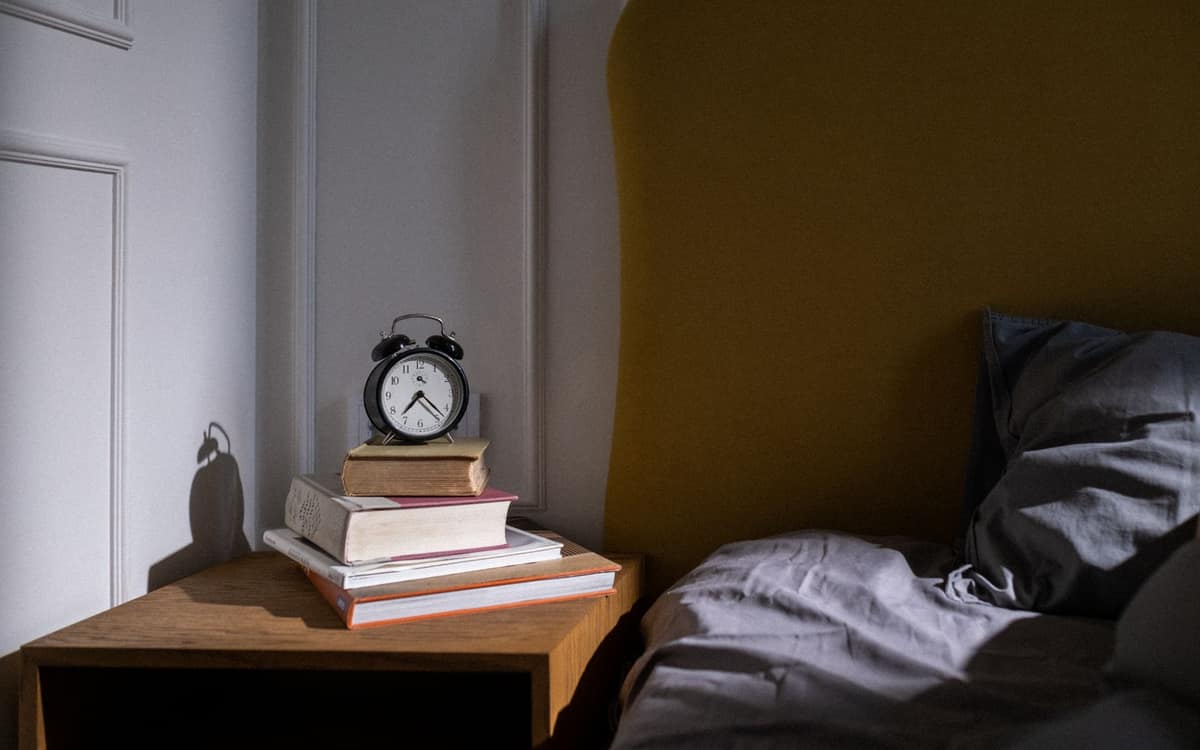
An alarm clock and books on a nightstand beside a bed

Three things stack up at the same hour. Your core temperature reaches its nightly minimum around two to four hours before you normally wake, so your body is actively dumping heat right then. Your sleep is lighter in the second half of the night— more REM, less deep sleep — so you notice things that would not have woken you at midnight. And every passive cooling product in your bed has saturated by then: cold-touch fabric equalized in minutes, phase-change material absorbed its load in the first hour or two, and the foam under you has reached your own temperature. The fixes that still work at 3am are the ones that do not saturate: an open weave, moving air, and a fresh cool surface you can roll onto.

“Why do I wake up hot at 3am” is one of the most-asked versions of this problem and it is usually answered as though the hour were incidental. It is not. The timing is the most useful clue you have, because it points at which of the three causes is yours.

Cause one: your own temperature curve

Core body temperature runs on a circadian rhythm with a daily swing of roughly one to two degrees Fahrenheit. It falls through the evening — that fall is part of what lets you fall asleep at all — and reaches its lowest point in the small hours, typically a couple of hours before habitual wake time, before climbing again toward morning.

Here is the part that matters: reachingthe minimum requires actively shedding heat, and your body does that primarily by dilating the blood vessels in your hands, feet and face to dump heat to the surroundings. If the surroundings will not take it — a warm room, a saturated mattress surface, a comforter with too much loft — the attempt shows up as feeling hot and waking. You are not overheating because something went wrong; you are overheating because your body is trying to cool down and the bed is in the way. The temperature targets are on the best temperature for sleep.

Cause two: your sleep is lighter by then

Sleep is not uniform across the night. Deep slow-wave sleep is front-loaded into the first few cycles, and the second half of the night shifts toward longer REM periods and lighter stages. The practical consequence is that a disturbance at 3am wakes you when the same disturbance at midnight would not have.

So part of what people experience as “it gets hot at 3am” is really “it has been too warm since midnight and 3am is when I started noticing.” That distinction matters, because it means the fix belongs at bedtime rather than at the moment you wake.

Cause three: everything in your bed has saturated

This is the one that explains the most frustrating version of the complaint — the person who bought a cooling product, felt it work on night one, and now wakes at 3am anyway. Nothing has failed. Most cooling products have a finite capacity and they spend it early.

How long each cooling mechanism keeps working, and what state it is in by 3am. Mechanisms as published or as our read of the construction each listing describes; no listing in this category publishes a PCM mass, which is the figure that would set the duration.
MechanismHow it worksState by 3am
Cold-touch fabric (Q-Max)Conducts heat out of skin on contactSpent in minutes — it is at your skin temperature
Phase-change materialAbsorbs heat by melting at a set temperatureSaturated, usually within the first hour or two
Gel-infused memory foamRaises the foam's heat capacitySaturated, and the foam has softened around you
Low-loft top layerTraps less warm air above youStill working — no capacity to use up
Open weave (percale, linen)Lets room air move through the clothStill working, as long as the room is cooler
Moving air (fan)Drives evaporation off your skinStill working — the only active mechanism

Read that table as a shopping rule. If you wake at 3am, do not buy anything whose mechanism is in the top half of it. A cold-touch blanket is a get-to-sleep aid, and a good one — what it cannot be is a 3am fix, because a passive fabric has nowhere to put the heat it takes. The same ceiling applies to phase-change pads, which is why we describe them as excellent for falling asleep and not a solution for the small hours. What the Q-Max figure does and does not promise is on Q-Max cooling ratings.

What to change, in order

If you wake up dry but hot: this is a heat-transfer problem and you want airflow. A cotton percale or linen sheet, a lower-loft top layer, and room air that is actually cooler than you are. An open weave does not saturate, which is exactly why it is the fix that still works at 3am.

If you wake up damp: this is a moisture problem, and absorption matters more than airflow. A cellulose viscose or an engineered wicking fiber moves the sweat; a polyester sheet traps it. The picks are on cooling sheets for night sweats, and the causes worth ruling out are on night sweats causes and fixes.

If it happens every single night regardless: stop adding passive layers and add an active one. An under-sheet fan is the cheapest thing that does work rather than slowing heat down, because evaporating sweat absorbs far more heat than any fabric can conduct away. Its one condition is that the room air has to be cooler than you are.

And the free one:roll over onto a cool part of the bed, and flip the pillow. Both work for the same reason — a surface that has not been under you has not saturated — and it is why a bigger bed and a second pillow genuinely help. More of that on how to keep a pillow cool.

The four things that are usually in the room, not the bed

Alcohol in the evening. It dilates blood vessels and disrupts the second half of the night specifically, which is the half you are waking in. This is the single most common non-bedding explanation for a reliable 3am wake-up.

Heating on a timer. Many systems run a pre-dawn cycle. If your 3am is suspiciously punctual, check the thermostat schedule before you buy anything.

A late heavy meal or a hard workout. Both raise the heat your body is still shedding hours later, which works directly against the temperature fall described above.

Humidity. At high relative humidity, sweat cannot evaporate, and evaporation is your most powerful cooling route. A bedroom that is tolerable at 40% humidity can be unbearable at the same temperature and 70%. The detail is on humidity and sleeping hot.

When it is worth mentioning to a doctor

Most middle-of-the-night overheating is environmental, and most of this site is about fixing the environment. But drenching night sweats that soak through nightclothes or bedding, sweats that come with fever, unintended weight loss or persistent fatigue, and a sudden change in a long-standing pattern are worth raising with a clinician rather than solving with bedding. That is not a hedge — it is the one case where buying a cooler sheet is the wrong first move.

If you’re drenched most nights, or it started suddenly, that’s worth raising with a doctor — it’s outside what bedding can fix, and outside what we cover.
Quick picks

Ranked on published construction and buyer fit. Select a row to jump to the full write-up. We have not slept on any of these — here is exactly what we do instead.

#ProductBest forHow it coolsPrice
1
LANE LINEN 100% Organic Cotton Percale Sheet Set

LANE LINEN 100% Organic Cotton Percale Sheet Set

Almost everyone, as a first move

The fix that does not saturateAirflow (open structure)
$44.99 · View on Amazon

Price as of October 25, 2026. #ad How we’re funded

2
Elegear Arc-Chill 3.0 + PCM Cooling Mattress Pad

Elegear Arc-Chill 3.0 + PCM Cooling Mattress Pad

People whose problem is getting to sleep, not staying asleep

Best for getting back to sleepPhase-change material
$57.99 · View on Amazon

Price as of October 25, 2026. #ad How we’re funded

3
Bed Fan Under-Sheet Bed Cooling Fan, Adjustable Speed

Bed Fan Under-Sheet Bed Cooling Fan, Adjustable Speed

The cheapest genuinely active option

Best if it happens every nightActive cooling (powered)
$69.99 · View on Amazon

Price as of October 25, 2026. #ad How we’re funded

4
Topcee Q-Max 0.5 Cooling Blanket

Topcee Q-Max 0.5 Cooling Blanket

A cool surface at lights-out, nothing more

Skip thisCold-touch conduction
$25.99 · View on Amazon

$29.9913% off

Price as of October 25, 2026. #ad How we’re funded

#1The fix that does not saturate

LANE LINEN 100% Organic Cotton Percale Sheet Set

Percale in organic cotton at a price where you can own two sets and never sleep on a damp one. If you only change one thing about your bed, change to this weave.

What it gets right

  • Percale is a plain one-over-one-under weave — the loosest common cotton structure, so air moves through it
  • Cotton absorbs sweat instead of sitting on top of it the way polyester does
  • Cheap enough to buy two sets, which matters more than any single feature

Trade-offs

  • Crisp rather than silky — genuinely a different feel, and some people dislike it
  • Wrinkles out of the dryer; percale always does
  • Listing does not publish a thread count or GSM
Published specifications
Material100% organic cotton
How it cools (our read)Airflow (open structure)
WeavePercale
Thread countNot published
Fabric weight (GSM)Not published
Certifications statedNone stated

Why the construction matters. Percale is defined by the weave, not the thread count: one thread over, one under, which leaves more open area between yarns than sateen's four-over-one float. That open area is the cooling.

Specifications read from the product listing on July 23, 2026. “Not published” means the listing does not state that figure.

#2Best for getting back to sleep

Elegear Arc-Chill 3.0 + PCM Cooling Mattress Pad

The most interesting mechanism here and the one with the clearest limit: phase-change material absorbs heat until it saturates, then stops. Excellent for falling asleep, not a solution for 4am.

What it gets right

  • Phase-change material genuinely absorbs heat — it is a real physical process, not a surface feel
  • The cold-touch surface makes getting into bed noticeably easier on a warm night
  • Far cheaper than any powered cooling system

Trade-offs

  • A PCM layer has a finite heat capacity; once it has absorbed its load it behaves like ordinary fabric until it re-solidifies
  • 'Q-Max' cold-touch numbers describe the first few seconds of contact, not the night
  • Listing publishes no PCM mass, which is the number that would tell you how long it lasts
Published specifications
MaterialNylon cold-touch face with phase-change layer
How it cools (our read)Phase-change material
Certifications statedNone stated

Why the construction matters. Phase-change materials store energy by melting at a set temperature. The useful capacity is the mass of PCM times its latent heat — so without a published PCM mass, nobody can tell you how many hours it buys.

Specifications read from the product listing on July 23, 2026. “Not published” means the listing does not state that figure.

#3Best if it happens every night

Bed Fan Under-Sheet Bed Cooling Fan, Adjustable Speed

The cheapest thing on this site that does actual work rather than slowing heat down. Pushing room air under the sheet drives evaporation, which is the most powerful cooling process available to a human body.

What it gets right

  • Evaporative cooling from moving air over damp skin beats every passive fabric here
  • A fraction of the price of a water-circulating system
  • Adjustable speed, so you can run it low all night

Trade-offs

  • Only works if the room air is cooler than you are — useless in an 80°F bedroom
  • Audible, and it moves the sheets around
  • No airflow rate published
Published specifications
MaterialUnder-sheet fan unit
How it cools (our read)Active cooling (powered)
Certifications statedNone stated

Why the construction matters. Evaporating a gram of sweat absorbs roughly 2,400 joules — far more heat than any fabric can conduct away. That is why moving air over skin outperforms every cold-touch product in this category, and why it fails in a humid room.

Specifications read from the product listing on July 23, 2026. “Not published” means the listing does not state that figure.

#4Skip this

Topcee Q-Max 0.5 Cooling Blanket

Skip this one

Skip this as your only fix. A cold-touch blanket does exactly what it says for about ten minutes, and listings that describe it as absorbing heat all night are describing something fabric cannot do.

What it gets right

  • Genuinely cool to first touch, and it does publish a Q-Max figure
  • Cheap, and useful as a top layer for getting to sleep

Trade-offs

  • Conduction stops the moment the fabric reaches your skin temperature
  • Nylon face does not absorb sweat, so a sweaty night gets worse, not better
  • 'Absorbs heat to keep you cool' overstates what a passive fabric can do — it has nowhere to put the heat
Published specifications
MaterialCold-touch nylon face, polyester reverse
How it cools (our read)Cold-touch conduction
Certifications statedNone stated

Why the construction matters. A passive fabric cannot remove heat from a system; it can only conduct it to somewhere cooler. Once the blanket and your skin are the same temperature, the flow stops. That is why the flip and the airflow options beat cold-touch over a full night.

Specifications read from the product listing on July 23, 2026. “Not published” means the listing does not state that figure.

Common questions

Why do I wake up hot at 3am every night?

Three things coincide. Your core body temperature reaches its nightly minimum a couple of hours before your usual wake time, so your body is actively dumping heat right then. Your sleep is lighter in the second half of the night, so you notice what would not have woken you at midnight. And every passive cooling product in your bed has saturated by then — cold-touch fabric in minutes, phase-change material in an hour or two.

Why does my cooling blanket stop working in the middle of the night?

Because its mechanism has a finite capacity. A cold-touch fabric conducts heat out of your skin until the fabric and your skin are the same temperature, which takes a few minutes, and a passive fabric has nowhere to put that heat afterwards. Phase-change material absorbs heat by melting and stops once it has melted. Neither has failed — they were never going to last until 3am.

What actually works for waking up hot in the middle of the night?

The mechanisms that do not saturate: an open weave such as cotton percale or linen that lets room air move through the cloth, a lower-loft top layer so less warm air is trapped above you, and moving air from a fan to drive evaporation. Rolling onto a cool part of the bed and flipping the pillow work for the same reason — a surface that has not been under you has not saturated.

Does alcohol make you wake up hot at night?

It is one of the most common non-bedding explanations. Alcohol dilates blood vessels and disrupts the second half of the night in particular, which is exactly the half you are waking in. If your 3am wake-ups track your evenings, that is worth testing before buying anything.

Is waking up hot the same as night sweats?

No, and the distinction decides what to buy. Waking up warm and dry is a heat-transfer problem and the answer is airflow — an open weave, less loft, cooler room air. Waking up damp is a moisture problem and the answer is absorption: a cellulose viscose or an engineered wicking fiber rather than polyester. Drenching sweats that soak through bedding are worth raising with a clinician.

Should I turn the thermostat down at night?

Usually yes, and check the schedule while you are there. Sleep research consistently puts the comfortable range for most people around 60 to 68 F, and many heating systems run a pre-dawn cycle that lands squarely in the hour people report waking hot. If your 3am is suspiciously punctual, the thermostat is the cheapest thing to rule out.

Try the cheap thing first

Work down this list in order. Each step costs more than the one above it, and most people stop before the bottom. Replacing a mattress to fix a problem your sheets were causing is the most expensive mistake in this category.

  1. 1Pillowcase, then pillowUnder $20 to start
  2. 2Sheets$25-$60
  3. 3Top layer$30-$90
  4. 4Topper or pad$30-$300
  5. 5The mattress$200-$900

Before any of it: work out which one is actually your problem. If your bedroom is 78°F, none of these will save you.