Skip to content
Chill & Chamber

Sleeping Hot

Is wool good for hot sleepers?

Sometimes, in one specific construction, for one specific problem — and the evidence behind the claim is far weaker and far more interesting than either side of the argument admits.

By Stephen V. · Specs last verified · Prices live as of October 25, 2026

We earn a commission if you buy through our links, at no extra cost to you. It never changes what we rank or what we say — how this is funded and how we pick.

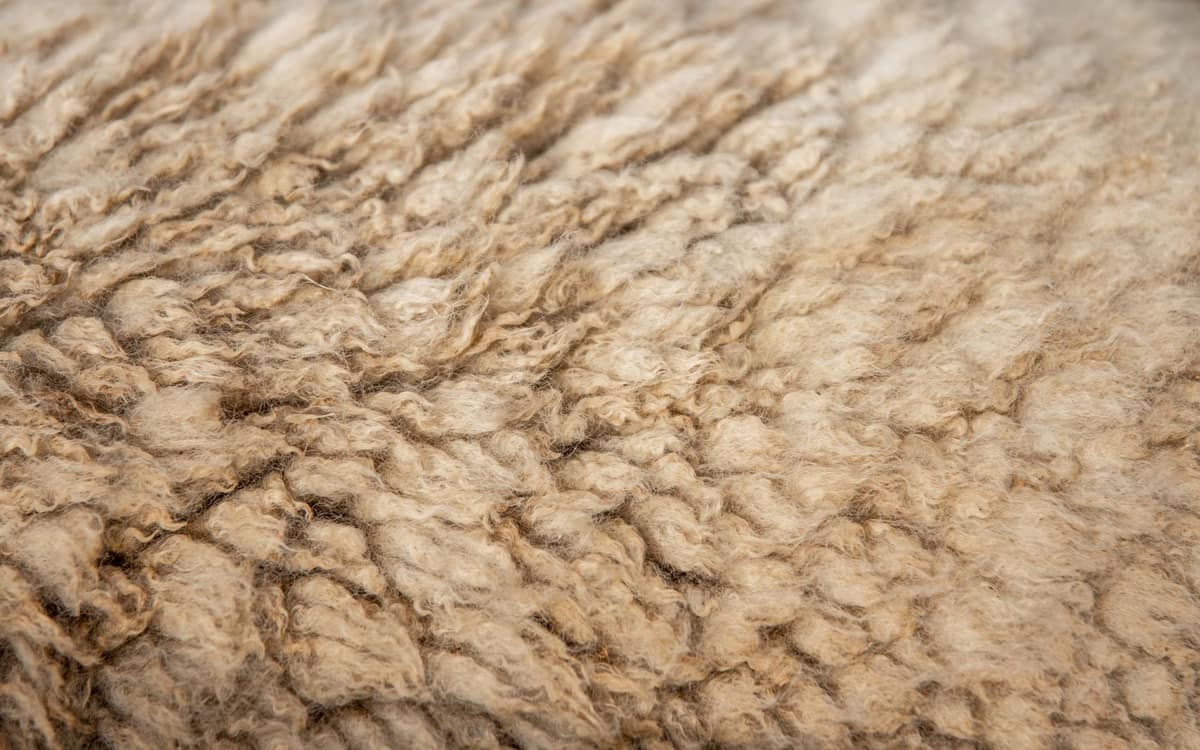
Close-up of natural beige wool texture

Wool is good for one kind of hot sleeper and bad for the other. If you wake up damp, wool is among the best fibers you can own: it absorbs water vapor into the fiber itself and releases it slowly, which keeps the air at your skin from saturating. If you wake up merely hot, wool is the wrong purchase, because it is an insulator and the wool industry’s own research sells it as one. The only construction worth considering in a warm room is a low-GSM wool duvet fill or a wool pillow — never a woven wool blanket — and the fill weight on the listing is the entire decision.

Wool occupies a strange position in cooling bedding. It is the fiber humans used for warmth for ten thousand years, and it is now sold with the words “temperature-regulating” on the package. Both of those things are true at once, which is confusing, so it is worth separating what wool actually does from what it is marketed as doing — and then looking at what the published evidence supports, because this is one of the few corners of bedding where there is any.

What wool actually does

Wool is strongly hygroscopic: it takes water vapor into the body of the fiber rather than carrying it along the surface. That is a different mechanism from everything else we rank on this site. Percale and linen work by airflow— open structure, air moves, heat goes with it. Lyocell and viscose work by wicking— liquid spreads out and evaporates. Cold-touch nylon works by conduction, for about four minutes. Wool works by buffering: it soaks up the moisture your body is putting out and gives it back slowly, so the humidity in the small pocket of air between you and the bedding stays more stable than it otherwise would.

That matters because humid air is why a warm room feels unbearable. Your main cooling mechanism at night is evaporation from your skin, and evaporation slows down as the air around you approaches saturation. A fiber that absorbs that moisture is genuinely helping, even though it is not moving any air. This is the honest case for wool, and it is a real one.

The same property is also why wool is warm. Material that holds water vapor and sits in a lofted layer above you is insulation, and no amount of marketing changes the direction that heat flows. Wool is a buffer and an insulator simultaneously, and which of those two you experience depends almost entirely on how much of it there is.

What the evidence actually shows

The study everyone cites is a real one, and it does not say what the marketing implies. Shin, Halaki, Swan, Ireland and Chow ran a polysomnography trial published in Nature and Science of Sleepin 2016: seventeen healthy young adults, nine nights each in a sleep laboratory, randomized across three binary factors — cotton versus wool sleepwear, polyester versus wool bedding, and an ambient temperature of 17 °C or 22 °C at 60% relative humidity.

Two findings matter here. The first is that wool sleepwearshortened sleep onset latency significantly — at 17 °C participants fell asleep in 9.9 ± 6.6 minutes in wool against 18.1 ± 0.9 minutes in cotton — with no difference at 22 °C. The second, stated in the abstract in six words, is this: “There was no bedding effect on sleep.” The wool duvet did nothing measurable, in either condition.

And note the conditions. 17 °C is 63 °F; 22 °C is 72 °F. The one result in wool’s favor appeared in the colder of two cool rooms, and disappeared in the warmer one. Nobody in that trial was a hot sleeper in a hot bedroom, which is the condition you are reading this page in. The headline study for wool bedding is a study of wool pajamas in a cold room that found nothing for bedding at all.

The industry’s own research is more revealing still. In January 2026, British Wool, the International Wool Textile Organisation and Bangor University published a bedding report comparing full-sized duvets of similar tog ratings and concluded that wool is “a better insulator than down by 17%, synthetic by 25% and feather and down by 30%.” That is the wool industry’s flagship selling point, and it is a warmth claim. Read it as the manufacturers do: wool is the best insulator on the shelf. If what you need is less insulation, that is a reason to be careful, not a reason to buy.

So who should buy wool?

Three groups, and the test is what you wake up with rather than how you feel going to bed.

You wake up damp.This is wool’s case. If your problem is sweat rather than temperature — a damp patch on the sheet, a clammy chest at 3am — a fiber that absorbs vapor into itself is doing exactly the job you need, and wool does it better than cotton and far better than polyester. The ranking across every fiber for that condition is on what fabrics sleep coolest.

Your bedroom swings. Cold at midnight, hot at 5am, or a partner who wants the window shut. Buffering is most valuable when conditions change, because the fiber absorbs on the way up and releases on the way down. A stable, uniformly hot room gives wool nothing to buffer against.

You want a natural fill and down is out. If allergies, ethics or a dislike of feathers rule out down, wool is the most credible natural alternative and the comparison worth reading first is down versus down alternative.

And who should not: anyone whose problem is straightforward heat in a hot room. If you are kicking the duvet off because you are too warm, you want less material, more airflow, and a fiber that does not insulate well — which is a cotton waffle blanket or a low-fill cooling comforter, not wool. The picks for that are on the best cooling comforters.

The only spec that matters: GSM

Wool bedding has one number worth reading and it is the fill weight, usually given in GSM. It decides everything — how warm the duvet is, how well it buffers, whether it is usable in July. A winter wool duvet runs several hundred GSM. The summer weights worth owning are a fraction of that, and the gap between them is not a matter of degree: they are different products that happen to share a fiber.

Wool fill weights and what they are for. Figures as published on the listings in our registry; where a listing publishes none, we say so.
Published fill weightWhat it isHot sleeper verdict
100 GSMSummer-weight duvet fillThe only weight we would put on a bed in a warm room
120 GSMLight all-season duvet fillWorkable year-round for most people in a cool house
500 GSMMattress pad fill, under youGood for sweat, adds warmth — wrong on a bed that already sleeps hot
Not publishedMost of the categoryUnknowable. Treat an unstated fill weight as a reason to pass
Woven wool blanketDense sheet, no loft chamberAvoid. Same fiber, opposite construction, opposite result

The reason the blanket row is there: a wool duvet holds a small mass of fiber inside a lofted chamber, where it can absorb moisture and still let air sit around it. A wool blanket compresses the same fiber into a dense woven sheet laid directly on you. Same material, opposite thermal behavior, and the listings use the word “breathable” for both. If you want a woven top layer that genuinely sleeps cool, that is cotton waffle, and the argument for it is on the best waffle blankets.

The three objections nobody tells you about first

You usually cannot wash it.Most wool fill is dry clean or spot clean only, because wet wool agitated in a machine felts: the scales on the fiber surface interlock and never come apart. For a hot sleeper this is a serious objection rather than an inconvenience, because the Asthma and Allergy Foundation of America advises washing bedding weekly at 130 °F or more, and a duvet that cannot be washed at all is a duvet you are relying on a cover to protect. One listing in our picks claims machine washability, and it is the least specified product of the set — that is the trade.

It is expensive for what it does.Wool duvets cost several times what a perfectly good down-alternative insert costs, and the mechanism you are paying for — moisture buffering — is worth real money only if moisture is actually your problem. If you are not sure, buy a cheap change first and find out: what to fix first sets out the order to spend in.

“Wool” on a listing is not a specification.Of the wool products we examined, some name the fill as 100% Australian wool and publish a GSM, while others say only “wool comforter” with no percentage and no fill weight anywhere on the page. Origin claims like “Australian” and “merino” are not standards and tell you nothing about how much fiber is in the thing. If the listing will not say how much wool and how heavy, treat it the way we treat any unstated spec on this site: as a finding, not a gap.

Where we would put wool in a hot bed

If you are going to try it, the head is the place. Your scalp and neck produce the most heat and moisture per square inch of anywhere touching the bed, the mass of fill in a pillow is small enough that the insulating penalty stays small with it, and a wool pillow with removable fill lets you set the loft. That is the one wool product we would buy before any other, and the alternatives it is competing against — shredded foam, latex, buckwheat — are ranked on our cooling pillow hub.

Second place is under you rather than over you: a wool mattress pad buffers the sweat that would otherwise end up in the mattress, without adding a layer above you. It is still insulation, so it is the wrong move on a bed that already sleeps hot — the diagnosis for that is on why your mattress sleeps hot — but on a cool-enough mattress with a sweaty sleeper on it, it is a sensible layer. And if the yellowing is already done, the method for that is on how to get sweat stains out of a mattress.

Last place, and only in a genuinely cool bedroom, is the duvet — at the lowest published fill weight you can find, with a cotton shell, under a cover you can wash. If the listing does not publish a GSM, buy something that does.

If you’re drenched most nights, or it started suddenly, that’s worth raising with a doctor — it’s outside what bedding can fix, and outside what we cover.
Quick picks

Ranked on published construction and buyer fit. Select a row to jump to the full write-up. We have not slept on any of these — here is exactly what we do instead.

#ProductBest forHow it coolsPrice
1
HOMBYS Lightweight Wool Comforter, 100% Australian Wool Filling 120gsm, 60s Cotton Shell

HOMBYS Lightweight Wool Comforter, 100% Australian Wool Filling 120gsm, 60s Cotton Shell

Hot sleepers who want wool's humidity buffering without its usual warmth

The fill weight to beatMoisture wicking
$79.99 · View on Amazon

Price as of October 25, 2026. #ad How we’re funded

2
YOUR MOON Summer Lightweight Wool Comforter, 100% Australian Lamb Wool Filling 100gsm, Pure Cotton Shell

YOUR MOON Summer Lightweight Wool Comforter, 100% Australian Lamb Wool Filling 100gsm, Pure Cotton Shell

A summer duvet for someone who wants wool and not warmth

Lightest wool publishedMoisture wicking
$95.99 · View on Amazon

Price as of October 25, 2026. #ad How we’re funded

3
WOOLROOM Deluxe Wool Pillow, Customizable Fill, 200T Organic Cotton Washable Cover

WOOLROOM Deluxe Wool Pillow, Customizable Fill, 200T Organic Cotton Washable Cover

A hot head that sweats rather than merely runs warm

Where wool makes most senseMoisture wicking
$160.00 · View on Amazon

Price as of October 25, 2026. #ad How we’re funded

4
YOUR MOON Machine Washable Wool Comforter, Lightweight

YOUR MOON Machine Washable Wool Comforter, Lightweight

Night sweats, where a duvet you cannot launder is a non-starter

Best if you must wash itMoisture wicking
$119.99 · View on Amazon

Price as of October 25, 2026. #ad How we’re funded

5
YOUR MOON 100% Wool Mattress Pad, 500 GSM, Queen 60 x 80 in

YOUR MOON 100% Wool Mattress Pad, 500 GSM, Queen 60 x 80 in

Night sweats on a mattress that already sleeps acceptably cool

Best wool under youMoisture wicking
$129.90 · View on Amazon

Price as of October 25, 2026. #ad How we’re funded

6
Arcturus Tahoe Wool Bed Blanket, Queen 90 x 96 in

Arcturus Tahoe Wool Bed Blanket, Queen 90 x 96 in

A cold room or a camp bed, not a hot sleeper

Skip thisMoisture wicking
$74.99 · View on Amazon

Price as of October 25, 2026. #ad How we’re funded

#1The fill weight to beat

HOMBYS Lightweight Wool Comforter, 100% Australian Wool Filling 120gsm, 60s Cotton Shell

The only wool duvet we found that publishes its fill weight and keeps it genuinely low. A wool comforter for a hot sleeper is a fill-weight decision and almost nothing else, and this is the number to beat.

What it gets right

  • Publishes a 120 GSM fill weight — the spec that decides everything, and one most wool listings omit entirely
  • Names the fill as 100% Australian wool rather than 'wool-rich' or 'wool blend'
  • Cotton shell, so the surface against your duvet cover absorbs rather than repels

Trade-offs

  • Wool is a warm fiber by nature: this is the lightest honest version of it, not a cooling product
  • Dry clean or spot clean, like most wool fill — you cannot throw it in a machine
  • No certification of any kind stated on the listing, and 'Australian wool' is an origin claim, not a standard
Published specifications
Material100% Australian wool fill, cotton shell
How it cools (our read)Moisture wicking
Fabric weight (GSM)120
Certifications statedNone stated

Why the construction matters. Wool bedding has one spec that matters and it is fill weight in GSM. Wool does not cool by airflow — it absorbs water vapor into the fiber and releases it slowly, which buffers the humidity at your skin. More fill means more buffering and more insulation, in that order, which is why a hot sleeper wants the lowest GSM that still drapes.

Specifications read from the product listing on October 13, 2026. “Not published” means the listing does not state that figure.

#2Lightest wool published

YOUR MOON Summer Lightweight Wool Comforter, 100% Australian Lamb Wool Filling 100gsm, Pure Cotton Shell

The lightest published wool fill we could find, which makes it the only one we would put on a bed in July. Everything else about it is ordinary; the number is the point.

What it gets right

  • 100 GSM published — the lowest fill weight of any wool duvet in our registry
  • Pure cotton shell stated, not a poly-cotton blend
  • Sold explicitly as a summer weight rather than as an all-season duvet that happens to be thin

Trade-offs

  • Costs more than the heavier 120 GSM option for less material, which is the usual shape of the summer-weight market
  • Spot clean or dry clean only
  • No certification stated, and no shell fabric weight published
Published specifications
Material100% Australian lamb wool fill, pure cotton shell
How it cools (our read)Moisture wicking
Fabric weight (GSM)100
Certifications statedNone stated

Why the construction matters. At 100 GSM there is roughly a sixth of the fill of a winter wool duvet, which is what makes it usable in a warm room. A summer-weight wool duvet is closer to a heavy cotton blanket than to a comforter, and buyers expecting loft are usually disappointed.

Specifications read from the product listing on October 13, 2026. “Not published” means the listing does not state that figure.

#3Where wool makes most sense

WOOLROOM Deluxe Wool Pillow, Customizable Fill, 200T Organic Cotton Washable Cover

The wool product we would actually buy first, because the head is where moisture buffering pays and where the mass of fill is small enough not to cook you. It adjusts, and the cover washes, which together solve wool's two standing problems.

What it gets right

  • Fill is customizable — you can remove wool to drop the loft, the single most useful adjustment in any pillow
  • 200T organic cotton cover that is stated washable, so the part that touches you can be laundered
  • Listing states the wool is traceable, which is more supply-chain detail than the category normally gives

Trade-offs

  • Wool fill compresses and firms over time, and unlike shredded foam it does not fluff back
  • No fill weight and no loft measurement published, so 'customizable' is the only loft information you get
  • Several times the price of a shredded foam pillow that moves more air, if airflow rather than moisture is your problem
Published specifications
Material100% natural wool fill, 200T organic cotton cover
How it cools (our read)Moisture wicking
Certifications statedNone stated

Why the construction matters. A wool pillow is the one place in the bed where wool's hygroscopic behavior is unambiguously useful: your head produces the most heat and moisture per square inch of anywhere you touch the bed, and the fill mass is small enough that the insulating penalty stays small with it.

Specifications read from the product listing on October 13, 2026. “Not published” means the listing does not state that figure.

#4Best if you must wash it

YOUR MOON Machine Washable Wool Comforter, Lightweight

Washability is the real objection to wool bedding and this listing answers it directly. It is also the least specified wool duvet here, so you are trading published detail for a care label you can live with.

What it gets right

  • Machine washable is stated on the listing, which almost no wool fill offers
  • Sold as a lightweight rather than an all-season weight
  • The only wool duvet here you could wash on the schedule the AAFA advises for bedding

Trade-offs

  • No fill weight published, so you cannot compare it against the 100 and 120 GSM options on the one spec that matters
  • No fiber percentage stated either — 'wool comforter' is not the same claim as '100% wool filling'
  • Washing wool repeatedly risks felting the fill whatever the label permits; expect it to firm up over time
Published specifications
MaterialWool fill — the listing states no fiber percentage
How it cools (our read)Moisture wicking
Certifications statedNone stated

Why the construction matters. Most wool fill is dry clean only because wet wool agitated in a machine felts: the scales on the fiber surface interlock and do not come apart. A washable wool duvet has usually been treated to remove or coat those scales, and the listing does not say which method was used.

Specifications read from the product listing on October 13, 2026. “Not published” means the listing does not state that figure.

#5Best wool under you

YOUR MOON 100% Wool Mattress Pad, 500 GSM, Queen 60 x 80 in

Wool under you rather than over you is the version of this idea that makes most sense for a hot sleeper: it buffers the sweat a mattress would otherwise absorb, without adding a layer above you. It publishes a fill weight, which is more than most pads of any fiber manage.

What it gets right

  • 500 GSM fill weight published — a real number on a spec the pad category almost never states
  • 100% wool fill named explicitly, with stated 60 by 80 inch queen dimensions
  • Sits under the sheet, where wool's moisture buffering does the most good and adds nothing over you

Trade-offs

  • 500 GSM of wool is a substantial layer: it will add warmth as well as absorbency, and on a bed that already sleeps hot that is the wrong trade
  • No skirt depth published, so there is no way to know what mattress height it fits
  • Wool pads are spot clean or specialist wash in practice, and the care route is not stated on the listing
Published specifications
Material100% wool fill
How it cools (our read)Moisture wicking
Fabric weight (GSM)500
Certifications statedNone stated

Why the construction matters. A wool pad works on the same principle as a wool duvet and in a better place: moisture moves out of the sheet into the fill and releases slowly, so the surface you lie on stays drier for longer. The cost is the same as always — the fill is insulation too.

Specifications read from the product listing on October 13, 2026. “Not published” means the listing does not state that figure.

#6Skip this

Arcturus Tahoe Wool Bed Blanket, Queen 90 x 96 in

Skip this one

Skip this if your problem is heat. It is a well-made wool blanket and the listing's own words are thick, warm and year-round — three things a hot sleeper is not shopping for. Wool bedding helps hot sleepers as a light duvet fill, not as a heavy woven layer.

What it gets right

  • Washable, which is unusual for a woven wool blanket
  • Full queen coverage at 90 by 96 inches, stated on the listing

Trade-offs

  • The listing describes it as thick and warm — this is an insulating layer by design
  • No wool percentage published, so you cannot tell how much of it is wool
  • A woven blanket puts the wool in a dense sheet against you, which is the opposite of the low-GSM fill construction that makes wool workable in a warm room
Published specifications
MaterialWool blanket — the listing states no fiber percentage
How it cools (our read)Moisture wicking
Certifications statedNone stated

Why the construction matters. The difference between a wool duvet and a wool blanket is air. A duvet holds a small mass of wool inside a lofted chamber; a blanket compresses the same fiber into a dense woven sheet. Same material, opposite thermal result.

Specifications read from the product listing on October 13, 2026. “Not published” means the listing does not state that figure.

Common questions

Is a wool comforter too hot for summer?

A standard one, yes. A summer weight at around 100 GSM of fill is a different product and is usable in a warm room — it is closer to a heavy cotton blanket than to a comforter, and buyers expecting loft are often disappointed. The spec to check is the fill weight in GSM. If the listing does not publish one, assume it is an all-season or winter weight.

Does wool really regulate temperature?

It regulates humidity, which is not the same claim. Wool absorbs water vapor into the fiber and releases it slowly, which keeps the air at your skin from saturating and helps evaporation keep working. It does not move air and it does not shed heat. The wool industry's own 2026 bedding research sells wool on being a better insulator than down, synthetic and feather — which is a warmth claim, honestly stated.

Is wool better than down for hot sleepers?

For sweat, yes; for heat, neither is a good answer. Wool absorbs moisture and down does not, so a damp sleeper is better served by wool. But British Wool's 2026 comparison of similar-tog duvets put wool ahead of down on insulation by 17%, meaning a wool duvet of the same tog traps heat at least as well. If temperature rather than dampness is your problem, both are the wrong category.

Are wool pillows good for hot sleepers?

This is the best place in the bed for wool. The head produces the most heat and moisture per square inch of anywhere touching the bed, and the mass of fill in a pillow is small, so you get the moisture buffering without much of the insulation penalty. Buy one with removable fill so you can set the loft, and expect wool to firm up over time rather than fluff back the way shredded foam does.

Can you wash wool bedding?

Usually not in a machine. Wet wool that is agitated felts, because the scales on the fiber surface interlock permanently, which is why most wool fill is dry clean or spot clean only. Some listings are treated for washability and say so. Given that the AAFA advises washing bedding weekly at 130 F or more to control dust mites, a non-washable duvet needs a cover you can launder instead.

Does wool bedding help you fall asleep faster?

The 2016 trial that is usually cited for this found the effect in wool sleepwear, not wool bedding — participants fell asleep in about 10 minutes in wool pajamas against 18 in cotton, and only at 17 C. The same study states plainly that there was no bedding effect on sleep. It is a real result and it is not about duvets.

Sources

Try the cheap thing first

Work down this list in order. Each step costs more than the one above it, and most people stop before the bottom. Replacing a mattress to fix a problem your sheets were causing is the most expensive mistake in this category.

  1. 1Pillowcase, then pillowUnder $20 to start
  2. 2Sheets$25-$60
  3. 3Top layer$30-$90
  4. 4Topper or pad$30-$300
  5. 5The mattress$200-$900

Before any of it: work out which one is actually your problem. If your bedroom is 78°F, none of these will save you.