What bedding fabrics sleep coolest?
Cooling is two separate properties — how much air a fabric moves and how much sweat it absorbs — and once you split them, the whole fabric aisle sorts itself out.
By Stephen V. · Specs last verified · Prices live as of October 25, 2026
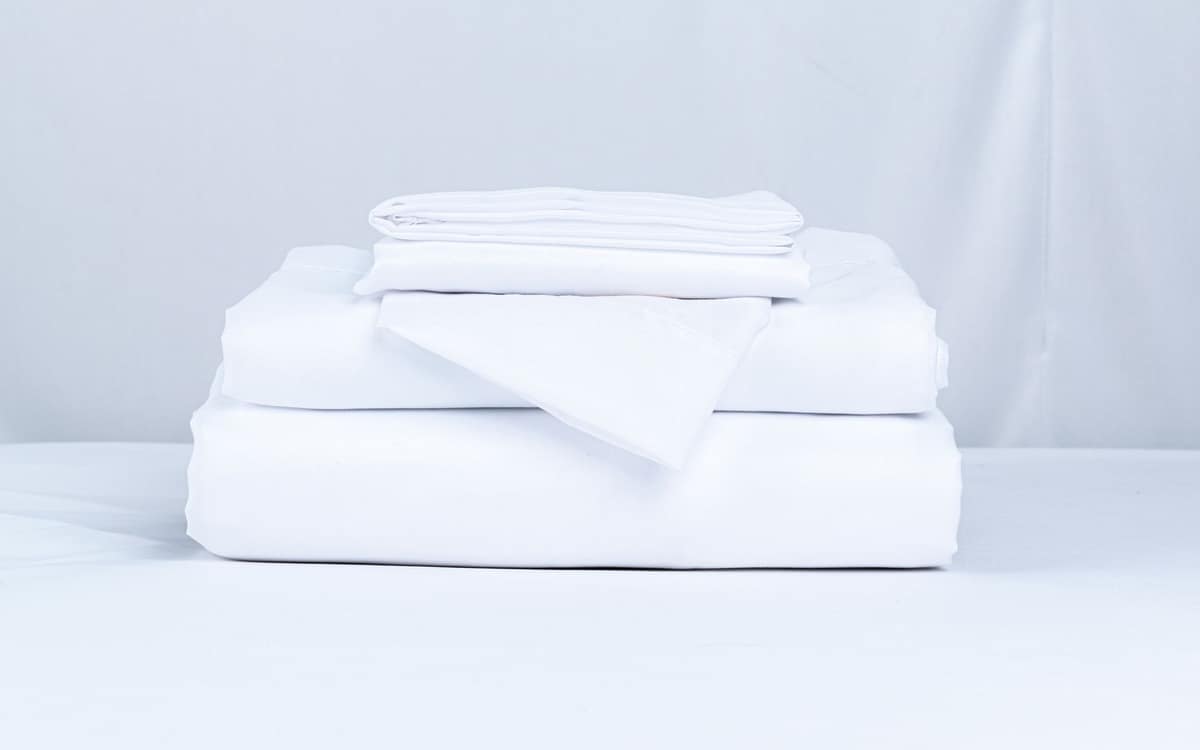
Cooling is two separate fabric properties, not one: airflow (how much air the fabric moves, set by its weave and fiber structure) and moisture management (whether the fiber absorbs and releases your sweat or traps it). Ranked on both, linen is coolest, cotton percale is the value pick, bamboo and Tencel trade airflow for a silky feel, and polyester and cold-touch synthetics sit at the bottom. Split those two properties and the whole fabric aisle sorts itself out.
The two things that actually cool
Every “cooling” fabric claim collapses into two questions. First, does it move air? That is mostly a matter of weave — an open, plain weave breathes; a dense one does not — and partly of fiber shape. Second, does it manage moisture? An absorbent fiber pulls sweat off your skin and releases it to evaporate; a non-absorbent one leaves it pooling against you. A fabric can be good at one and bad at the other, which is why a single “cooling” label tells you almost nothing. Rank the fibers on both and the order becomes clear.
Linen — the coolest common fabric
Flax fiber is hollow and stiff, so linen cloth holds itself off your skin and moves air through the gap, and it absorbs a large share of its weight in moisture before it feels wet. It wins on both properties at once, which nothing else here does. The catch is feel and price: linen is crisp, it wrinkles permanently, and it is the most expensive fabric on the list. It is the right buy for a hot, humid room if you like the hand — the case for it is on the best linen sheets, and how it stacks up against cotton is on cotton vs linen.
Cotton — the value pick, if you get the weave right
Cotton the fiber absorbs sweat well; cotton the sheet is only as cool as its weave. A percaleweave — one thread over, one under — leaves open area for air and breathes genuinely well. A sateen weave of the same cotton floats several threads over one to get its sheen, which packs the surface tight and sleeps noticeably warmer. Same fiber, opposite result, which is the whole argument on percale vs sateen. For most hot sleepers, percale cotton is the best value in bedding.
Bamboo viscose, lyocell and Tencel — silky, wicking, less airy
These regenerated-cellulose fibers — bamboo viscose, lyocell, and Tencel, which is a brand of lyocell — are excellent at moisture: they absorb sweat into the fiber and feel smooth and cool rather than crisp. What they do not do is move much air, because the cloth drapes flat against your skin instead of standing off it like linen or open percale. So they are the pick if you sweat and want a smooth feel, and less so if you want the airy, off-the-skin sensation. The differences are on Tencel vs bamboo, and the picks are on the best bamboo sheets.
Cold-touch synthetics — the trap
Nylon cold-touch fabrics, the ones sold on a “Q-Max” number, feel dramatically cool the instant you lie down because they conduct heat away from your skin fast. That is a first-contact effect measured over seconds, and it is over in minutes: once the fabric reaches your skin temperature the sensation stops, and because the fiber does not absorb, the sweat that follows sits clammy on the surface. The cold-touch feel is real and it is genuinely useful for falling asleep, but as a whole-night fabric it fails on both counts. The mechanism is on do cooling sheets work.
Polyester and microfiber — the bottom
Plain polyester, and its brushed form microfiber, are the worst common bedding fibers for a hot sleeper: they neither breathe nor absorb, and brushing raises a nap that traps a layer of still air against you, which is insulation. A “cooling” label on brushed microfiber is describing a construction that does the opposite of cooling.
Weave beats fiber
The one rule that overrides the fiber ranking: weave beats fiber. A percale-woven cotton will out-cool a “cooling” synthetic in a dense weave, because the open structure that moves air matters more than the marketing word on the fiber. It is also why thread count is a poor guide — a very high thread count means a denser, warmer cloth, not a better one — which is the argument on thread count and cooling.
Where each fiber belongs
The right fiber depends on the layer. On sheets, where airflow across your whole body matters, linen or percale cotton lead. On a pillowcase, where the priority is absorbing sweat off your face and hair, a smooth wicking viscose or lyocell often beats a crisp weave — covered on cooling pillowcases. On a blanket, structure does the work: an open waffle weave in cotton breathes regardless of how thick it looks. And on sleepwear, the same fiber ranking applies after one bigger question, which is how much of you the fabric covers — covered on the best cooling pajamas.
| Fiber | Airflow | Wicking | Feel | Verdict |
|---|---|---|---|---|
| Linen | Highest | High | Crisp, stands off skin | Coolest — if you like the hand and price |
| Cotton (percale) | High | High | Crisp, matte | Best value for most hot sleepers |
| Cotton (sateen) | Low | High | Smooth, silky | Warmer — the weave undoes the fiber |
| Bamboo / lyocell / Tencel | Moderate | Highest | Smooth, drapes | Best for sweat and smooth feel, less airy |
| Cold-touch nylon | Low | None | Icy for minutes | Onset only — clammy over a whole night |
| Polyester / microfiber | Lowest | None | Soft, napped | Skip — traps heat and sweat |
Put it together and the shopping rule is short: buy an open weave in an absorbent fiber, and treat the word “cooling” on the label as decoration. Linen and percale cotton for airy; bamboo and lyocell for smooth and sweaty; polyester and cold-touch for neither.
One number is worth knowing how to read before you shop: Q-Max, which several cold-touch listings publish. It is a genuine laboratory reading of peak heat flux at the first instant of contact — and it says nothing about the following eight hours. What it measures, and why the figures may not be comparable between brands, is on Q-Max cooling ratings.
One fiber is missing from the ranking above on purpose, because it does not fit the airflow-versus-wicking frame: wool buffers humidity instead of moving heat, which makes it excellent for a damp sleeper and the wrong buy for a merely warm one. The evidence, including the trial that found no bedding effect at all, is on is wool good for hot sleepers.
Fiber is one layer of the answer. The whole bed, built one product per heat route in spending order, is on the best cooling bed setup.
Common questions
What is the coolest fabric for bed sheets?
Linen, because flax fiber is hollow and stiff, so the cloth holds itself off your skin and moves air while also absorbing a lot of moisture. It wins on both airflow and wicking at once. The trade-offs are that it is crisp, it wrinkles permanently, and it is the most expensive common sheet fabric.
Is bamboo or cotton cooler?
It depends on what you mean by cool. A percale cotton weave moves more air, so it feels airier and stands off the skin. Bamboo viscose absorbs sweat better and feels smooth and cool to the touch but drapes flat against you. Percale cotton for airflow, bamboo for moisture and a silky feel.
Do cold-touch cooling fabrics really work?
They work for the first few minutes and no longer. A cold-touch nylon conducts heat away from your skin quickly, which feels dramatic when you lie down, but once the fabric warms to your skin temperature the sensation stops, and because it does not absorb, sweat then sits clammy on top. Useful for falling asleep, not for a whole night.
Is polyester bad for hot sleepers?
Generally yes. Plain polyester and brushed microfiber neither breathe nor absorb sweat, and the raised nap on microfiber traps a layer of still air against you, which is insulation. Engineered wicking polyesters like Coolmax are the exception, because they are built to move liquid moisture — but a generic cooling microfiber is not.
Read next
- Sleeping HotWhy you overheat at night, and what to fix first — cheapest change before most expensive.
- The best cooling sheet material for hot sleepersEvery common sheet fiber compared on how it moves heat and what it does with sweat.
- How to stop sleeping hot: what to fix firstThe decision guide. Five steps in cost order, and how to know when to stop.
Try the cheap thing first
Work down this list in order. Each step costs more than the one above it, and most people stop before the bottom. Replacing a mattress to fix a problem your sheets were causing is the most expensive mistake in this category.
- 1Pillowcase, then pillowUnder $20 to start
- 2Sheets$25-$60
- 3Top layer$30-$90
- 4Topper or pad$30-$300
- 5The mattress$200-$900
Before any of it: work out which one is actually your problem. If your bedroom is 78°F, none of these will save you.