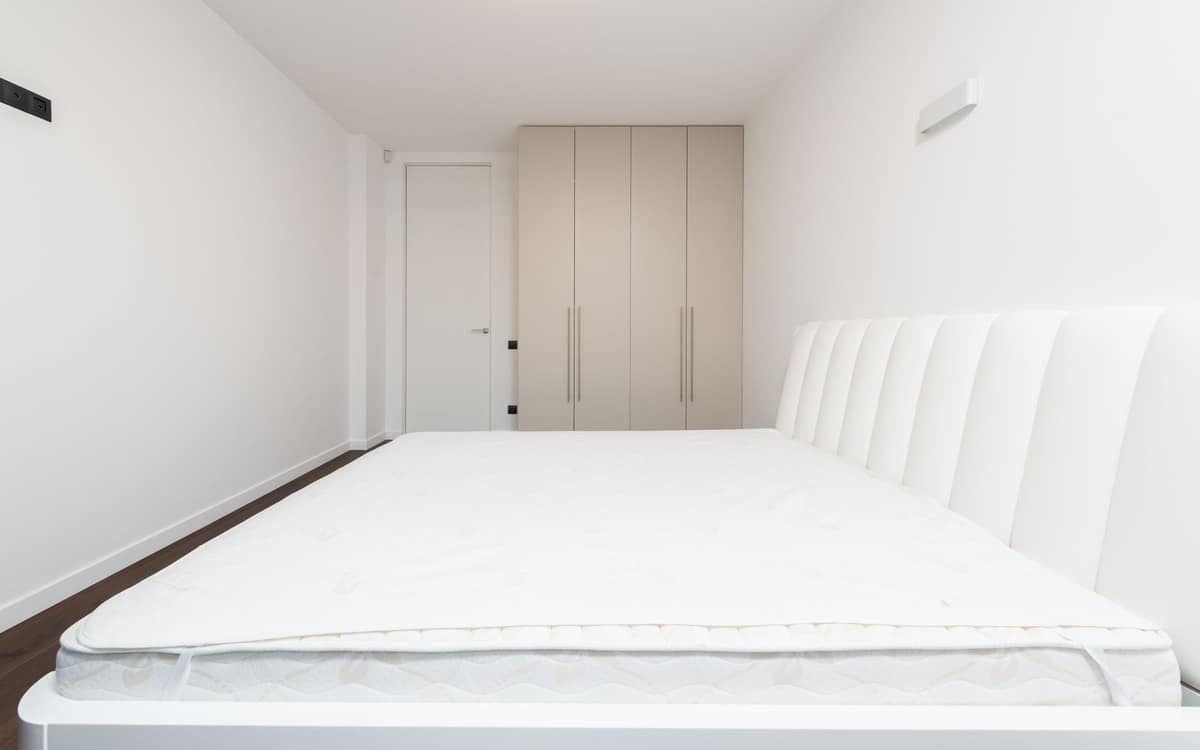
Neither word tells you anything about temperature. Euro top and pillow top both describe how an extra plush layer is attachedto a mattress, not what that layer is made of — and the material is what decides whether the bed sleeps hot. A pillow top is a separate gusseted pad stitched onto the surface with a small gap below it, which is why it looks rounded. A euro top is sewn flush with the edges under the cover, which is why it looks squared off. If you are choosing between two otherwise identical beds, take the euro top— not because flush stitching cools anything, but because euro tops are typically built with denser fill, which sinks less and flattens into a body impression more slowly. A hollow in the top layer is a real heat trap. The stitching is not.
These two terms are retailer vocabulary. There is no standards body defining them, no published test behind either one, and some manufacturers use “euro pillow top” for the flush construction, which muddies it further. That is worth knowing up front, because a surprising amount of writing on this question treats the labels as though they were specifications.
What the two words actually describe
Pillow top. A single gusseted layer of fiber or foam, stitched onto the top of the finished mattress with a small gap between it and the comfort layer underneath. The gusset is what gives it height, and the gap is what gives it that slightly detached, rounded look along the side of the bed.
Euro top. The same idea, attached differently: the layer is sewn flush with the edges of the mattress rather than onto its face, so it sits inside the cover rather than on top of it. Visually the result is flatter and more neatly stacked, with the plush layer running all the way out to the side panel instead of stopping short of it.
The Sleep Foundation’s description of the two constructions matches that, and adds the detail that matters most here: euro tops typically use denser, somewhat firmer materials, while the fill in pillow tops skews toward softer, lighter polyester fiber or low-density foam. That is a tendency, not a rule, and it is the only part of the comparison that reliably affects how a bed sleeps.
Why neither is a cooling spec
A mattress has three layers that decide its temperature, and the attachment method of the plush one is not among them.
The core. Pocketed coils are mostly air, and air is the only thing inside a mattress that can actually move heat away from you. A solid foam core cannot do that at any price, which is why we rank construction above every cooling adjective on the listing. The full argument is on hybrid versus foam for hot sleepers.
What the plush layer is made of.This is where the whole question actually lives. Latex is open-cell and springs back, so it gives without molding a hollow. Fiber fill is loft, which insulates mildly but moves air. Viscoelastic memory foam softens as it warms to your body and wraps you more closely — the pressure relief and the heat trap are the same event. Put any of those three inside a euro top or a pillow top and the behavior follows the material, not the seam.
How deep the plush layer is. Every inch of comfort layer is an inch of insulation between you and the coils that are supposed to be moving your heat. A four-inch plush top on a coil core largely cancels the reason you bought the coil core.
What each term does and does not tell you. Construction descriptions follow the Sleep Foundation's definitions; the material and depth columns are the ones that change how a bed sleeps. | Pillow top | Euro top |
|---|
| How it is attached | Gusseted layer stitched onto the face, small gap beneath | Sewn flush with the edges, inside the cover |
| How it looks | Rounded, slightly detached from the body of the bed | Flat and squared off, stacked to the edge |
| Typical fill | Softer, lighter fiber or low-density foam | Denser, somewhat firmer materials |
| Feel | More immediate surface give | More uniform, firmer surface |
| Body impressions over time | Flattens unevenly as the loose fill migrates | Generally slower, though most of this claim comes from sellers |
| Plush layer at the edge | Stops short of the side panel | Runs out to the edge |
| Tells you anything about heat? | No | No |
The one real thermal difference, stated carefully
It is not the stitching. It is what happens to the layer after a year.
A pillow top built from loose, light fiber compresses where you lie and stays compressed, because there is nothing holding the fill in position inside the gusset. What you end up with is a shallow trough with raised fill around it — and a trough is exactly the geometry that traps heat. Your body sits lower, more of your skin is in contact with the surface, and the raised sides block the small amount of air movement that was reaching you. That is the same mechanism that makes memory foam sleep hot, arrived at by wear rather than by design.
A euro top with denser fill, sewn flush so the material cannot migrate sideways, resists that for longer. “For longer” is doing real work in that sentence: it is not immunity, and the durability claim is one we would treat with some caution, because almost everyone publishing it sells euro-top beds. We have not slept on either construction for a year and we are not going to pretend otherwise.
The edge-support difference is real but mostly a comfort question rather than a thermal one. A euro top runs plush material out to the side panel, so the usable surface is closer to the full width of the mattress. On a pillow top the plush stops short, which matters mainly to couples sleeping near the edges. We have seen that framed as a temperature benefit via “better weight distribution”; we could not verify any testing behind that, so we are not repeating it.
If you already own a pillow top that sleeps hot
You cannot remove it, and no topper will undo it — adding material on top of a plush layer makes the insulation deeper, not shallower. What you can do, in order of how much it helps per dollar:
Change the sheets first. The layer against your skin is the cheapest thing on the bed and the fastest to change. An open weave in an absorbent fiber does more for a hot night than anything structural you can buy. Start with percale versus sateen.
Check what your mattress protector is doing. A laminated waterproof protector sits directly on top of the plush layer and can block more moisture movement than the mattress itself ever did. This is one of the most common hidden causes of a bed that got hotter without anything obvious changing: mattress protectors and heat.
Then look at the room and the base. Airflow under the mattress and around the bed is free to fix and frequently the actual problem. The full sequence is on how to make a mattress cooler.
The cheaper move: add the plush top instead of buying it
Here is the part that saves most people several hundred dollars. If what you want is the feel of a pillow top — surface give at the hip and shoulder, a softer landing — you can buy that as a pillow-top mattress pad for around forty dollars and put it on the bed you already own.
It is the same construction logic: fiber loft held in a quilted shell, sitting above the mattress. The differences are that it costs roughly a fiftieth of a new bed, you can take it off if you hate it, you can wash it, and you can replace it when it flattens instead of living with a permanent trough in a mattress you cannot return. For a hot sleeper there is a fourth advantage: a pad is a fraction of an inch of fiber rather than two or three inches of built-in plush, so the thermal cost is far smaller.
The honest caveat is that a pad gives you surface give, not depth. If your bed is genuinely hard rather than merely firm on top, see cooling toppers for a too-firm mattress, which works through how much give you actually need. The general pad-versus-topper question is on cooling mattress pad versus topper.
What to look for on the listing instead
When you are comparing two beds, the top-style word is near the bottom of the list of things worth reading. In descending order of usefulness: does it have a pocket-coil core; what is the comfort layer material (latex and fiber beat viscoelastic foam for heat); how thick is that comfort layer; and are there checkable certifications such as CertiPUR-US for the foam or OEKO-TEX for the cover.
You will notice how little of that most listings publish. Coil count, coil gauge, foam density and latex type are absent from the overwhelming majority of mattresses sold online, which is precisely why we rank on construction type rather than pretending to compare models on numbers that do not exist. Where a figure is not published, our product notes say so.
One bed in our registry states both halves of the answer — a euro top and a latex comfort layer over pocketed coils — and it is the pick at the top of this page. It is also roughly twice the price of the budget hybrids, and 14 inches tall, which means your current fitted sheets will not fit it. Both of those are real costs, and neither is caused by the stitching.