Cooling mattress pad vs cooling topper
One of these is a thin layer that changes the surface you touch. The other is two to four inches of insulation you are adding to your bed. They are sold under the same words and they do opposite things to your temperature.
By Stephen V. · Specs last verified · Prices live as of October 25, 2026
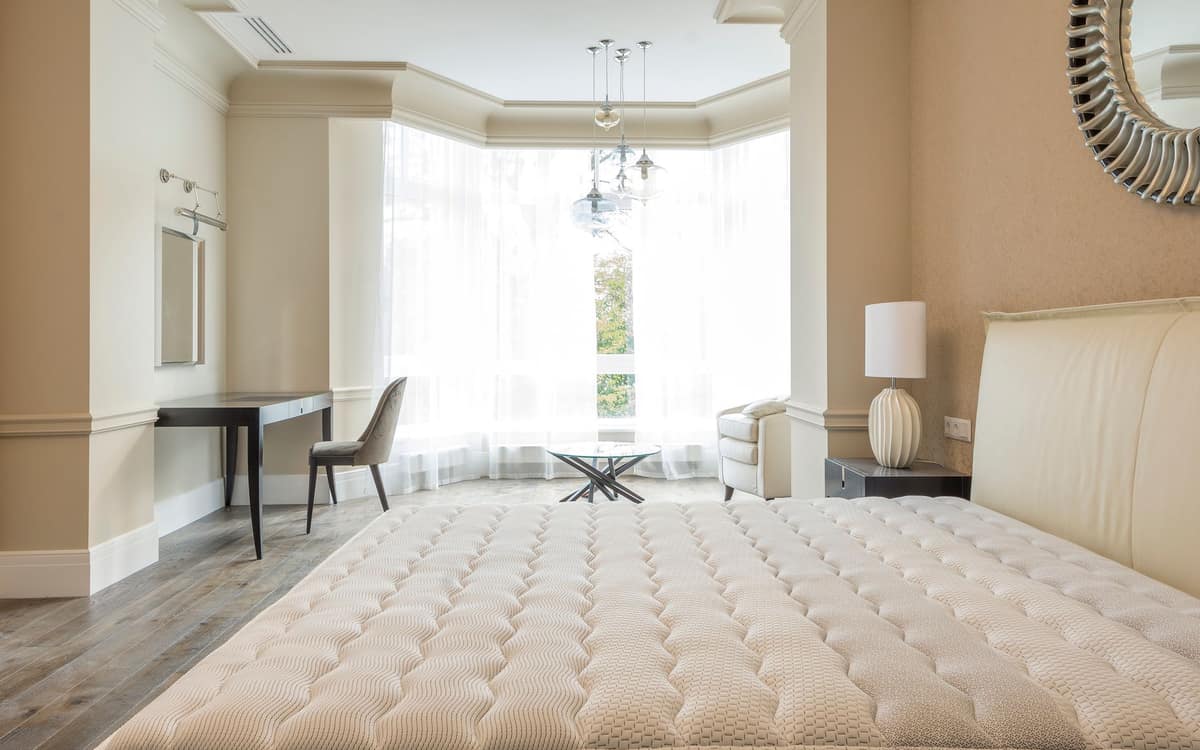
For heat, buy the pad. A cooling mattress pad is a thin quilted layer that changes the surface you are in contact with and adds almost no insulation. A cooling topper is two to four inches of foam or fiber, and every one of those inches sits between you and the room. Buy the topper only when the mattress is genuinely too firm — that is a comfort problem with a comfort solution, and you will be paying for it in heat either way.
These two products are cross-shopped constantly, and the reason is that marketplaces use both words in the same listing title. “Cooling mattress topper pad” is a real phrase on real listings. So people who want a cooler bed buy three inches of gel-infused memory foam, and are surprised when the bed gets warmer.
The disambiguation page — topper vs pad vs protector — covers what all three products are for. This page answers the narrower question people actually type: between a pad and a topper, which one makes the bed cooler, and by what mechanism.
If the choice you are weighing is a pad or new sheets rather than a pad or a topper, that comparison is cooling sheets vs a cooling mattress pad.
The one-line physics
A bed sheds your heat in two directions: sideways, into moving air at the edges, and upward, through whatever is on top of you. It does not shed heat downward. Everything under you is a one-way street, so every layer you add there is stored heat.
A pad works by changing what the top of that stack is made of. It is typically under an inch, quilted, fiber-filled, and covered in cotton or viscose. The surface you touch has a low thermal mass, so it warms up slowly rather than sitting at your skin temperature by midnight, and an absorbent face fiber takes sweat off you instead of leaving it pooled on a sealed surface. The mechanism is genuine and the effect is modest and lasts all night.
A topper works by adding material.That is not a criticism — it is the entire point of a topper, because material is what produces contour and pressure relief. But there is no version of “more material between you and the room” that is thermally free. A three-inch foam topper is roughly the R-value of a light jacket laid under your hips. Gel infusion, ventilation holes and phase-change panels are all attempts to claw back some of what the thickness costs. The best of them claw back some. None of them claw back all of it.
Head to head
| Cooling mattress pad | Cooling topper | |
|---|---|---|
| What it is | Quilted fiber layer, usually under an inch | 2-4 inches of foam, latex or fiber |
| Primary job | Change the surface you touch | Change how firm the bed feels |
| Net effect on heat | Slightly cooler | Warmer, unless it is latex |
| Pressure relief | Slight | Substantial |
| Machine washable | Yes | No — spot clean |
| Needs deeper fitted sheets | Rarely | Almost always |
| Typical price band | Budget | Mid to premium |
| Reversible if it fails | Yes — it goes in a cupboard | Awkward — it is bulky and often non-returnable once opened |
The three cases where the topper is still the right buy
This site sells toppers and tells people not to buy them for heat, which only makes sense if we are equally clear about when they are correct. There are three cases.
The mattress is too firm.No half-inch quilted pad will give a broad-shouldered side sleeper two inches of contour at the hip and shoulder. If you are waking up with a sore shoulder rather than a hot one, a pad is not a smaller version of the answer — it is the wrong answer. Buy latex, which is the one foam that is open-celled and pin-cored and therefore does not turn into a sealed hollow as it warms. The picks are on best latex toppers.
The mattress has a dip and you are not replacing it yet.A topper laid over a sag follows the sag, so it is a delay rather than a fix — but it is a cheap delay, and sometimes that is the correct financial decision. The full version of that argument is on mattress vs topper.
The bed is fine and you sleep cold on one side of it. Mismatched couples sometimes solve the problem with a topper on one half only. It works, it looks odd, and it is far cheaper than two mattresses. See cooling toppers for couples.
Notice that not one of those three cases is “my bed is hot”. If heat is the complaint, the topper is being asked to fix something it structurally makes worse.
Where the pad genuinely beats the topper
It washes. This is underrated as a thermal property rather than a hygiene one. A fiber layer loaded with sweat does not behave like the material you bought; it behaves like a damp cloth, which conducts heat differently and holds moisture against you. A layer you can strip and launder weekly stays close to how it performed on night one. A foam topper cannot be washed at all, and it is the layer absorbing everything the sheet lets through.
It is reversible.A pad that does not help goes in a cupboard and you are out thirty dollars. A three-inch topper that does not help is a large, awkward, frequently non-returnable object that you now have to store or dispose of. When you are experimenting — and with heat you usually are — the cheap reversible test is worth more than the expensive irreversible one.
It does not break your sheets. Adding two to four inches to a mattress is the single most common cause of a fitted sheet popping a corner at four in the morning. A pad adds a fraction of an inch and slips under the same sheet you already own. The pocket-depth arithmetic, if you are stacking anyway, is on topper sizes and fit.
What about a cooling topper that says it is cooling?
Almost all of them say it. The word is unregulated in bedding, and it is applied with equal confidence to open-cell latex and to a sealed slab of gel-infused viscoelastic foam, which do opposite things. Three things on a topper listing actually predict its thermal behavior, and the word cooling is not one of them:
- The material. Latex breathes because its cell structure is open and it is usually pin-cored. Memory foam does not, because it is a sealed viscoelastic slab that softens as it warms and wraps you more tightly the longer you lie still. The full ranking is on cooling topper materials.
- The thickness.Thinner is cooler, always, for every material. A two-inch latex topper is cooler than a three-inch one made of exactly the same latex. Buy the thinnest one that solves your firmness problem, not the plushest one in your budget — the arithmetic is on topper thickness.
- Whether the cooling is structural or a coating.Pin-cored latex and spacer-knit covers move air. Gel infusions, cold-touch finishes and phase-change panels move a fixed quantity of heat and then stop — useful for falling asleep, irrelevant at three in the morning. The distinction is set out on gel foam vs PCM.
The decision, in order
- Is the bed uncomfortable, or just hot? Uncomfortable means a topper is on the table. Just hot means it is not.
- Have you changed the sheets and the room first? Both are cheaper than either product here and both have larger effects for most people. The order is on what to fix first.
- If it is heat: buy the thinnest washable pad with an absorbent face fiber. Cotton, viscose or lyocell, not brushed polyester. Ranked picks are on the best cooling mattress pads, and the same pads sorted by sleeping position are on cooling mattress pads by sleeper type.
- If it is firmness: buy latex, as thin as will do the job, and accept that you are adding some heat to buy contour. That is a real trade, not a failure.
- If it is both: a thin latex topper with a washable pad on top of it. It is the only stack we recommend, because the pad is the layer that gets dirty and the latex is the layer that breathes.
Can you use both?
Yes, and the order is mattress, topper, pad, fitted sheet. The pad goes on top because it is the washable one, and the whole point of a washable layer is that it is the layer catching the sweat. Putting a pad under a topper achieves nothing except making it harder to remove.
Measure the total height before you build the stack. Mattress plus a three-inch topper plus a pad is comfortably past the pocket depth of an average fitted sheet, and a sheet that will not stay on undoes both purchases at four in the morning.
One case where the pad wins outright: if what you want is the feel of a pillow-top mattress, a pillow-top pad is the cheap way to get it without buying a new bed. What the top-style words on a mattress listing mean, and what they do not, is on euro top versus pillow top.
Common questions
Is a cooling mattress pad or a cooling topper better for hot sleepers?
The pad, in nearly every case. A pad is thin and adds almost no insulation while changing the surface you are actually touching, which is where the heat complaint comes from. A topper adds two to four inches of material between you and the room, and no amount of gel infusion makes added thickness thermally free. Choose the topper only when the mattress is genuinely too firm.
What is the difference between a cooling mattress pad and a cooling topper?
Thickness and job. A pad is usually under an inch, quilted, fiber-filled and machine washable, and it changes the feel of the surface. A topper is two to four inches of foam, latex or fiber, and it changes how firm the bed is. The pad is a surface fix; the topper is a support fix.
Will a cooling topper make my bed hotter?
Usually yes, compared with no topper. Every inch of material under you is insulation, and memory foam in particular is a sealed slab that softens and wraps you as it warms. Latex is the exception worth paying for: it is open-celled and normally pin-cored, so air can still move through it. Even then, thinner is cooler than thicker in the same material.
Can I put a cooling mattress pad on top of a topper?
Yes, and that is the correct order: mattress, topper, pad, fitted sheet. The pad goes on top because it is the layer you can wash, and it should be the layer catching sweat. Check the stacked height against your fitted sheet's pocket depth before you commit to both.
Do I need deeper sheets for a mattress pad?
Rarely. A pad adds a fraction of an inch and normally fits under the fitted sheet you already own. A topper is the one that breaks sheets: two to four inches of added height is the most common reason a fitted sheet pops a corner in the night.
Sources
Read next
- Cooling Mattress ToppersToppers, pads and protectors — three different products people buy interchangeably.
- The best cooling mattress pads for hot sleepersThin, washable, barely insulating. Usually the right buy where a topper is not.
- Topper vs mattress pad vs protectorThree products, one shelf, three different jobs. The disambiguation page.
- Do cooling mattress pads really work?What a thin pad can and cannot do about heat, and why it usually beats a topper.
- How thick a cooling topper should you buyMatch topper depth to the job — and know when thicker starts working against you.
Try the cheap thing first
Work down this list in order. Each step costs more than the one above it, and most people stop before the bottom. Replacing a mattress to fix a problem your sheets were causing is the most expensive mistake in this category.
- 1Pillowcase, then pillowUnder $20 to start
- 2Sheets$25-$60
- 3Top layer$30-$90
- 4Topper or pad$30-$300
- 5The mattress$200-$900
Before any of it: work out which one is actually your problem. If your bedroom is 78°F, none of these will save you.