Skip to content
Chill & Chamber

Cooling Pillows

How to wash a pillow, by what it is filled with

The allergy bodies want your bedding washed hot. Most of the things you would wash will not survive it. Here is the way around that.

By Stephen V. · Specs last verified · Prices live as of October 25, 2026

We earn a commission if you buy through our links, at no extra cost to you. It never changes what we rank or what we say — how this is funded and how we pick.

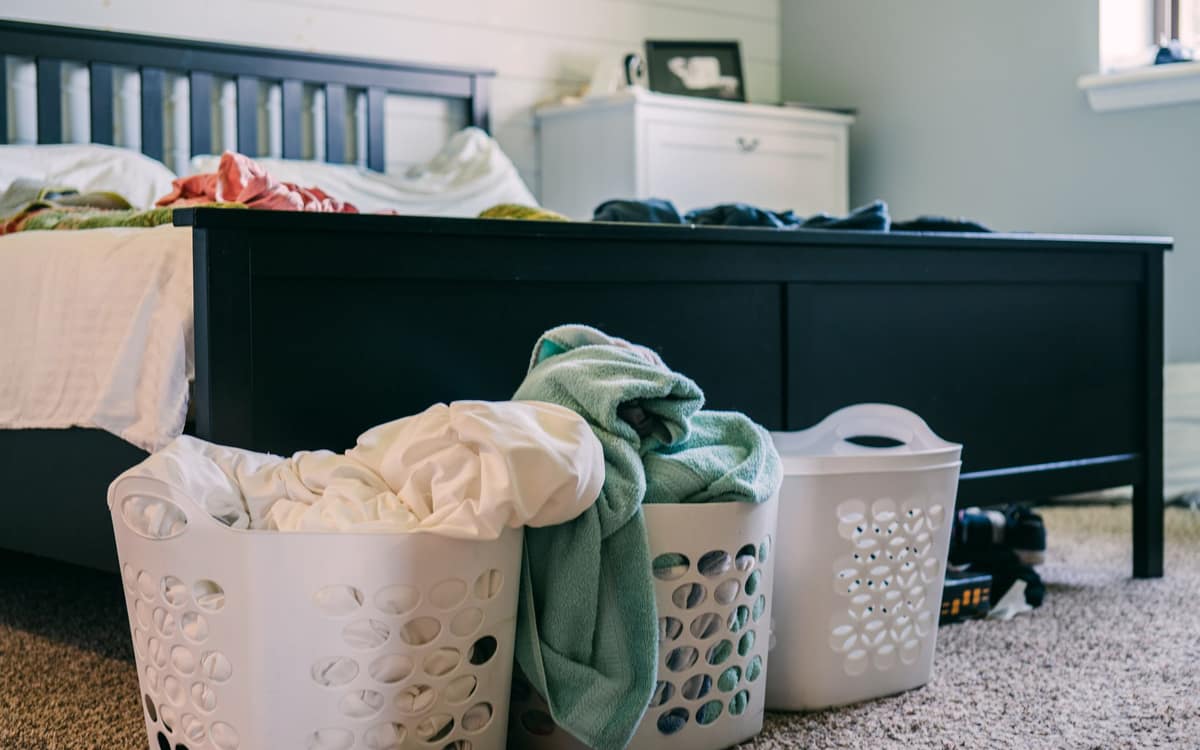
Laundry baskets of stripped bedding at the foot of a bed

Wash the layers, not the pillow. Almost every pillow worth owning as a hot sleeper — solid foam, shredded foam, latex, buckwheat — is damaged or ruined by a machine wash, because the fill soaks up water it cannot then release. The routine that works is a zippered protector washed weekly, a pillowcase washed with your sheets, the pillow’s own removable cover washed monthly, and the core kept dry and aired. If your pillow has no removable cover and no protector, that is the gap to close before anything else.

There is a reason this question is asked so often and answered so badly. The honest answer is mostly “don’t”, which is unsatisfying, and it varies completely by fill, which is inconvenient. So we went and read what the pillows in our own registry actually instruct, and what the allergy bodies actually recommend, and the two turn out to be in direct conflict on one specific number.

What each fill can take

Every pillow we rank falls into one of four constructions, and the washing answer follows from the construction rather than from the brand.

What to do with each fill, and what the listings in our registry say about it. Where a listing gives no instruction, the advice in the last column is our read of the material, labelled as ours.
FillMachine wash the core?What to wash insteadWhy
Solid memory foamNoCover and protector onlyWater saturates the cells, agitation tears the block apart, and it will not dry through
Shredded memory foamNot recommendedRemovable cover; replace fill if neededThe pieces hold water individually and clump permanently as they dry
LatexNoCover and the fitted liner, where there is oneWater and agitation break latex down; a soaked core cannot dry through
Buckwheat hullsNeverCotton cover, with the hulls emptied out firstWet hulls rot and mould. Air the hulls in the sun instead

Three of our picks are built around that table. The Utopia shredded pillow has a washable cover and ships with an extra eight ounces of fill, so the cover goes in the machine and lost loft gets topped up rather than laundered back. The QUTOOL pair has a zippered inner cover as well as an outer one, which means there are two washable layers before you reach the foam. The LOFE buckwheat pillow has a side zipper specifically so the hulls can come out, which is the only way its cotton cover can be washed at all.

Latex is the clearest case. The RejuveNite pillow in our picks arrives with a 400-thread-count cotton sateen cover and a fitted inner liner, both machine washable, and a core that should never see water. That is not a limitation the seller is apologizing for; it is how a latex pillow is meant to be used.

The 130 degree problem

Here is the conflict, and it is the reason this page exists rather than being a paragraph on another one.

If you’re drenched most nights, or it started suddenly, that’s worth raising with a doctor — it’s outside what bedding can fix, and outside what we cover.

The Asthma and Allergy Foundation of America advises washing sheets, blankets and throw rugs weeklyin hot water — “at least 130° F or more to kill dust mites” — and covering mattresses and pillows in zippered allergen-barrier covers “made of a material with pores too small to let dust mites and their waste product through”. It also recommends keeping indoor humidity between 30 and 50 percent, which matters more than most people realize: mites need humidity, and so does mould.

Now read the care labels. Of the pillow protectors in our registry, the cheap waterproof ones instruct a cold gentle wash and a low tumble dry. That is well below 130°F. The reason is the film: every waterproof protector is cloth laminated to a membrane, and the membrane is the part that fails, years before the fabric does. Hot water and a hot dryer are exactly what destroy it.

Exactly one protector we rank states machine wash and dry with no cold-only restriction, and it is the SureGuard cotton encasement — also the only one naming a third-party certification. If a doctor has told you to encase the bedding, that combination is the whole reason to pay three times as much. If nobody has, you are buying a seal you do not need around the hottest part of the bed, and sealing and cooling are opposite requirements.

The routine that actually works

Four layers, four different intervals. Nothing here requires you to put a pillow in a machine.

Pillowcase: with your sheets.Weekly, in the hottest wash the fabric allows. A pillowcase is the only layer that touches your face, and on a hot sleeper it loads with sweat and sebum faster than any other piece of bedding. If yours is a cold-touch synthetic, check the label — most of them are cold-wash-only, which is a real argument for keeping a cotton or bamboo-viscose set in rotation. Our pillowcase picks cover which fibres survive which cycle.

Protector: weekly, as hot as its label allows. This is the layer doing the work. A zippered protector is a washable barrier around something awkward to wash, and swapping it in resets the hygiene clock without touching the pillow. The terry-faced option in our picks is the one to buy if sweat rather than dust is your problem: a looped cotton pile absorbs liquid before it reaches the membrane, which is the only physics you get to choose on a waterproof product.

The pillow’s own cover: monthly. Unzip it, wash it, and while it is off, look at the core. A core that looks clean and springs back is fine. A core with yellow staining has had moisture in it, which is the one finding that overrides everything else on this page.

The core: air it, do not wash it.Once a month, strip the pillow and leave it somewhere with moving air for a few hours — an open window is enough, direct sun is better for buckwheat. You are driving off accumulated moisture, which is both what makes a pillow smell and what makes it a hospitable place for mites.

If you wash a foam pillow anyway

People do, and sometimes there is no choice. The failure is almost never the wash; it is the drying.

Foam is a sponge with a very low drying rate. A queen foam pillow holds several pounds of water after a wash, the outside dries in hours and the centre can take days, and the centre is where the smell comes from. If you are going to do it: gentle cycle, cold water, minimal detergent, an extra spin to pull out as much water as possible, then days of air-drying somewhere warm with the pillow turned every few hours. Do not use a hot dryer on foam — it degrades the cell structure, which is the thing keeping you cool, and the outer surface can scorch while the middle is still wet.

A pillow that still smells after a wash and a full dry has had moisture in the fill long enough to matter, and no further washing will fix it. That is a replacement, and the three condition tests that settle the question are on when to replace a pillow.

Buckwheat, which is its own procedure

Buckwheat deserves its own paragraph because the fill and the cover are two separate products that happen to be sold together. Unzip the side, pour the hulls into a clean pillowcase or a bowl, wash the empty cotton cover like a normal piece of bedding, and spread the hulls somewhere dry and sunny for a few hours while it dries. Then funnel them back.

Wet hulls are the one genuinely bad outcome here: they rot, they mould, and the smell does not come out. This is also why buckwheat is the fill you top up rather than replace — hulls are sold by the bag, and a pillow with fresh hulls is new in the only way that matters.

Humidity does more than washing does

Worth ending on, because it is free. The AAFA’s 30 to 50 percent indoor humidity recommendation is aimed at mites, but it has a direct effect on how your pillow behaves night to night: fill that cannot shed the moisture it took on last night starts the next night already damp, and damp fill conducts heat into your head instead of away from it. Sleeping in a humid room is the fastest way to make a perfectly good pillow feel like a bad one — which is the subject of humidity and sleeping hot.
Quick picks

Ranked on published construction and buyer fit. Select a row to jump to the full write-up. We have not slept on any of these — here is exactly what we do instead.

#ProductBest forHow it coolsPrice
1
SureGuard Waterproof Zippered Pillow Protectors, Smooth Cotton, Set of 2

SureGuard Waterproof Zippered Pillow Protectors, Smooth Cotton, Set of 2

Dust mite allergy, bed bugs, or anyone told by a doctor to encase the bedding

The only one you can wash hotMoisture wicking
$33.97 · View on Amazon

Price as of October 25, 2026. #ad How we’re funded

2
SafeRest Waterproof Zippered Pillow Protector, Cotton Terry, Pack of 2

SafeRest Waterproof Zippered Pillow Protector, Cotton Terry, Pack of 2

Anyone who sweats enough to be ruining pillows and needs the sweat actually stopped

Best if sweat is the problemMoisture wicking
$19.00 · View on Amazon

Price as of October 25, 2026. #ad How we’re funded

3
Utopia Bedding Shredded Memory Foam Pillow, Adjustable Fill

Utopia Bedding Shredded Memory Foam Pillow, Adjustable Fill

Most people, cheaply

Easiest pillow to keep cleanAirflow (open structure)
$21.89 · View on Amazon

$34.9937% off

Price as of October 25, 2026. #ad How we’re funded

4
LOFE Organic Buckwheat Pillow with Organic Cotton Cover

LOFE Organic Buckwheat Pillow with Organic Cotton Cover

Hot sleepers willing to change what a pillow feels like

The one you air, never washAirflow (open structure)
$56.99 · View on Amazon

Price as of October 25, 2026. #ad How we’re funded

#1The only one you can wash hot

SureGuard Waterproof Zippered Pillow Protectors, Smooth Cotton, Set of 2

The only pick here you can wash and dry like ordinary bedding rather than nursing on a cold cycle, and the only one naming a third-party certification. It is also about three times the price of the cheap waterproof option, and you are paying for the seal, not for the temperature.

What it gets right

  • A sealed encasement rather than a cover — the listing describes a fine zipper that closes the pillow off completely
  • Smooth 100% cotton surface, and the listing states it is free from vinyl, PVC and phthalates
  • GREENGUARD Gold certified and independently lab tested per the listing, which is more evidence than anything else in this category offers
  • Machine wash and dry, with no cold-only restriction stated, so it can take the hot wash the allergy bodies advise
  • 10-year quality guarantee stated on the listing

Trade-offs

  • By far the most expensive option here, at roughly three times the cheapest waterproof protector
  • Smooth cotton over a laminate absorbs less than a terry face does, so more moisture stays on the surface
  • It is still a full waterproof barrier around the hottest part of the bed, and no vapor figure is published
  • Standard size is 21 by 27 inches — generous, but check it against a slim pillow or it will bag
Published specifications
Material100% cotton face, waterproof laminate
How it cools (our read)Moisture wicking
WeaveSmooth woven
Fabric weight (GSM)Not published
Certifications statedGREENGUARD Gold

Why the construction matters. The listing's own bullets are why this is the allergy pick and not the hot-sleeper pick: a 'Super fine zipper with Invisi-Zip technology completely seals off your pillow from bed bugs', and it 'Blocks dust mites, mold, mildew, pollen and pet dander'. Sealing is the job it is built for. Sealing and cooling are opposite requirements.

Specifications read from the product listing on September 29, 2026. “Not published” means the listing does not state that figure.

#2Best if sweat is the problem

SafeRest Waterproof Zippered Pillow Protector, Cotton Terry, Pack of 2

The best compromise available in a product built on a compromise: an absorbent cotton terry face over the membrane, so sweat is pulled into cloth before it ever reaches the film. It is still a barrier, and it will still be warmer than no protector at all.

What it gets right

  • Cotton terry face — a looped pile that absorbs liquid, which is the single most useful property on the skin side of a membrane
  • The listing describes the waterproof layer as a back coating, so the film sits behind the cloth rather than against your cheek
  • Explicitly noiseless, which is the usual failure of cheap waterproofing
  • Machine washable and tumble-dryer safe at low temperatures

Trade-offs

  • It is a waterproof membrane. Every waterproof membrane slows water vapor, and nothing on the listing quantifies how much
  • Terry has pile, so this adds more loft under your head than a flat woven protector does
  • The listing publishes no fabric weight and no vapor-permeability figure, so 'breathable' is a claim you cannot check
  • Standard size only fits a standard pillow — measure before buying if yours is a queen or king
Published specifications
MaterialCotton terry face, waterproof membrane back coating
How it cools (our read)Moisture wicking
WeaveTerry (looped pile)
Fabric weight (GSM)Not published
Certifications statedNone stated

Why the construction matters. The listing states 'premium terry cotton, with a breathable, waterproof membrane back coating'. That construction order matters more than any cooling claim: the fiber that touches you absorbs, and the film that blocks sits behind it. On a waterproof protector the face fabric is the only physics you get to choose.

Specifications read from the product listing on September 29, 2026. “Not published” means the listing does not state that figure.

#3Easiest pillow to keep clean

Utopia Bedding Shredded Memory Foam Pillow, Adjustable Fill

Shredded foam beats a solid foam block for heat for one structural reason: the gaps between pieces are air channels. Being able to remove fill makes it the most flexible cheap pillow here.

What it gets right

  • Shredded fill leaves air gaps a solid block does not have
  • Remove fill to lower the loft — the single most useful adjustment in a pillow
  • Washable cover

Trade-offs

  • Shredded foam clumps and needs regular fluffing
  • Still polyurethane foam, so it warms up with you
  • No fill weight published
Published specifications
MaterialShredded viscoelastic memory foam
How it cools (our read)Airflow (open structure)
Certifications statedNone stated

Why the construction matters. A solid memory foam pillow is a sealed insulating block under your head. Shredding the same material into pieces creates interconnected voids — the fill is identical, the thermal behavior is not.

Specifications read from the product listing on July 23, 2026. “Not published” means the listing does not state that figure.

#4The one you air, never wash

LOFE Organic Buckwheat Pillow with Organic Cotton Cover

The coolest-sleeping pillow fill there is, and the one most people return. Buckwheat hulls do not compress into a solid mass, so air moves through them all night — but it is firm and it rustles.

What it gets right

  • Hulls are rigid and irregular — the fill never packs into a solid, insulating block
  • Add or remove hulls to set the loft precisely
  • Cotton cover, no foam anywhere in it

Trade-offs

  • Firm in a way foam sleepers find alarming for the first week
  • Audibly rustles when you move
  • Heavy, and it needs airing out rather than washing
Published specifications
MaterialBuckwheat hulls, organic cotton cover
How it cools (our read)Airflow (open structure)
Certifications statedNone stated

Why the construction matters. Buckwheat is the extreme case of the shredded-fill principle: the hulls are rigid, so the void fraction between them stays roughly constant no matter how much weight is on top. Nothing else in a bedroom does that.

Specifications read from the product listing on July 23, 2026. “Not published” means the listing does not state that figure.

Common questions

Can you wash a memory foam pillow?

You can, and you should not. Foam is a sponge with a very low drying rate: the outside dries in hours and the centre can take days, and a core that stays damp is what makes a pillow smell. Agitation also tears the cell structure, which is the part doing the cooling. Wash the cover and the protector instead, and air the core monthly.

How do you wash a latex pillow?

Wash the cover, never the core. Water and agitation break latex down and a soaked latex core will not dry through. Every latex pillow in our registry ships with a removable cover for exactly this reason and one adds a fitted inner liner. Spot clean the core with a damp cloth if you have to, then let it air completely before putting the cover back on.

How often should you wash a pillow?

Think in layers rather than in pillows. Pillowcase weekly with your sheets, zippered protector weekly at the hottest temperature its label allows, the pillow's own removable cover monthly, and the core aired monthly but not washed. That sequence keeps the pillow clean without ever putting the fill in water.

What temperature kills dust mites in bedding?

The Asthma and Allergy Foundation of America advises washing bedding weekly in hot water at least 130 degrees Fahrenheit. The practical catch is that most waterproof pillow protectors instruct a cold gentle wash, because the waterproof film is what fails first. Of the protectors in our registry only one states machine wash and dry with no cold-only restriction, which is the reason to buy it if a doctor has told you to encase the bedding.

Can you put a pillow in the dryer?

A cover or a protector, yes, at the temperature its label allows. A foam or latex core, no — a hot dryer degrades the cell structure that keeps you cool, and the outer surface can scorch while the middle is still wet. Buckwheat hulls should never go near a dryer; spread them out to air instead.

How do you wash a buckwheat pillow?

Empty it first. Unzip the side, pour the hulls into a clean pillowcase or a bowl, wash the empty cotton cover as normal bedding, and spread the hulls somewhere dry and sunny while the cover dries. Then funnel them back. Wet hulls rot and mould and the smell does not come out, which is the one failure to avoid.

My pillow still smells after washing it. Now what?

Replace it. A smell that survives a wash and a full dry means moisture sat in the fill long enough to matter, and foam does not recover from that. Further washing makes it worse by adding more water. Before you buy, check whether the pillow takes extra fill — several of ours do — because a flat pillow and a smelly one are different problems with different fixes.

Sources

Try the cheap thing first

Work down this list in order. Each step costs more than the one above it, and most people stop before the bottom. Replacing a mattress to fix a problem your sheets were causing is the most expensive mistake in this category.

  1. 1Pillowcase, then pillowUnder $20 to start
  2. 2Sheets$25-$60
  3. 3Top layer$30-$90
  4. 4Topper or pad$30-$300
  5. 5The mattress$200-$900

Before any of it: work out which one is actually your problem. If your bedroom is 78°F, none of these will save you.