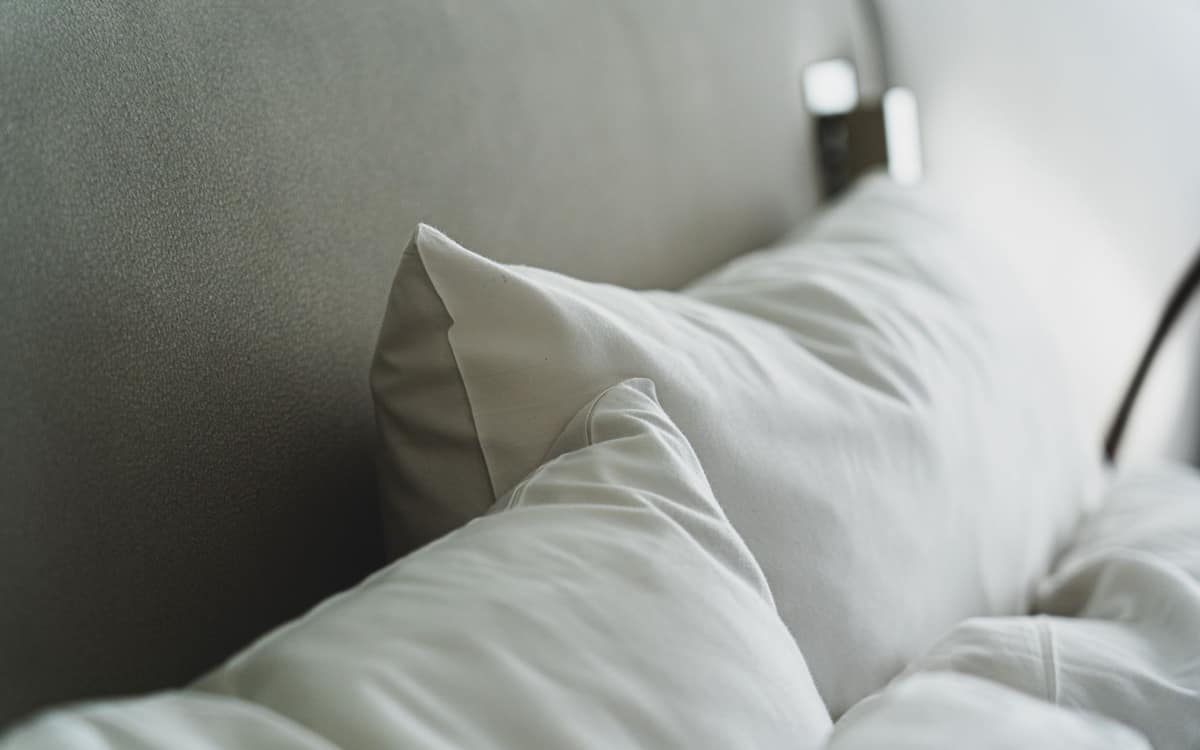
For temperature, bamboo viscose wins and it is not close— our pick is the Bedsure PureWoven pair, usually around $13. Viscose absorbs sweat into the fiber and gives it up as it dries, which is the mechanism that matters on the one surface your face and scalp are pressed against all night. Satin almost always means polyestersatin, and polyester does not absorb anything — it feels cool and smooth for a few minutes and then holds moisture against your skin. Buy satin if your goal is hair friction, which it genuinely solves. Buy bamboo viscose if your goal is not waking up with a damp pillow.
This comparison is muddled in almost every article written about it, for a reason worth understanding before you spend anything: the two words are not the same kind of word.Satin is a weave — a structure where several yarns float over one, producing a smooth, lustrous face. Bamboo is a plant that gets regenerated into viscose, a fiber. You can have a satin weave in silk, in polyester, in viscose or in cotton, and those four fabrics behave completely differently against skin. “Satin versus bamboo” is like asking whether knitted is better than wool.
In practice, though, the question has a clear answer, because in the pillowcase aisle “satin” means polyester satin almost every time. So what people are really comparing is polyester in a smooth weave against regenerated cellulose in a plain weave, and those two have very different nights.
What each one actually does
Polyester satin: friction, not temperature.The floats make the surface exceptionally smooth, and smooth is the whole point — less drag on hair, less creasing on skin. Those benefits are real and they are the reason satin pillowcases sell. What polyester cannot do is take up water. Sweat from your scalp and face sits on the surface, where the only route out is evaporation into air that the dense weave is not letting move. It also feels cool to the hand on first contact, because a smooth dense synthetic conducts heat quickly — and that is where the cooling claim comes from. It lasts about as long as it takes the fabric to reach your skin temperature.
Bamboo viscose: absorption, which is the useful one. Viscose takes moisture into the body of the fiber readily and releases it as the case dries, so the surface against your face stays drier for longer. It is also smooth enough that most people who bought satin for hair reasons are perfectly happy on it. The trade-off is honest: it does not feel like anything dramatic when you lie down. There is no cold hit. It simply works better over seven hours.
The four pillowcase types for a hot sleeper. Fabric weights are not published on any of these listings, which is the norm in this category.| Fabric | What it is | Heat | Sweat | Hair |
|---|
| Polyester satin | Satin weave, synthetic fiber | Cool for minutes, then nothing | Does not absorb — stays on your skin | Excellent |
| Bamboo viscose | Plain weave, regenerated cellulose | Good all night | Absorbs into the fiber, dries fast | Very good |
| Silk | Satin weave, protein fiber | Moderate — absorbs some, breathes little | Absorbs about a third of its weight | Excellent |
| Cold-touch nylon (Q-Max) | Dense synthetic face | Strong for about ten minutes | Does not absorb | Good |
| Cotton percale | Open plain weave, cotton | Best airflow of the five | Absorbs well | Poor — the most friction here |
The silk question, since it always comes next
Silk is what satin is pretending to be, and it is a genuinely different material: a protein fiber that absorbs a meaningful fraction of its weight in moisture before feeling wet, in a satin weave that gives you the same friction benefit. It costs many times what a polyester satin case costs.
For heat specifically, silk is middling rather than excellent. It absorbs, which helps, but a satin weave in any fiber is a dense structure that does not move much air, and silk cannot be washed at the temperature the AAFA recommends for dust mite control without damaging it. If you want the hair and skin benefits and you sleep hot, silk is a reasonable compromise and viscose is the better thermal choice. The longer version of that argument, applied to the whole bed, is on silk versus cooling sheets.
The cold-touch option, and its ceiling
The third thing in this aisle is a cold-touch case with a published Q-Max figure — a dense nylon face engineered to pull heat out of your skin fast on contact. It works. Q-Max is a real instrument measurement of peak heat flux in the first fraction of a second of contact, and a case that publishes one is telling you something checkable, which almost nothing in bedding does.
The ceiling is physics rather than quality. A passive fabric has no way to get rid of the heat it has taken; once the case and your skin are the same temperature, the flow stops. For most people that is somewhere under ten minutes. Where this is genuinely useful is if your problem is falling asleep rather than staying asleep, and there is a trick that extends it: flip the pillow. Two cool surfaces per pillow, four if you own two. What the number means in detail is on Q-Max cooling ratings, and more ways to keep the surface cool are on how to keep a pillow cool.
Why the pillowcase is worth this much attention
Because of where it sits. Your head and neck produce more heat and more moisture per square inch than anywhere else touching the bed, and the pillow is the one surface you cannot roll away from — you can kick a comforter off, you cannot kick a pillow off. It is also the cheapest layer in the bed to change, which makes it the highest-return experiment available to a hot sleeper. A $13 pair of pillowcases that fixes a 3am wake-up is a better outcome than a $600 mattress that does not.
If changing the case does not fix it, the problem is one layer deeper: the fill. A solid memory-foam pillow forms a heat-trapping hollow around your head no matter what is wrapped around it, and that is a different purchase — covered on gel versus latex versus shredded fill.
What to buy
If you wake up damp: bamboo viscose, two pairs, changed mid-week. That is under $30 and it is the highest-value move in this category.
If you lie awake unable to get comfortable at lights-out: a cold-touch case, with the flip as part of the plan.
If your priority is hair and skin and you accept the thermal trade:silk, or polyester satin if the budget says so — just do not buy it expecting it to be cooler, because it is not.
If you want maximum airflow and do not mind texture: a cotton percale case, which beats all of them on moving air and loses on friction. The full ranking is on the best cooling pillowcases.