Rank nightgowns on cut before fabric. A gown already beats a pajama set structurally — no elastic waistband gripping your middle, no cuffs at the ankle, and an open hem so the air under the covers reaches your legs — so the remaining decisions are how much skin the top leaves uncovered and which fiber suits your problem. Viscose for a night that turns damp; cotton for one that is simply warm; polyester satin for neither. Our pick is the GYS sleeveless bamboo-viscose gown, with the Ekouaer viscose chemise as the budget option. Prices are read live as of November 22, 2026.
Sleepwear is the only layer closer to your skin than the sheet, and it follows the same rules as everything else on this site: less cloth beats better cloth, absorbent fibers beat polyester, and the word “cooling” on a listing predicts nothing. What makes nightgowns worth their own page rather than a line on the cooling pajamas roundup is that the thing which separates one gown from another is not fabric at all. It is the cut.
Why a gown beats a set, structurally
Three reasons, none of them about fiber.
No waistband. An elastic band is the single warmest feature of any pajama set. It presses cloth against the part of you with the most surface area and the least airflow, and it does it continuously, all night, whichever way you roll. A gown has nothing there.
An open hem. Shorts and pants close off the bottom of the garment. A gown is a chimney: the air warmed against your legs can leave downward and be replaced by cooler air from under the covers. It is a small effect and it is free.
One garment instead of two. Two pieces means an overlap at the waist where you are wearing two layers. One piece means you never are.
That is the structural case. It is also why the cheapest gown on this page is not a compromise — the mechanism is wearing less, and less is cheaper.
The criteria, in the order that matters
1. How much the top leaves uncovered. Sleeveless over short-sleeved, always. After that, a racerback or a strap cut exposes more of the shoulders and upper back than a crew neck does, and the upper back is a large, flat area that sheds heat well when nothing is on it. The trade is stability: narrow straps slip, and a slipped strap wakes you.
2. Length and looseness. Knee-length and loose is the sweet spot. Too short and it rides up and bunches at your waist, which puts you back where the waistband was. Floor-length wraps your legs. A gown that is adjustable at the strap lets you set where the hem falls, which is a more useful feature than it sounds.
3. Fiber, matched to your actual problem. This is where most people start and it should be third. If you wake up damp, you want regenerated cellulose — viscose or lyocell — which pulls moisture into the body of the fiber instead of leaving it as a film between cloth and skin. If you wake up warm and dry, you want cotton in an open weave, because cotton moves more air than a viscose knit does. The full material argument is on what bedding fabrics sleep coolest.
4. Knit versus woven.Almost every gown in this price range is a knit, which drapes and stretches and also lies against the skin and clings once it is genuinely wet. A woven cotton — a seersucker or a poplin — holds itself off you. Very few nightgowns are woven; most of the woven sleepwear in our registry is in set form, which is one honest argument for a set over a gown.
What is not a criterion
The word “cooling”, which is unregulated and appears on everything in the category including the polyester.
A brand name containing the word bamboo.A trade name is not a fiber content statement. The FTC is explicit that unless a product “is made directly with bamboo fiber” it “can’t be called bamboo”, that a manufactured fiber made from bamboo “should be labeled and advertised using the proper generic name for the fiber”, and that “there’s no trace of the original plant in the finished rayon product”. Viscose from bamboo pulp is a good sleepwear fiber on its own merits. It is not the plant.
The same fiber claim turns up on bedding, where it works slightly differently: on a pad or a topper, “bamboo” names only the face fabric and the fill behind it is what decides the night. That version of the test is on the best bamboo mattress toppers and pads.
Comparative breathability claims with no test behind them.One listing here states its fabric is “More Breathable than Cotton”. No test is cited, and the claim runs two different properties together: viscose is better than cotton at absorbing moisture and worse than an open cotton weave at moving air. We have left the garment on the page, because the cut is good, and said what we think of the claim.
The thing to do when the listing will not tell you the blend
Four of the five gowns here publish no blend percentages at all — no “95% viscose, 5% spandex”, just “bamboo viscose” or “soft bamboo fabric”. That is worth knowing before you buy and it is not the end of the story, because the garment itself has to tell you. The FTC’s labeling guidance requires a textile product label to disclose “the generic fiber names and percentages by weight of each constituent fiber”, that those “must be listed in descending order of predominance”, that products “must be labeled to show the country of origin”, and that the label name either the company or the manufacturer’s Registered Identification Number.
So: when it arrives, read the tag before you wash it. If the first fiber listed is polyester, you bought a polyester nightgown with a viscose adjective, and that is exactly the thing to return inside the window. This is the single most useful habit a sleepwear buyer can have, and it costs nothing.
The picks
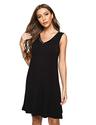
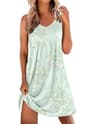
GYS sleeveless bamboo-viscose gown, V neck, knee-length— the pick. The cut is right on every axis that matters: no sleeves, no collar, no waistband, knee-length with an open hem. Viscose handles a damp night better than any cotton knit will. The honest cons: the listing publishes no blend percentages (the other GYS piece in our registry states 95% viscose and 5% spandex, this one states nothing), and viscose is at its weakest when wet, so it wants a cold wash and no hot dryer.
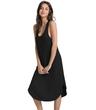
WiWi sleeveless racerback nightshirt— the one that leaves the most skin uncovered, which is the lever this category is really about. A racerback frees the whole upper back. The listing also states 4-way stretch, which is the property that stops a gown binding when you roll. Cons: narrow racerback straps concentrate pressure on two small areas of the shoulder, no blend percentages are published, and the listing markets it for hot flashes and night sweats, which are symptoms rather than a product category.
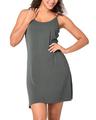
BAMBOO COOL adjustable spaghetti-strap chemise— the only gown here with adjustable straps, which means you can set where the hem sits rather than hoping. That is the difference between a gown that stays put and one wrapped around your waist at 3am. Cons: spaghetti straps are the least stable cut on the page, the breathability claim above is unsupported, and no percentages are published.
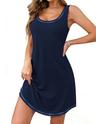
Ekouaer bamboo-viscose sleeveless chemise— the budget pick, and the cheapest piece of sleepwear in our registry by a clear margin. Sleeveless crew-neck tank cut, loose, no waistband. At this price the cloth is thin, which is largely the point and partly the catch: thin viscose knit goes transparent and clingy when wet, and cheap viscose wears out faster.
Ekouaer cotton sleeveless pleated nightgown— the cotton option, and the right answer if your nights are warm and dry rather than damp. It states its blend exactly, which almost nothing else here does: 95% cotton, 5% spandex. Cotton absorbs sweat into the fiber and, unlike viscose, an open cotton structure also lets air through. Cons: the pleats fold extra cloth across the front of the chest, which is where you least want more of it, and the listing does not say whether the cloth is knit or woven.
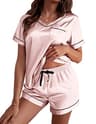
Ekouaer satin short-sleeve set — skip this.It is a set rather than a gown and we have kept it here deliberately, because the satin trap is identical in both shapes and the satin nightgown aisle is enormous. The listing’s title leads with the word silk and calls the product a “Soft Silk Pajama”; the same bullet states the fabric is 95% polyester and 5% spandex. Satin is a weave, not a fiber — it floats yarns over several others to build a smooth face, and a smooth, dense synthetic face is exactly what feels cool for the first minute and clammy an hour later, because polyester does not absorb. Read the material line, not the title.
Cut and fiber as each listing states them. 'Not published' means the listing gives no figure — which is true of blend percentages on four of the five gowns.| Nightgown | Cut | Fiber as labeled | Blend percentages published | Best for |
|---|
| GYS | Sleeveless V neck, knee-length | Viscose derived from bamboo | No | Waking up damp |
| WiWi | Sleeveless racerback, 4-way stretch | Viscose derived from bamboo | No | Leaving the upper back clear |
| BAMBOO COOL | Adjustable spaghetti strap chemise | Viscose derived from bamboo | No | Setting the hem where you want it |
| Ekouaer viscose | Sleeveless crew-neck tank chemise | Viscose derived from bamboo | No | Spending the least |
| Ekouaer cotton | Sleeveless pleated, knee-length | 95% cotton, 5% spandex | Yes | Waking up warm but dry |
| Ekouaer satin set (skip) | Short sleeve, two pieces | 95% polyester, 5% spandex | Yes | A cool room, not a hot one |
The last column is how to use this page. Damp and warm are different problems with different answers, and a nightgown is cheap enough that owning one of each is a reasonable thing to do — the same argument as owning two sets of sheets, for the same reason: you always start the night on something dry.
What a nightgown will not fix
Sleepwear is the cheapest layer on the bed to change and the thinnest. If the room sits at 76 degrees or the mattress is a thick foam slab, what you are wearing is not the variable that is beating you. The order to work through, cheapest and most effective first, is on how to stop sleeping hot, and if the nights are specifically sweaty rather than warm, the bedding side of that is on the best cooling sheets for night sweats and bedding for menopause night sweats.
If you’re drenched most nights, or it started suddenly, that’s worth raising with a doctor — it’s outside what bedding can fix, and outside what we cover.
How we picked these
Cut first, fiber second, marketing language ignored entirely — the method is on how we pick. We have not worn these, laundered them or measured them, and we never claim to have. Each listing was read on the date stamped in its product table, each one was confirmed in stock before we featured it, and every figure above is either stated on the listing or marked “Not published”. Sizing and fit we cannot help with at all: these are garments, every brand cuts differently, and the only reliable move is to buy from a seller whose return window you have checked.