Skip to content
Chill & Chamber

Sleeping Hot

The best cooling pajamas for hot sleepers

What you wear to bed is the only layer closer to your skin than the sheet, and it follows the same rules: less cloth beats better cloth, absorbent fibers beat polyester, and the word cooling on a listing predicts nothing.

By Stephen V. · Specs last verified · Prices live as of September 15, 2026

We earn a commission if you buy through our links, at no extra cost to you. It never changes what we rank or what we say — how this is funded and how we pick.

The coolest pajamas are the least pajamas, in a fiber that absorbs sweat. Decide on coverage first — shorts, a cami or tank, a sleeveless gown — then choose cotton, linen or viscose over polyester, and a loose woven cloth over a clingy one if you run hot rather than damp. Read the material line, not the title: some “bamboo” pajamas are half polyester, and some “silk” ones are polyester outright.

Everything else on this site is about the bed. This page is about the one layer that sits closer to you than the sheet, and the first thing to say about it is the cheapest thing: clothing exists to keep you warm. It does that by holding a thin layer of still air against your skin, and it does it whether or not the listing says cooling. Every extra inch of sleeve and leg is a little more insulation. So the best pajamas for a hot sleeper are, before anything else, less pajamas.

That makes the obvious question a fair one: why wear anything? If you run hot and dry, wearing nothing is a perfectly good answer that costs nothing, and we would rather say so than sell you a set. It stops being the obvious answer when you sweat. A thin, absorbent layer does the same job against your skin that a good sheet does — it takes moisture off you and spreads it out where it can evaporate — with one practical difference: on a bad night, a damp top is a thirty-second change at 3am, and a damp bed is a job. That is the real case for pajamas if you wake up wet, and it is why this page spends so long on fiber.

If night sweats are the reason you are shopping, the fabric logic here is the same one behind our sheets for night sweats, applied to what you wear instead of what you lie on.

If you’re drenched most nights, or it started suddenly, that’s worth raising with a doctor — it’s outside what bedding can fix, and outside what we cover.

What we required before a set could appear here

Sleepwear is sold largely on photographs of people who are not asleep. Every pick below had to clear all three of these first.

  • It states what the fabric is made of. Either as percentages or as 100% of one fiber, in the listing itself. US textile rules already require the sewn-in label to list each fiber by its generic name and percentage by weight, but you do not get to read the label until the set arrives. The listing is where you make the decision, and a listing that will not state the blend is asking you to buy the fiber unseen.
  • It states the cut. Sleeve length and leg length, in words, because how much of you a set covers is the first thing that decides how warm it sleeps.
  • It is currently purchasable. Every product here was resolved from a live Amazon listing on the date stamped in its write-up, and prices are pulled live rather than typed in by us. The full method is on how we pick.

What we did not require was the word cool. Four of the seven listings below use it somewhere in their title or feature bullets. The linen set, which we rank as the one best equipped for a hot and humid night, does not use it at all.

The three things that decide how pajamas sleep

Rank sleepwear on these, in this order, and most of the category sorts itself out.

One: coverage, because cloth is insulation. Shorts alone cover the least. A cami or tank with shorts comes next, then a sleeveless nightgown, then short sleeves with shorts, then short sleeves with capris, and long sleeves with long pants cover the most. No fiber reverses that order: a long-sleeve linen set is still a long-sleeve set. If you only take one thing from this page, take the sleeve and leg length seriously before you look at anything else, because it is the variable that the rest of the listing will try hardest to distract you from.

Two: the fiber, because it decides what happens to sweat. Cotton and linen absorb moisture into the fiber. Viscose and lyocell absorb it and spread it quickly. Plain polyester does neither, and satin sleepwear is often polyester, because satin is the name of a weave rather than a fiber. The small share of spandex in most stretchy sets does not absorb either, which is why a set that is 97% absorbent fiber is a different object from one that is 50%. This is the same hierarchy we use for bedding, set out in full on what fabrics sleep coolest, and the difference between absorbing and wicking is on what wicking really means.

Three: construction and fit, because cling undoes airflow. A woven cloth — poplin, seersucker, linen — holds its own shape, so a loose woven set hangs away from you and lets the air under the covers reach your skin. A knit cloth stretches and follows your body, which is exactly why it feels soft and exactly why it sticks to you once it is damp. Neither is wrong. They are two different trades: woven for someone who runs hot, knit viscose for someone who runs wet and wants the fiber doing the work. The loose cut matters as much as the cloth, since air can only reach skin that the fabric is not pressed against.

Not on that list: the word cooling, a “cool-touch” claim, and price. None of the three predicts how a set sleeps.

Read the material line, not the title

This is the single most useful habit when shopping for sleepwear, and the listings we read for this page made the case better than we could. All of these were read on September 15, 2026, from the listings’ own feature bullets:

  • A nightgown titled as a bamboo viscose cooling sleep shirt whose material line reads 48% polyester, 47% viscose from bamboo and 5% spandex. There is more polyester in it than the fiber in its name.
  • A women’s set titled viscose from bamboo cooling pajamas that is 48% viscose, 47% polyester and 5% spandex, cut with long jogger pants.
  • A set sold as merino wool pajamas that is 86% cotton and 14% wool.
  • A men’s set from a brand with the word bamboo in its name whose feature bullets describe the fabric as soft, lightweight and moisture-wicking and never state a fiber at all.
  • And our skip, titled as a silk pajama, whose own first bullet says 95% polyester and 5% spandex.

None of those numbers is hidden. Each is printed in the listing, just not in the title, which is the only part a search result shows you. It is also worth knowing what the word bamboo is doing when it does appear: the FTC’s position is that fabric made from bamboo should carry a generic fiber name such as rayon, or “rayon made from bamboo”, because no trace of the original plant survives the process. Bamboo tells you where the cellulose came from. Viscose, a type of rayon, tells you what the fiber does. The first two of those listings, and our skip, come from the same brand as our best nightgown pick, which is the useful lesson: brands do not sleep hot or cool, fabrics do.

How to read the picks

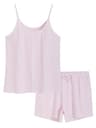
Our best overall is a cotton seersucker cami and shorts, and it wins on the first ranking factor before it gets to the others. Spaghetti straps and shorts leave almost everything uncovered, the fiber is stated as 100% cotton with nothing unnamed, and seersucker is woven so that some stripes pucker while others lie flat. That pucker is the point: every raised ridge is cloth that is not touching you, which is the same reason a waffle weave breathes better than its thickness suggests. It is also budget-priced, which matters, because the honest limitations push you toward owning two. Its care tips say not to tumble dry, which is a real inconvenience for something you may be washing every other day. It publishes no fabric weight and no certification. And cotton can feel heavy once it is genuinely soaked, so if you drench a set rather than just warm it, the viscose pick below pulls sweat off your skin faster.

The best for night sweats pick is the opposite trade. It is 97% viscose derived from bamboo and 3% spandex, the most viscose of any set we read that stated its blend, cut as a racerback tank and shorts so the fiber does not come with extra coverage. Where the seersucker is chosen to stand off your skin, this is chosen to sit on it and take the moisture in. The listing is candid that the ribbed knit feels “like a second skin”, and that is both its advantage and its limitation: it follows your body closely and it will cling when damp, so someone who runs hot but dry will like the seersucker better. The no-pilling, no-fading and no-shrinking claims are the seller’s rather than anything we can check, and because viscose is at its weakest wet, the cold, gentle wash it asks for is worth following. It is mid-priced, and it states no certification.

The best for men pick is a lightweight cotton poplin short set from Amazon’s own label, and it is the best-documented listing on this page. It states a relaxed fit through the hip, thigh and leg, publishes a 9-inch inseam on a size Medium, and names an OEKO-TEX STANDARD 100 certification, which covers the finished textile against a list of harmful substances. That is more measurement than any other listing here offers. Its limitations are specific. It describes the cloth as cotton poplin with “gentle stretch” without saying what the stretch fiber is or how much of the blend it takes up. A notch-collar button shirt puts more cloth around the neck and chest than a tee or a tank would. And poplin is a flat, smooth weave, so it lies closer to the skin than seersucker does. For a man who sleeps hot and wants something he would open the door in, it is still the sensible default, and it is budget-priced.

The best for a humid room pick is 100% linen, cut as a short-sleeved top and shorts, with an OEKO-TEX Standard 100 certification stated. Linen earns this slot for the reason set out on cotton vs linen: the stiff flax fiber holds the cloth off your skin and still absorbs a great deal of moisture before it feels wet, and in a humid room, where evaporation is slow, a fiber that does both is the one that keeps working. The same seller lists a long-sleeve, long-pant version in the same fiber; for a hot sleeper, that is the one to scroll past. The honest drawbacks: this is the most expensive set on the page by a clear margin, it publishes no fabric weight, the certification is stated without a certificate number you could look up, and the listing says linen gets softer with every wash, which is a polite way of saying it starts out crisp. It creases, too. A men’s version from the same seller exists, but the listing we read describes pajama pants in its title and loose shorts in its bullets, so check the photos for the variant before you order.

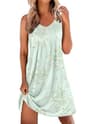
The best nightgown is a sleeveless, knee-length, loose cotton gown that states its blend exactly: 95% cotton and 5% spandex. A nightgown’s advantage is structural rather than about fabric. There is no elastic waistband gripping your middle, and the hem is open, so the air under the covers reaches your legs directly instead of meeting a second layer of cloth. It is also among the cheapest pieces here. Against it: the 5% spandex does not absorb, the listing does not say whether the cloth is knit or woven, and the pleated front folds extra cloth over the chest, which is the one place on a nightgown where you want less. It states no certification, no fabric weight and no care instructions.

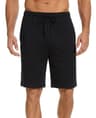
The best if you skip the top pick is for men who already sleep without a shirt and only want something on below the waist. They are knit sleep shorts that state both numbers of their blend, 95% bamboo viscose and 5% spandex, and bottoms only is the least clothing any pick on this page asks you to wear. The knit lies against the skin and will cling when damp, the same trade as the night-sweats set. The listing claims the shorts stay odor-free after four days of wear, which is not a reason to skip washing anything you sweat into. They are budget-priced, sold as a single pair.

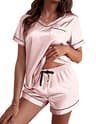
The skip is a short-sleeve satin set, and the frustrating thing about it is that the cut is right. Short sleeves and shorts are exactly the coverage this page recommends. The cloth is the problem. Its title leads with the word silk; its own first bullet says 95% polyester and 5% spandex. Polyester does not absorb, so sweat stays between the fabric and your skin, and a smooth, dense satin face is precisely the kind of surface that feels cold the moment you put it on and clammy an hour later. That first cool touch is contact, not cooling, and it stops once the fabric reaches skin temperature — the same effect we explain for sheets on do cooling sheets work. It is very cheap, it resists wrinkles, and in a cool bedroom it is a perfectly pleasant thing to sleep in. For a hot sleeper it is the wrong fiber in the right shape.

What these listings actually publish

Published specs as the listings state them, read on September 15, 2026. Our read of published construction, not a wear test.
Fiber, as statedConstructionCutCertification statedPrice band
Best overall100% cottonSeersucker, wovenCami and shortsNone statedBudget
Best for night sweats97% viscose from bamboo, 3% spandexRibbed knitRacerback tank and shortsNone statedMid
Best for menCotton with stretch, blend not statedPoplin, wovenShort-sleeve shirt and shortsOEKO-TEX STANDARD 100Budget
Best for a humid room100% linenNot publishedShort sleeves and shortsOEKO-TEX Standard 100, no numberPremium
Best nightgown95% cotton, 5% spandexNot publishedSleeveless, knee-lengthNone statedBudget
Best if you skip the top95% bamboo viscose, 5% spandexKnitShorts onlyNone statedBudget
Skip this95% polyester, 5% spandexSatinShort sleeves and shortsNone statedBudget

Two of the seven state a certification, and neither prints a certificate number. One publishes a garment measurement. None publishes a fabric weight, which is the figure that would actually tell you how much cloth you are buying. That is the state of the category, not a gap in our reading, and it is why the cut and the material line carry so much weight on this page: they are nearly the only hard facts a sleepwear listing gives you.

Night sweats: the routine does more than the pajamas

The same two habits that matter most on our bedding for menopause night sweats page matter here, and both cost less than any pick above.

  • Keep a second set by the bed. Folded on the nightstand, not in a drawer across the room. Changing a damp top takes seconds and saves you from stripping the sheets, which is the whole practical argument for wearing something rather than nothing.
  • No fabric softener, ever. Softener works by leaving a water-repelling film on the fiber, which cancels the absorbency you chose cotton, linen or viscose for. The laundering rules are on care and washing, and they apply unchanged to what you wear.
  • Match the fiber to the sheet. An absorbent top on a polyester microfiber sheet is doing half the job, because everything below you still traps moisture. If you wake up wet, the sheet is the larger surface and the bigger lever.
  • Wash viscose cold. Regenerated cellulose is at its weakest wet, and hot, aggressive washing is what makes it pill and lose shape well before cotton would.

If you are still hot in the lightest set here

Then what you are wearing was not the problem, and a better pair of pajamas will not fix it. Try one night in nothing at all as a test. If that is still too warm, the heat is coming from the bed or the room: check the loft of what is on top of you first, then the surface you are lying on, then the bedroom itself. That order, and the reasoning behind it, is on what to fix first, and the room-level fixes that work without air conditioning are on how to stay cool at night.
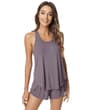
Quick picks

Ranked on published construction and buyer fit. Select a row to jump to the full write-up. We have not slept on any of these — here is exactly what we do instead.

#ProductBest forHow it coolsPrice
1
Latuza Women's Cotton Seersucker Cami and Shorts Pajama Set

Latuza Women's Cotton Seersucker Cami and Shorts Pajama Set

Women who want the least cloth in a woven cotton

Best overallAirflow (open structure)
$16.99 · View on Amazon

$22.9926% off

Price as of September 15, 2026. #ad How we’re funded

2
NACHILA Women's Viscose from Bamboo Ribbed Racerback Tank and Shorts Pajama Set

NACHILA Women's Viscose from Bamboo Ribbed Racerback Tank and Shorts Pajama Set

Waking up damp rather than just warm

Best for night sweatsMoisture wicking
$37.99 · View on Amazon

$39.995% off

Price as of September 15, 2026. #ad How we’re funded

3
Amazon Essentials Men's Lightweight Cotton Poplin Pajama Set, Short Sleeve

Amazon Essentials Men's Lightweight Cotton Poplin Pajama Set, Short Sleeve

Men who want a woven short set

Best for menAirflow (open structure)
$25.00 · View on Amazon

Price as of September 15, 2026. #ad How we’re funded

4
Simple&Opulence Women's 100% Linen Pajama Set, Short Sleeve Shirt and Shorts

Simple&Opulence Women's 100% Linen Pajama Set, Short Sleeve Shirt and Shorts

Humid bedrooms, or sweating and hot at once

Best for a humid roomAirflow (open structure)
$69.99 · View on Amazon

Price as of September 15, 2026. #ad How we’re funded

5
Ekouaer Cotton Sleeveless Pleated Nightgown

Ekouaer Cotton Sleeveless Pleated Nightgown

Women who find waistbands and shorts too warm

Best nightgownLess insulation
$14.99 · View on Amazon

$19.9925% off

Price as of September 15, 2026. #ad How we’re funded

6
GYS Men's Bamboo Viscose Pajama Shorts

GYS Men's Bamboo Viscose Pajama Shorts

Men who sleep without a top

Best if you skip the topLess insulation
$23.99 · View on Amazon

$29.9920% off

Price as of September 15, 2026. #ad How we’re funded

7
Ekouaer Satin Short Sleeve Pajama Set

Ekouaer Satin Short Sleeve Pajama Set

A cool bedroom, not a hot sleeper

Skip thisCold-touch conduction
$16.99 · View on Amazon

Price as of September 15, 2026. #ad How we’re funded

#1Best overall

Latuza Women's Cotton Seersucker Cami and Shorts Pajama Set

The least cloth you can wear to bed in a fiber that absorbs, woven into a puckered texture that holds it off your skin. Cheap enough to own two, which is the part that matters on a bad night.

What it gets right

  • States 100% cotton — no blend, no unnamed percentage
  • Seersucker's crinkled weave holds much of the cloth off your skin instead of lying flat against it
  • A strappy cami and shorts leave shoulders, arms and legs uncovered — the least fabric of any set here

Trade-offs

  • The care tips say do not tumble dry, which is a real inconvenience for a set you may wash every other day — buy two
  • No fabric weight and no certification stated
  • Cotton can feel heavy once genuinely soaked; viscose pulls sweat off the skin faster, and linen holds more before it feels wet
Published specifications
Material100% cotton
How it cools (our read)Airflow (open structure)
WeaveSeersucker (woven)
Certifications statedNone stated

Why the construction matters. Cut, as the listing describes it: a camisole with adjustable spaghetti straps and a closed button placket, relaxed fit, plus elastic-waist drawstring shorts. Seersucker is woven so that some stripes pucker and others lie flat, and the pucker is the point: every raised ridge is cloth that is not touching you.

Specifications read from the product listing on September 15, 2026. “Not published” means the listing does not state that figure.

#2Best for night sweats

NACHILA Women's Viscose from Bamboo Ribbed Racerback Tank and Shorts Pajama Set

97% viscose, the most of any viscose set we read, cut as a sleeveless tank and shorts. It is a ribbed knit that sits against your skin, and for someone who wakes up wet that is a trade worth making.

What it gets right

  • States 97% viscose derived from bamboo and 3% spandex — the most viscose of any set we read for this page
  • A racerback tank and shorts, so the fiber comes without extra coverage
  • The care instructions allow the dryer, which matters for a set you may be washing every other day

Trade-offs

  • A ribbed knit the listing itself describes as "like a second skin": it follows your body closely and will cling once damp
  • The no-pilling, no-fading and no-shrinking claims are the seller's, not something we can check; viscose is weakest wet, so follow the cold, gentle wash it asks for
  • No certification and no fabric weight stated
Published specifications
Material97% viscose derived from bamboo, 3% spandex
How it cools (our read)Moisture wicking
WeaveRibbed knit
Certifications statedNone stated

Why the construction matters. Cut, as the listing describes it: a racerback tank top with a curved hem, and side-split shorts with an elastic waistband. Regenerated cellulose absorbs very well and drapes flat against you rather than standing off, so this set is chosen for what it does with sweat rather than for airflow — the opposite trade to the seersucker set.

Specifications read from the product listing on September 15, 2026. “Not published” means the listing does not state that figure.

#3Best for men

Amazon Essentials Men's Lightweight Cotton Poplin Pajama Set, Short Sleeve

A woven cotton short set with a published inseam, a stated relaxed fit and an OEKO-TEX certification, priced like a basic. The sensible default for a man who sleeps hot.

What it gets right

  • Lightweight cotton poplin: a woven cloth in a fiber that absorbs sweat, cut relaxed so it hangs off the body
  • Certified to OEKO-TEX STANDARD 100, stated on the listing
  • Publishes its measurements — a 9-inch inseam and a relaxed fit through hip, thigh and leg — which is rare in this category

Trade-offs

  • Described as cotton with "gentle stretch", but the listing does not say what the stretch fiber is or how much of it there is
  • A notch-collar button shirt is more cloth around the neck and chest than a tee or a tank
  • Poplin is a flat, smooth weave, so it lies closer to the skin than seersucker's pucker
Published specifications
MaterialCotton poplin with stretch (stretch fiber not stated)
How it cools (our read)Airflow (open structure)
WeavePoplin (woven)
Certifications statedOEKO-TEX STANDARD 100

Why the construction matters. Cut, as the listing describes it: a short-sleeve button-front shirt with a notch collar and one patch pocket, plus elastic drawcord shorts with a button fly, side pockets and a 9-inch inseam on a US size Medium. A published inseam is the one fit number that tells you how much leg you will actually be covering.

Specifications read from the product listing on September 15, 2026. “Not published” means the listing does not state that figure.

#4Best for a humid room

Simple&Opulence Women's 100% Linen Pajama Set, Short Sleeve Shirt and Shorts

The one fiber that absorbs a lot of sweat and still moves air, in a short set. It costs the most of anything here, and in a humid bedroom it is the set most likely to earn that.

What it gets right

  • States 100% linen, and states an OEKO-TEX Standard 100 certification
  • Stiff flax fiber holds the cloth off your skin while it absorbs moisture — the only common fiber that does both well
  • Short sleeves and shorts, so you get the fiber without the coverage penalty of the long-sleeve version

Trade-offs

  • The most expensive set on this page by a clear margin
  • No fabric weight published, and the certification is stated without a certificate number you could look up
  • The listing says linen gets softer with every wash, which is a polite way of saying it starts out crisp; it also creases
Published specifications
Material100% linen
How it cools (our read)Airflow (open structure)
Certifications statedOEKO-TEX Standard 100

Why the construction matters. Cut, as the listing describes it: a short-sleeved top and short pants. The same seller lists a long-sleeve, long-pant set in the same fiber, and for a hot sleeper that is the one to scroll past: identical cloth, far more of you covered.

Specifications read from the product listing on September 15, 2026. “Not published” means the listing does not state that figure.

#5Best nightgown

Ekouaer Cotton Sleeveless Pleated Nightgown

No waistband, no sleeves, and an open hem that lets air in from below, in a fabric that is 95% cotton by the listing's own numbers. The cheapest way on this page to wear very little.

What it gets right

  • States its blend exactly: 95% cotton, 5% spandex
  • Sleeveless, knee-length and loose, with no waistband holding heat in at the middle
  • One of the cheapest pieces on this page

Trade-offs

  • The 5% spandex does not absorb, and the listing does not say whether the cloth is knit or woven
  • Pleats fold extra cloth over the front of the chest, which is exactly where you do not want more of it
  • No certification, no fabric weight and no care instructions stated
Published specifications
Material95% cotton, 5% spandex
How it cools (our read)Less insulation
Certifications statedNone stated

Why the construction matters. Cut, as the listing describes it: loose fit, sleeveless, V-neck, knee-length, with pleated front details. A nightgown's advantage over a shorts set is structural rather than about fabric: there is no elastic band gripping your waist, and the hem is open, so the air under the covers reaches your legs directly.

Specifications read from the product listing on September 15, 2026. “Not published” means the listing does not state that figure.

#6Best if you skip the top

GYS Men's Bamboo Viscose Pajama Shorts

For the man who already sleeps without a shirt and only wants something on below the waist: 95% viscose, stated to the percent, and nothing else to overheat in.

What it gets right

  • States the full blend, both numbers: 95% bamboo viscose, 5% spandex
  • Bottoms only, which is the least clothing any pick on this page asks you to wear
  • Absorbent regenerated cellulose, so sweat goes into the fiber rather than sitting on it

Trade-offs

  • A knit, as the title says, and knit viscose lies against the skin and clings when damp
  • The listing's claim that they stay odor-free after four days of wear is no reason to skip washing them if you sweat
  • Labeled "bamboo viscose"; the fiber is viscose, and bamboo is only where the cellulose came from
Published specifications
Material95% bamboo viscose, 5% spandex
How it cools (our read)Less insulation
WeaveKnit
Certifications statedNone stated

Why the construction matters. Cut, as the listing describes it: lightweight knit sleep shorts with pockets. A top is the easiest thing to leave off, and for plenty of men the right pajamas for a hot night are exactly this and nothing else.

Specifications read from the product listing on September 15, 2026. “Not published” means the listing does not state that figure.

#7Skip this

Ekouaer Satin Short Sleeve Pajama Set

Skip this one

The cut is right and the cloth is wrong. The title calls it a silk pajama; its own material line says 95% polyester, in a smooth satin weave that feels cool for a minute and then leaves sweat sitting on your skin.

What it gets right

  • Short sleeves and shorts — the right amount of coverage
  • States its real blend in the feature bullets: 95% polyester, 5% spandex
  • Very cheap, resists wrinkles, and is genuinely pleasant to put on

Trade-offs

  • Polyester does not absorb, so sweat stays between the cloth and your skin
  • The title says silk and the fabric is polyester — satin names a weave, not a fiber
  • The slick, cool first touch is contact, and it fades once the fabric reaches skin temperature
Published specifications
Material95% polyester, 5% spandex
How it cools (our read)Cold-touch conduction
WeaveSatin
Certifications statedNone stated

Why the construction matters. The listing's title leads with the word silk and its first bullet calls the product a "Soft Silk Pajama", while the same bullet states the fabric is 95% polyester and 5% spandex. Satin floats yarns over several others to make a smooth face, and smooth, dense cloth is exactly what feels cold at first contact and clammy an hour later. Read the material line, not the title.

Specifications read from the product listing on September 15, 2026. “Not published” means the listing does not state that figure.

Common questions

What are the best pajamas for hot sleepers?

The ones that cover the least, in a fiber that absorbs sweat. Shorts with a cami or tank, a sleeveless nightgown, or just shorts will sleep cooler than any long-sleeve set regardless of fabric. Within that, choose cotton, linen or viscose over polyester, and a loose woven cloth such as seersucker or poplin if you run hot rather than damp.

Is it cooler to sleep naked or in pajamas?

If you run hot and dry, sleeping in nothing is cooler and costs nothing. If you sweat, a thin layer of an absorbent fiber can feel better, because it takes moisture off your skin the way a good sheet does, and on a bad night you can change a damp top in seconds instead of changing the bed. Either way, avoid polyester sleepwear, which traps sweat against you.

Are bamboo pajamas good for night sweats?

Pajamas that are mostly viscose made from bamboo are a good choice, because viscose absorbs moisture well. The catch is the word mostly: some listings titled bamboo are close to half polyester, and one we read has more polyester than viscose. Read the material percentages rather than the title, and look for a set where viscose is the large majority of the blend.

Are satin or silk pajamas cooling?

Satin pajamas usually are not. Satin is a weave, not a fiber, and satin sleepwear is often polyester, which does not absorb sweat. It feels cool when you first put it on and then clammy once you sweat. Some listings call polyester satin silk in the title, so check the fiber percentages before you buy.

Are linen pajamas cooler than cotton?

Linen is the cooler fiber at the extreme. Its stiff flax fibers hold the cloth off your skin while absorbing a lot of moisture, which makes it the best choice for a humid room. A loose cotton seersucker or poplin is close behind, cheaper and softer from day one. Cut matters more than either: a linen long-sleeve set is warmer than a cotton cami and shorts.

What should a man wear to bed if he sleeps hot?

Start with less: many men sleep cooler in only a pair of light shorts. If you want a set, a loose woven cotton poplin short-sleeve shirt and shorts is the sensible default, and viscose sleep shorts suit someone who sweats. Avoid polyester lounge shorts and anything long-sleeved.

Sources

Try the cheap thing first

Work down this list in order. Each step costs more than the one above it, and most people stop before the bottom. Replacing a mattress to fix a problem your sheets were causing is the most expensive mistake in this category.

  1. 1Pillowcase, then pillowUnder $20 to start
  2. 2Sheets$25-$60
  3. 3Top layer$30-$90
  4. 4Topper or pad$30-$300
  5. 5The mattress$200-$900

Before any of it: work out which one is actually your problem. If your bedroom is 78°F, none of these will save you.