Weighted blankets and heat: how to stay cool under one
A weighted blanket calms by pressure, pressure comes from density, and density is the enemy of airflow. That tension is the whole problem — and it is manageable.
By Stephen V. · Specs last verified · Prices live as of October 25, 2026
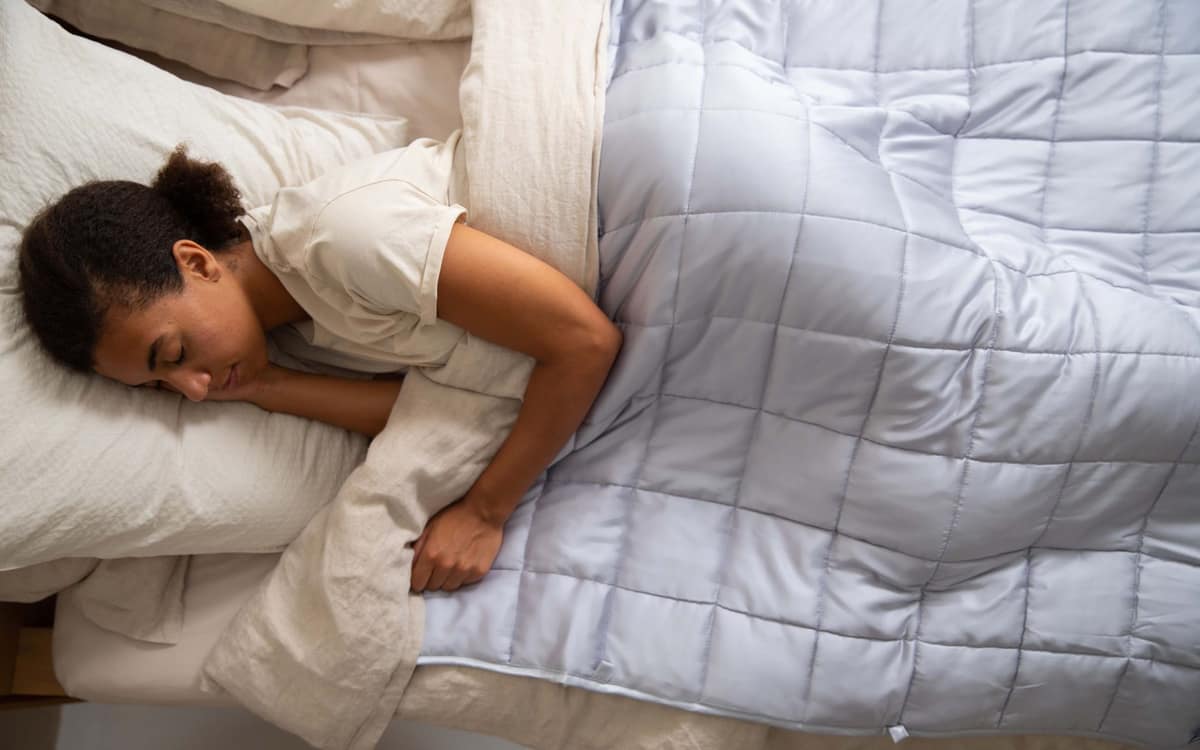
Most weighted blankets sleep warm, because weight comes from density and density is the enemy of airflow. You manage it with two choices: a dense fill — glass beads rather than plastic pellets, which keeps the blanket thin — and a breathable cover, cotton or bamboo viscose rather than minky or fleece. A very hot sleeper in a hot room may still want to save it for cooler months.
Why weight and heat travel together
A weighted blanket calms by deep pressure, and pressure is exactly the problem for temperature. The weight presses the fabric flat against your skin and closes the small gap that convection needs to carry warm air away, so the feature that makes the blanket soothing also makes it insulate. This is inherent — no weighted blanket escapes it entirely — but how much heat you pay is set almost entirely by what the weight is made of and what it is wrapped in, and both are yours to choose. The general case for weight without the heat penalty is on the cooling weighted blanket roundup.
The fill: glass beads over plastic pellets
This is the first choice, and it is usually printed on the listing. Glass beads are far denser than plastic poly pellets, so a given weight of them occupies much less volume. Less volume means a thinner quilt, a thinner quilt has less loft, and loft is warmth. Plastic-pellet blankets have to reach their target weight with bulkier pellets, and cheaper ones pad the difference with extra polyester filler to stop the pellets shifting — loft you did not want, added purely to make up the pounds. A 15 lb glass-bead blanket and a 15 lb pellet blanket press on you identically and insulate you differently. Choose glass beads and most of the heat problem is solved before you look at anything else.
The cover: where more of them go wrong
The cover matters even more than the fill, because it is the surface actually touching you under all that pressure. The default is minky — a plush polyester pile, chosen because it feels lovely in a shop — and pile fabrics work by holding a deep layer of still air against your skin, which is the textbook definition of insulation. Press 15 lb on top of that and you have built a sweatbox. A cotton or bamboo-viscose cover does the opposite: it breathes, and it absorbs the sweat that pressure guarantees. If a blanket you like only comes in minky, the cheap fix is to skip its shell and button it inside your own breathable duvet cover.
The combination that stays cool
Put the two right choices together: glass-bead fill for the least loft, in a cotton or bamboo-viscose cover for airflow and sweat handling. That is the coolest a weighted blanket gets. It is still a weighted blanket — it will always restrict airflow more than a bare sheet — but this is the version that costs you the least heat for the calm rather than the most.
What a “cooling” label does and does not tell you
“Cooling weighted blanket” on a listing can mean two very different things. Sometimes it means the useful build — glass-bead fill in a breathable or engineered cover — and sometimes it means a cold-touch face bonded to an otherwise ordinary blanket, which gives you a cool first-touch sensation that fades in minutes and does nothing for the airflow the weight has already closed off. Read past the word to the two things that actually decide the outcome: the fill material and the cover fiber. If the listing states glass beads and a cotton or viscose cover, the label is earning its place; if it states a Q-Max number and a minky shell, it is not.
Weight, briefly
The common guideline is roughly ten percent of your body weight, which is about how the blanket feels rather than how hot it runs. Weight and warmth are separable: a 20 lb glass-bead blanket in a cotton cover can sleep cooler than a 12 lb pellet blanket in minky. So if you are between sizes and you sleep hot, the lighter option is the safer bet for temperature — but the fill and the cover decide far more than the number of pounds does.
Who should skip one
Be honest about the room. A very hot sleeper in a hot bedroom may simply not tolerate any weighted blanket in the middle of summer, because there is a floor to how little even the best combination insulates, and pressure will always work against airflow. If that is you, use the weighted blanket in the cooler months, choose a lighter weight for warm nights, or set it aside for July entirely and build a summer bed out of thin, sheddable layers instead — the whole approach is on the summer bedding guide. A weighted blanket cannot cool a hot room, and if the room is the real problem it will make the night worse rather than better — the same limit that applies to every passive layer, explained on how cooling blankets work.
If night sweats are why the weight has become too much, the light top layers we would use instead are on blankets for night sweats.
One boundary worth stating plainly: people buy weighted blankets for calm and for a range of therapeutic reasons, and those claims are outside what this site covers. We are judging one thing only — whether a given weighted blanket sleeps hot, and how to make it sleep cooler.
| Choice | Cooler | Warmer | Why |
|---|---|---|---|
| Fill | Glass beads | Plastic poly pellets | Denser fill means less volume and less loft |
| Filler | Beads alone | Added polyester batting | Extra loft added only to reach the weight |
| Cover | Cotton or bamboo viscose | Minky, fleece, sherpa | Pile holds still air against you; woven cotton breathes |
| Weight | Lighter, if between sizes | Heaviest you can find | A comfort guide, not a thermal one |
| Room | Cool bedroom | Hot bedroom | Pressure needs somewhere cooler for the heat to go |
Weight itself is the other half of this, and getting it wrong is a temperature mistake as well as a comfort one: a blanket at the top of your range pins you in place and removes the small adjustments you use to vent heat overnight. The 10 percent rule, where it comes from and why the standard 15-pound blanket is light for most adults is on how heavy a weighted blanket should be.
One practical warning before you buy any of these: a soaked 15 lb blanket outweighs what most domestic washers are rated for, and the shell you sleep under is the part that needs laundering most. The method and the weight limits are on how to wash a weighted blanket.
Common questions
Do weighted blankets make you hot?
Most do, because the pressure that calms you also presses the fabric flat against your skin and closes the gap air needs to move. It is inherent to a weighted blanket, but how hot depends on the fill and cover: glass beads keep it thin, and a breathable cotton or viscose cover lets sweat escape.
Are glass beads or plastic pellets cooler?
Glass beads, clearly. They are denser than plastic poly pellets, so the same weight takes up less volume and the quilt is thinner. A thinner quilt has less loft, and loft is what makes a layer warm. Cheaper pellet blankets also add polyester filler to reach the weight, which adds loft you do not want.
What cover is coolest for a weighted blanket?
A woven cotton or bamboo-viscose cover. Avoid minky, fleece and sherpa: those pile fabrics hold a deep layer of still air against your skin, which is insulation by design, and the blanket's weight presses it onto you. If your blanket only comes in minky, put it inside your own breathable duvet cover.
Can you use a weighted blanket in summer?
You can if the fill is dense and the cover breathes and the room is not hot, but a very hot sleeper in a hot bedroom may not tolerate one in peak summer, because pressure always works against airflow. In that case use it in cooler months, pick a lighter weight, or build a summer bed from thin, sheddable layers instead.
Read next
- Cooling BlanketsBlankets, comforters and duvet inserts. Loft is the variable, not the fabric.
- The best cooling weighted blanketsWeight without the heat penalty. Glass beads, shell fabric, and what to avoid.
- How cooling blankets work, and whether they doThe physics of cold-touch fabric, and why 'absorbs heat all night' is not a thing.
Try the cheap thing first
Work down this list in order. Each step costs more than the one above it, and most people stop before the bottom. Replacing a mattress to fix a problem your sheets were causing is the most expensive mistake in this category.
- 1Pillowcase, then pillowUnder $20 to start
- 2Sheets$25-$60
- 3Top layer$30-$90
- 4Topper or pad$30-$300
- 5The mattress$200-$900
Before any of it: work out which one is actually your problem. If your bedroom is 78°F, none of these will save you.