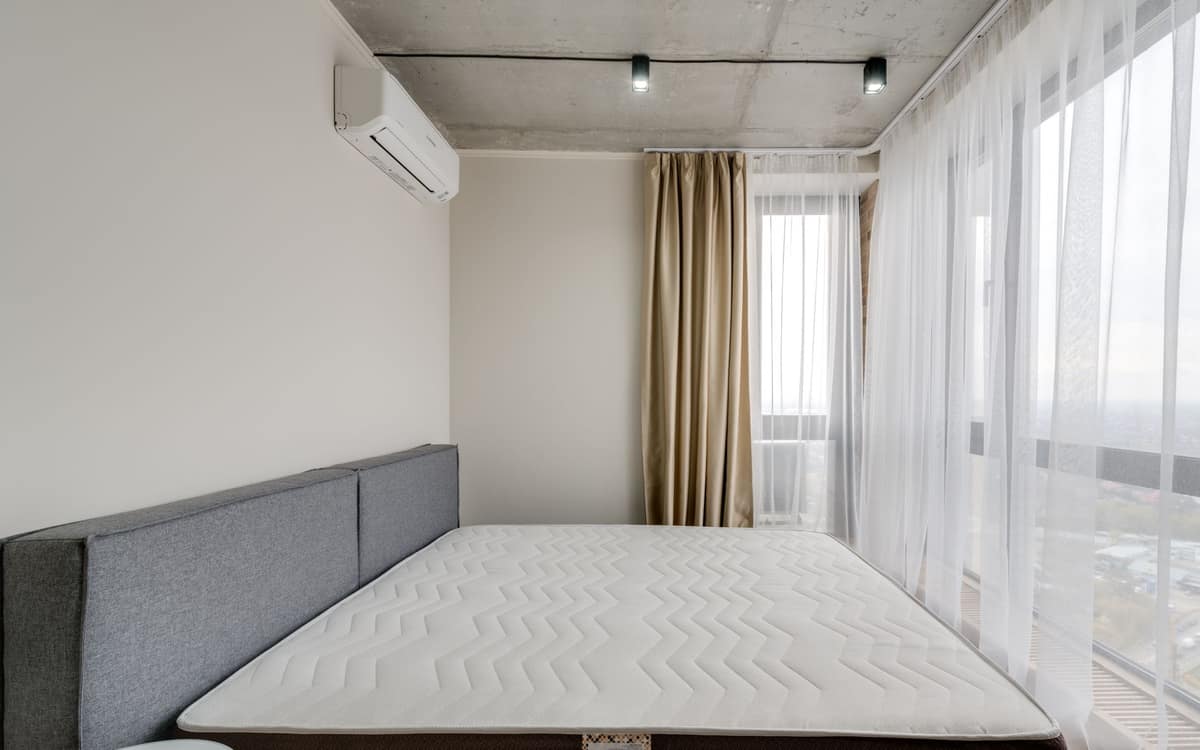
The smell is off-gassing: polyurethane foam is shipped vacuum-compressed, and as it expands it releases volatile organic compounds that were trapped in the cell structure during manufacture. It is almost always temporary. Unwrap the topper in a different room, not on the bed, leave it flat with a window open and a fan moving air across it, and most of the odor is gone in 24 to 72 hours; a faint smell can linger a week or two. Warmth and airflow speed it up; a sheet or a mattress protector over it slows it down a lot. If you cannot wait or the smell bothers you badly, the material that does not do this is natural latex— which smells faintly of rubber instead, and that one does not fade.
This is the most common complaint about a new foam topper and it generates two opposite overreactions: ignoring it entirely, or assuming the product is toxic and returning it within a day. Neither is right, and the useful version of the answer is mostly about mechanism and timing.
What is actually happening
Polyurethane foam is made by reacting polyols with isocyanates, which produces a cellular solid and leaves behind traces of reaction by-products, residual solvents and processing aids inside the cells. In an uncompressed slab those escape slowly over the factory and warehouse weeks. A topper sold online is compressed to a fraction of its volume and sealed in plastic, so none of that can leave — everything is still in there when you cut the bag open, and it all starts coming out at once as the foam expands.
That is why the smell is strongest in the first hours and why it fades. It is a finite quantity of material leaving a finite volume of foam. The variables you control are temperature, airflow and whether anything is covering the surface.
The method, in order
1. Unwrap it somewhere else. A spare room, a garage, a covered porch in dry weather. The mistake almost everyone makes is unwrapping it on the bed, which puts the source of the smell in the room you then have to sleep in and traps the emissions against a mattress that will absorb some of them.
2. Lay it flat and give it room. Flat, not folded, not leaning against a wall. The surface area in contact with air is what sets the rate, and a folded topper hides half of its own surface from the room.
3. Move air across it. A window and a box fan do more in six hours than a closed room does in three days. This is the single highest-leverage step and it costs nothing.
4. Keep it warm. Emission rates rise with temperature, so a warm room finishes faster than a cold garage. There is a real trade here in winter: a cold garage is well ventilated but slow, a warm bedroom is fast but you have to be in it. A warm room with a window cracked and a fan running is the best of both.
5. Leave it uncovered. No sheet, no protector, no mattress pad until the smell has gone. A cover is a barrier, and every barrier extends the timeline.
6. Do not spray anything on it.Fabric sprays mask the odor rather than removing the source, and wetting open-cell foam is a genuinely bad idea — it holds water deep in the structure where it cannot dry, and that is how a topper acquires a mildew smell that never leaves. A dry baking-soda sprinkle left for several hours and then vacuumed off is safe and modestly effective. The wet-cleaning rules are on topper cleaning and care.
Typical off-gassing behavior by topper material. Based on the construction each listing in our registry publishes; no listing publishes a VOC emission figure, which is why certification is the only checkable signal available.| Material | Smell on unboxing | How long | Does it fully go? |
|---|
| Compressed memory foam | Strong, chemical, plasticky | 24 to 72 hours for most of it | Yes — faint traces up to 2 weeks |
| Gel-infused memory foam | Strong, sometimes sweeter | 24 to 72 hours | Yes |
| Polyurethane 'cooling' foam | Strong | 24 to 72 hours | Yes |
| Natural latex | Mild, rubbery or vanilla-like | Days to soften, never fully | No — but most people stop noticing |
| Fiber-fill pad (no foam) | None to very slight | Hours | Yes |
| Wool pad | Faint lanolin smell | Days | Fades with airing |
Is it dangerous?
We are not going to tell you it is or it is not, because we have not measured anything and nobody selling these publishes an emission figure. What we can tell you is what is checkable.
The only meaningful signal available on a listing is certification. For polyurethane foam, CertiPUR-US tests for formaldehyde, specified flame retardants, heavy metals, phthalates and low VOC emissions. For natural latex, GOLS is an organic standard with its own testing. For the fabric that touches you, OEKO-TEX Standard 100 tests the textile for harmful substances and publishes a label check you can query. A listing that names one of those and gives a number you can look up is telling you something; a listing that says “non-toxic” with no standard behind it is telling you nothing.
If you are pregnant, buying for an infant, or you have asthma or chemical sensitivity, the sensible response is not to debate the risk but to remove it: air the topper outside the living space for longer, or buy a material that does not off-gas in the first place.
If you’re drenched most nights, or it started suddenly, that’s worth raising with a doctor — it’s outside what bedding can fix, and outside what we cover.
If you cannot wait: what to buy instead
Natural latex.It is not made by the polyurethane reaction, so it does not produce the same emissions. It does have its own smell — faintly rubbery, sometimes described as vanilla-like — which softens over a few days and then stays at a low level permanently. Most people stop registering it within a week. Latex is also the better material for a hot sleeper for a separate reason: its open-cell, pin-cored structure lets air move through the slab, where memory foam is closed and solid. The ranked picks are on the best latex toppers.
A fiber-fill pad.If what you actually want is a softer, cooler surface rather than three inches of pressure relief, a quilted pillow-top pad has no foam in it at all and effectively no smell. It is also the cheaper and cooler answer for most people, because it puts a fraction of an inch of fiber between you and the mattress instead of a slab — the full argument is on pad versus topper.
When the smell is not off-gassing
Three other smells get reported as “my topper smells” and none of them has this fix.
Musty or mildewed. That is moisture in the foam, usually from sweat that never dried or from a liquid spill that was blotted rather than extracted. Open-cell foam holds water deep inside where airflow cannot reach, and it does not resolve on its own.
Like sweat, on a topper you have owned a while.Body oils and perspiration salts accumulate in the fill. A protector would have prevented it; once it is in the foam it largely is not coming out, which is the argument for putting a washable barrier between you and anything you cannot launder — covered on the best mattress protectors.
Nothing, but the bed smells. Check the mattress itself. If there is yellow staining under the topper, the sweat went through months ago and the topper is not the source: how to get sweat stains out of a mattress.
How long to give it before returning it
Seventy-two hours of flat, warm, well-ventilated airing with nothing covering it. If it is still strong after that, it is outside the normal range and a return is reasonable — and note that most of the return windows on these products are long enough to let you run the test properly. What is not reasonable is judging it in the first hour, which is when every compressed foam product smells its worst.