Cleaning a cooling topper or pad
Nobody buys bedding for the laundry instructions, but on a bed where somebody sweats they decide how the thing performs a year from now.
By Stephen V. · Specs last verified · Prices live as of October 25, 2026
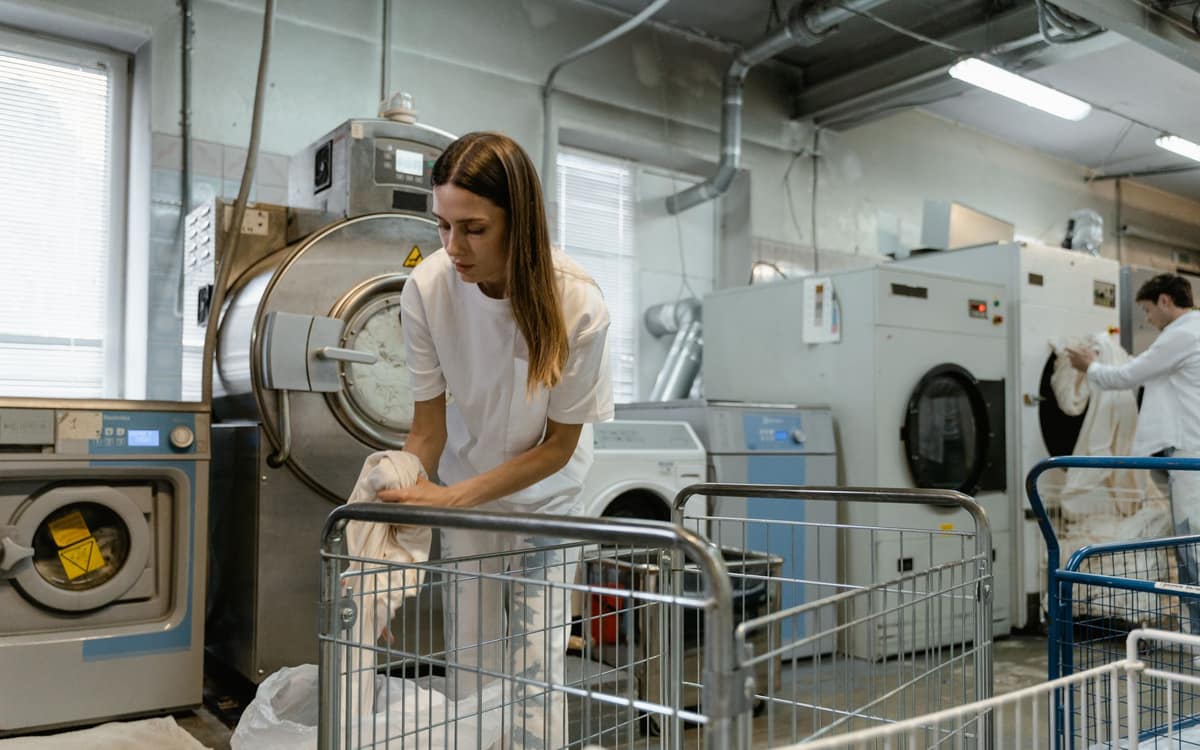
Fiber-filled pads and most protectors go in the machine on cold, gentle, and must be dried fully before they go back on the bed. Foam and latex toppers cannot be washed or wrung at all — spot-clean, air-dry, and keep a washable pad or sheet over them so the washable layer takes the sweat.
Why a dirty layer sleeps hotter
This is not a hygiene lecture with a temperature claim bolted on. There is a real thermal mechanism, and it is the same one that makes a damp sheet feel wrong.
A fiber layer moves heat away from you partly by letting moisture evaporate out of it. Evaporation carries a large amount of heat — far more per gram than simply warming the air does — which is why a breeze across damp skin feels dramatic and a breeze across dry skin does not. A pad that is already holding moisture from previous nights has less capacity to take up more, so the sweat stays closer to you and the evaporative route is partly closed.
Body oils compound it. Over months they coat the fibers, which makes them less absorbent and makes the surface feel slick rather than dry. Fiber layers also compress and mat as they age, and matted fill has less air in it, so the layer that was chosen for being light and open gradually becomes a denser, warmer one. None of this is dramatic in any single week; a year of it is very noticeable.
What can and cannot go in the machine
| Layer | Machine washable? | How to dry |
|---|---|---|
| Quilted fiber pad | Yes — cold, gentle | Low heat or line dry, fully |
| Waterproof protector | Yes — cold, gentle | Low heat only; high heat wrecks the film |
| Phase-change or cold-touch pad | Usually gentle only, no softener | Line dry; check the label |
| Solid foam topper | No | Spot-clean, air-dry flat |
| Latex topper | No | Spot-clean, air-dry away from sunlight |
| Active circulating pad | No | Wipe the surface only |
Two rows deserve emphasis. High heat destroys a waterproof membrane — it delaminates or cracks, and the protector silently stops being waterproof while still costing you the airflow. And sunlight degrades latex: UV breaks it down and it goes crumbly at the edges, so air-dry it indoors or in shade.
Fabric softener and dryer sheets are the quiet killer
Both work by depositing a thin waxy coating on the fibers. That coating is the entire point — it is what makes fabric feel soft and reduces static. It also fills the gaps between fibers and makes them water-repellent, which is precisely the opposite of what an absorbent, breathable layer is for.
On a cooling pad the effect is compounding: every wash adds a little more, the fill takes up less moisture each time, and eventually people conclude the product stopped working. It did, but the laundry did it. Skip both. If you want the fill to stay lofted, dryer balls do that job mechanically without coating anything. The same argument applies to sheets, in more detail, on how to wash cooling sheets.
Drying properly matters more than washing properly
A thick pad that comes out of the machine feeling merely damp can hold a surprising amount of water deep in the fill, and putting it back on the bed in that state is worse than not washing it. It will feel cool for an hour through evaporation and then be a damp, insulating layer for the rest of the night, and a fill that stays damp for days is where mildew smell comes from.
Give it more drying time than you think, on low heat, and check the middle rather than the corners. For foam and latex, which cannot be dried with heat at all, the honest answer is that a soaked topper is often a lost topper — which is the strongest practical argument for keeping a washable layer above it.
Spills, and when to stop cleaning and replace
A spill on a fiber pad is a laundry problem. A spill on a foam or latex topper is something else, because the liquid does not sit on the surface — it wicks down into an open-cell structure you cannot reach, cannot wring out and cannot dry with heat. Blot from the outside inwards with a dry towel, press firmly to draw liquid upwards rather than rubbing it deeper, then stand the topper on its edge somewhere with moving air and give it far longer than seems reasonable. A fan pointed at it helps more than anything else available.
There is a point where the honest answer is that the layer is finished, and it is worth naming rather than pretending a technique exists:
- A persistent smell after full drying. That is bacterial or fungal growth inside the foam, and surface cleaning does not reach it.
- Visible staining that spreads outward over days. The liquid traveled deeper than you cleaned.
- Foam that has gone crumbly or powdery at the edges. Normal ageing, accelerated by heat and sunlight, and not reversible.
- Permanent compression where you sleep. A hollow that does not recover overnight is a topper that has stopped doing its job, thermally as well as structurally, because compressed foam has less air in it.
None of this applies to a washable pad, which is most of the practical argument for having one. Replacing a pad is a minor expense; replacing a topper is not.
The routine that actually works
- Sheets weekly, more in summer. They are the layer taking most of the moisture and the cheapest thing to own two of.
- Pad or protector every four to eight weeks, and sooner if anyone has been ill or the weather has been hot.
- Air the bed before making it. Pull the covers back for half an hour rather than sealing overnight moisture in under a duvet. This is free and it is the single most useful habit here.
- Rotate a foam or latex topper end to end every few months so it compresses evenly rather than developing a permanent hollow.
- Never put a topper away damp. Storage is where a slightly damp foam layer becomes a ruined one.
The structural point behind all of this: put the washable thing closest to you. A thin quilted pad over a foam topper means the layer absorbing your sweat is the one that goes in the machine, and the expensive layer stays dry. That is most of the practical case for buying a pad rather than a topper in the first place.
Care only buys you so much time, and a waterproof protector in particular fails silently at the film long before the cloth looks worn. The condition tests that tell you when a topper, pad or protector is actually finished are on how long a mattress topper lasts.
A brand-new topper has a different problem from a dirty one, and the fix is airing rather than cleaning — spraying anything on open-cell foam is how you turn a temporary chemical smell into a permanent musty one. The method is on why your mattress topper smells like chemicals.
Common questions
Can you wash a cooling mattress topper?
It depends what it is made of. Quilted fiber pads and most protectors machine wash on cold and gentle. Solid foam and latex toppers cannot be washed or wrung at all, because saturating them breaks down the structure and they will not dry through — spot-clean those and keep a washable pad over them.
Does washing ruin the cooling in a mattress pad?
Washing does not, but fabric softener and dryer sheets do. Both leave a waxy coating that fills the gaps between fibers and makes them repel moisture instead of absorbing it, which is the opposite of what the layer is for. Wash without either, and use dryer balls if you want the fill to stay lofted.
How often should you wash a cooling mattress pad?
Every four to eight weeks for most households, and more often in hot weather, after illness, or if anyone in the bed sweats heavily. Sheets should be weekly regardless, since they take most of the moisture and are the easiest layer to keep in rotation.
How do you dry a mattress topper?
Fiber pads go on low heat or a line, and need longer than you expect — check the middle of the fill, not the corners, because a pad that is still damp inside will feel cool for an hour and then insulate you for the rest of the night. Foam and latex must air-dry flat, and latex should be kept out of direct sunlight because UV degrades it.
Read next
- Cooling Mattress ToppersToppers, pads and protectors — three different products people buy interchangeably.
- The best cooling mattress pads for hot sleepersThin, washable, barely insulating. Usually the right buy where a topper is not.
- How to wash cooling sheets without ruining themThe wash routine that preserves wicking and airflow instead of destroying it.
- Mattress protectors and heatWaterproof protectors add heat. When that trade is worth it, and how to soften it.
- Cooling topper materials: gel foam vs latex vs fiberGel foam, latex, PCM and fiber — what each one physically does with your body heat.
Try the cheap thing first
Work down this list in order. Each step costs more than the one above it, and most people stop before the bottom. Replacing a mattress to fix a problem your sheets were causing is the most expensive mistake in this category.
- 1Pillowcase, then pillowUnder $20 to start
- 2Sheets$25-$60
- 3Top layer$30-$90
- 4Topper or pad$30-$300
- 5The mattress$200-$900
Before any of it: work out which one is actually your problem. If your bedroom is 78°F, none of these will save you.