Skip to content
Chill & Chamber

Cooling Mattress Toppers

How long a mattress topper lasts, and how to tell when yours is done

Fiber pads go first, foam goes second, latex outlives both, and a waterproof protector fails at the film rather than the cloth. None of them will tell you when.

By Stephen V. · Specs last verified · Prices live as of October 25, 2026

We earn a commission if you buy through our links, at no extra cost to you. It never changes what we rank or what we say — how this is funded and how we pick.

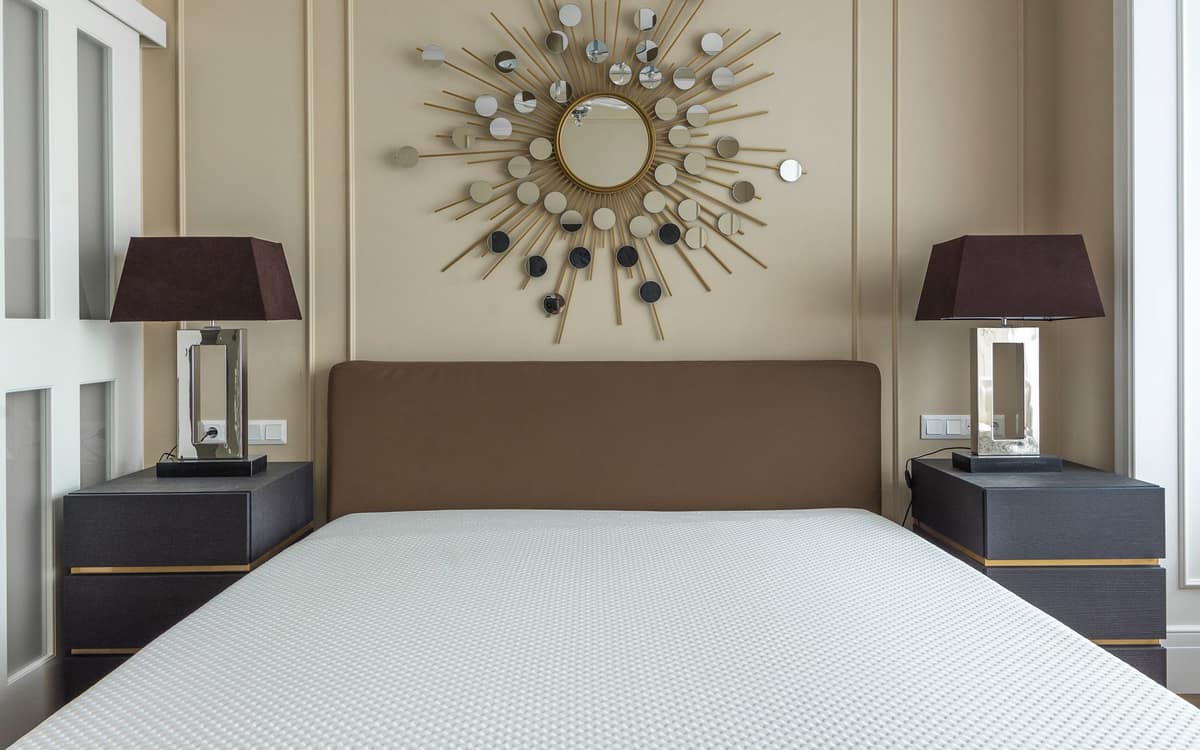
A bare quilted mattress surface on a made-up bed frame

Replace a topper when a straight edge laid across the bed shows a permanent dip where you sleep, not when a calendar says so. From construction, expect the shortest life from a fiber-fill pad, two to four years from gel memory foam, and considerably longer from latex, which returns to shape instead of holding an impression. A waterproof protector is a separate clock entirely: it fails when the membrane cracks, which hot washing and hot drying bring forward by years. And if the dip is in the mattress rather than the topper, a new topper will not fix it.

We did the same exercise here that we did for pillows, because it is the only way to answer this question honestly: we read the current listing for every topper, pad and protector in our registry and looked for a stated lifespan. The result is worth having before you take anyone’s interval seriously.

What the listings actually publish

Across every topper, pad and protector we rank, exactly one publishes a durability figure: the Linenspa waterproof protector states a 10-year limited warranty. That is the entire set.

Nobody states a replacement interval. Nobody states a foam density, which is the single number that would predict how fast a foam topper softens. Nobody states a fill weight on the fiber pads, which is the number that would predict how fast fiber compresses. Several publish claims about what the product does on night one and none about night one thousand.

So the honest answer is a test rather than a number, and conveniently, the tests are better evidence than a number would be. A foam density figure tells you about the slab a factory made; a straight edge tells you about the slab you have been sleeping on.

The three tests

All three take under two minutes, and you should do them with the bedding stripped.

The straight-edge test. Lay a broom handle, a long spirit level or the edge of a door across the bed, running from one side to the other at hip height. Look at the gap underneath it. A topper that still has life in it sits close to the straight edge all the way across. A worn one shows a visible trough where you sleep and a ridge where nobody does. This is the decisive test for foam, and it is the one that distinguishes wear from the normal softness a topper had when it was new.

The press-and-release test. Press your palm into the trough and lift it off. A sound topper pushes back up to level within a second or two. One that stays dented, or returns slowly and incompletely, has foam that has lost its cell structure or fiber that has permanently packed. On a fiber pad this is often the only test that shows anything, because fiber compresses evenly rather than forming an obvious hollow.

The heat test, which is the one this site cares about. If you are waking up hot and sticky in the hip and shoulder region specifically, and it did not used to be like that, your topper has compressed. That is not a loose association, and it is the subject of the next section.

Why a flattened topper sleeps hotter

This is the part a general durability guide will not tell you, and on a hot sleeper’s bed it is usually the first symptom to appear — months before you notice a dip.

Everything a topper does for temperature depends on volume. A latex slab is pin-cored and cellular, so air moves through it; compress it and those channels narrow. A fiber pad works because the fill is lofted, with air between the fibers; pack it down and the air is gone. Even a ventilated foam topper relies on open cells and drilled channels, and foam that has been crushed in the same place nightly for three years has fewer of both than it started with. There is no cooling mechanism in any of these products that survives the structure collapsing.

Then there is the geometry, which compounds it. As the topper develops a trough, you sit lower in the bed and more of your side is in contact with bedding rather than exposed to room air. The hollow also holds the air that your body has already warmed, because there is nothing moving it. Your hips are the widest part of the contact patch and the part pressing hardest, which is exactly why hip and shoulder heat is the early warning.

Expected life by material, and why

Our read of what each construction does over time, drawn from the material rather than from a measurement. Nobody has tested these over years, including us, and we say so on how we pick.

Expected service life by construction. These are our reads from published construction, not measured results, and no listing in our registry states a replacement interval.
ConstructionExpected lifeHow it failsWhat to do about it
Fiber-fill padShortest of the threeThe fill packs down evenly and quietly; loft and airflow go togetherTreat it as a consumable — it is cheap enough to replace on a cycle
Gel memory foam topperTwo to four years under nightly useThe slab softens where you lie and keeps the impression; the hollow is the hot spotRotate it head to foot every few months to spread the load
Latex topperLongest by a clear marginSurface oxidation and crumbling at the edges, long before the core gives upKeep it covered and out of direct sun; latex degrades in UV
Waterproof protectorThe membrane decides, not the clothThe film cracks or delaminates and the protector silently stops being waterproofWash cool, dry low; one published warranty in our registry runs 10 years

The fiber pad entry deserves a word, because it reads like a criticism and is not. A pad that compresses in two years is doing the right job for a hot sleeper: it is thin, it adds almost no insulation, and it costs a fraction of a foam topper. Treating it as something you replace is a perfectly reasonable way to own bedding, and it is why the cheap washable quilted pad is in our picks above.

Latex is the opposite end. Natural latex is resilient rather than viscoelastic, so it returns to shape instead of recording the impression — the same property that makes it sleep cooler is the property that makes it last. Our latex picks are compared on the best latex mattress toppers.

The protector is a different clock, and a silent one

A waterproof protector has two lives: the cloth and the film behind it. The cloth usually looks fine for a decade. The film is a laminate, and laminates crack — from flexing, from heat, and above all from hot washing and hot tumble drying.

The problem is that it fails silently. There is no visible symptom; the protector simply stops being waterproof, and you find out when a spill or a night sweat reaches the mattress. The practical rule is in the care label: a protector that instructs a cold gentle wash and a low tumble dry is telling you where its weak point is. Follow it, and check every year or so by cupping a tablespoon of water on the surface and seeing whether it beads or soaks through.

Our full care routine for all three product types — including which ones go in a machine at all — is on cleaning and caring for a topper.

Before you replace it: is it the topper or the bed?

The most expensive mistake available here is buying a second topper to fix a sagging mattress. They present identically from on top of the bedding, and they are separated in thirty seconds.

Pull the topper off and run the straight-edge test on the bare mattress. If the trough is in the mattress, a new topper will sit in that trough and reproduce it within weeks, and you will have spent the money twice. If the mattress is level and the topper is dished, the topper is the problem and this page applies. The mattress-side version of the same tests, and what to do when it is the bed, is on when to replace a mattress.

One more thing worth checking first, because it is free: the base. A topper on a sagging box spring or a slatted base with wide gaps will dish in the gaps regardless of its own condition. See the bed base and airflow.

Sheets fail far sooner than a topper does, and in four ways that are easy to test for — starting with the one nobody checks. The method is on how often to replace your sheets.
Quick picks

Ranked on published construction and buyer fit. Select a row to jump to the full write-up. We have not slept on any of these — here is exactly what we do instead.

#ProductBest forHow it coolsPrice
1
Pure Green Natural Latex Mattress Topper, Medium, 3 Inch

Pure Green Natural Latex Mattress Topper, Medium, 3 Inch

Hot sleepers who genuinely need three inches of give

Longest-lived material hereAirflow (open structure)
$299.00 · View on Amazon

Price as of October 25, 2026. #ad How we’re funded

2
Niagara Sleep Solution Ultra Soft Bamboo-Viscose Pillow-Top Mattress Pad

Niagara Sleep Solution Ultra Soft Bamboo-Viscose Pillow-Top Mattress Pad

Softening a firm bed without adding heat

The one you expect to replaceLess insulation
$36.98 · View on Amazon

$44.9918% off

Price as of October 25, 2026. #ad How we’re funded

3
Linenspa Waterproof Mattress Protector, Fitted-Sheet Style

Linenspa Waterproof Mattress Protector, Fitted-Sheet Style

Waterproofing on a budget, on a mattress under 14 inches

The only published warrantyLess insulation
$15.83 · View on Amazon

$18.9917% off

Price as of October 25, 2026. #ad How we’re funded

4
MATBEBY Quilted Fitted Mattress Pad and Protector

MATBEBY Quilted Fitted Mattress Pad and Protector

A washable layer on a bed you already like

Cheapest to replace on a cycleLess insulation
$26.58 · View on Amazon

$31.9917% off

Price as of October 25, 2026. #ad How we’re funded

#1Longest-lived material here

Pure Green Natural Latex Mattress Topper, Medium, 3 Inch

If you need real pressure relief and you sleep hot, latex is the answer memory foam pretends to be. Open-cell natural latex breathes; gel-infused viscoelastic foam mostly does not.

What it gets right

  • Natural latex has an open-cell structure and is pin-cored — air can actually move through the slab
  • Responds instantly instead of slowly molding a heat-trapping hollow around your hips
  • Listing states GOLS certified organic — a checkable registry claim, not a badge

Trade-offs

  • Expensive — several times the price of a gel foam topper of the same thickness
  • Heavy and awkward to move; latex is dense
  • Latex proteins are an allergy consideration for a small number of people
Published specifications
MaterialNatural latex
How it cools (our read)Airflow (open structure)
Thickness3 in
Certifications statedGOLS certified organic

Why the construction matters. Latex toppers are pin-cored — drilled with a grid of holes during molding — which is both how the firmness is tuned and why air moves through the slab. Memory foam has no equivalent structure.

Specifications read from the product listing on July 23, 2026. “Not published” means the listing does not state that figure.

#2The one you expect to replace

Niagara Sleep Solution Ultra Soft Bamboo-Viscose Pillow-Top Mattress Pad

The right first move for most hot sleepers, because it changes the surface without adding a slab of foam. A pad this thin cannot insulate you the way a topper does.

What it gets right

  • Fiber fill, not memory foam — it does not mold around you and hold heat in the hollow
  • Viscose surface moves moisture better than the polyester quilting on most pads
  • Cheap enough to be a genuine experiment rather than a commitment

Trade-offs

  • Adds very little pressure relief — if your hips hurt, this is not the fix
  • Fiber fill compresses over time and needs replacing sooner than foam
  • No fill weight published
Published specifications
MaterialViscose derived from bamboo, fiber fill
How it cools (our read)Less insulation
Certifications statedNone stated

Why the construction matters. The whole argument for a pad over a topper: a topper puts two or three inches of foam between you and the mattress. A pad puts a fraction of an inch of fiber there. Less material between you and the room is less insulation.

Specifications read from the product listing on July 23, 2026. “Not published” means the listing does not state that figure.

#3The only published warranty

Linenspa Waterproof Mattress Protector, Fitted-Sheet Style

The least protector you can buy that still does the job: one pound of fabric, top surface only, under twenty dollars. If you need waterproofing and nothing else, buying more than this is buying insulation you did not want.

What it gets right

  • The listing states a shipping weight of one pound for a queen — the thinnest protector on this page by a wide margin
  • Top-only coverage, so the sides of the mattress are left open to breathe
  • Machine washable and dryer safe on low, with a stated 10-year limited warranty

Trade-offs

  • The face is brushed polyester, which does not absorb sweat the way a viscose or cotton face does
  • Fits mattresses 8 to 14 inches only — too shallow for a deep bed or a bed with a topper on it
  • No fabric weight published, so 'thin' rests on the shipping weight rather than a GSM figure
Published specifications
MaterialBrushed polyester face, waterproof backing
How it cools (our read)Less insulation
Fabric weight (GSM)Not published
Certifications statedNone stated

Why the construction matters. Top-only protectors are a genuine thermal choice, not a corner cut. A five- or six-sided protector wraps the mattress edges as well, and those edges are where a bed does most of its breathing.

Specifications read from the product listing on August 31, 2026. “Not published” means the listing does not state that figure.

#4Cheapest to replace on a cycle

MATBEBY Quilted Fitted Mattress Pad and Protector

A cheap quilted pad that adds a thin comfort layer and takes the wash instead of your mattress. Modest on cooling, useful on laundry.

What it gets right

  • Thin enough not to insulate meaningfully
  • Machine washable, which matters if you sweat
  • Very cheap

Trade-offs

  • The cooling claim is generic — no named fiber technology behind it
  • Thin fill offers little cushioning
  • No fill weight or fabric weight published
Published specifications
MaterialPolyester fill, polyester face
How it cools (our read)Less insulation
Certifications statedNone stated

Why the construction matters. Being washable is an underrated thermal feature. Sweat-loaded fabric holds moisture against you; a layer you can strip and wash weekly stays closer to its original behavior.

Specifications read from the product listing on July 23, 2026. “Not published” means the listing does not state that figure.

Common questions

How long does a mattress topper last?

It depends on the material, and no listing we have read publishes an interval. From construction, expect the shortest life from a fiber-fill pad, two to four years from gel memory foam under nightly use, and considerably longer from latex, which returns to shape instead of holding an impression. Across every topper, pad and protector in our registry exactly one publishes a durability figure at all — a 10-year limited warranty on a waterproof protector.

How do I know if my mattress topper needs replacing?

Lay a straight edge — a broom handle or a long level — across the bare bed at hip height and look at the gap underneath. A sound topper stays close to it all the way across; a worn one shows a trough where you sleep. Then press into the trough and let go: it should push back to level within a second or two. If it stays dented, the structure has gone.

Does an old mattress topper make you sleep hotter?

Yes, and it is usually the first symptom, often months before you can see a dip. Every cooling mechanism in a topper depends on volume: latex works because the slab is cellular and pin-cored, a fiber pad works because the fill is lofted with air between the fibers, and ventilated foam works through open cells and drilled channels. Compressed material has lost all of those. The trough also holds the air you have already warmed, and your hips press hardest — which is why hip and shoulder heat is the early warning.

How often should you replace a mattress pad?

Treat a thin fiber pad as a consumable rather than a durable. The fill packs down evenly and quietly, so it rarely shows an obvious hollow — the press-and-release test is the one that catches it. That is not a flaw: a pad is thin and cheap precisely because it adds almost no insulation, which is what a hot sleeper wants, and replacing it on a cycle is a reasonable way to own it.

When should you replace a mattress protector?

When it stops being waterproof, which happens silently. The cloth usually looks fine for a decade; the laminate behind it cracks from flexing and, above all, from hot washing and hot drying. Test it once a year by cupping a tablespoon of water on the surface and seeing whether it beads or soaks through. A care label that insists on a cold wash and a low tumble dry is telling you where the weak point is.

Can you fix a sagging mattress topper?

Foam, no — once the cell structure has collapsed in one place it does not come back, and rotating it head to foot only spreads the remaining life. A fiber pad can sometimes be revived briefly by a wash and a tumble on low to break up packed fill, which is one of the few advantages a washable pad has. Latex rarely sags in the first place; if it has, check the base underneath before blaming the topper.

Is the dip in my topper or in my mattress?

Pull the topper off and run the straight-edge test on the bare mattress. If the trough is in the mattress, a new topper will sit down into it and reproduce the same dip within weeks, so you would be paying twice for nothing. Also check the base: a topper over a sagging box spring or a slatted frame with wide gaps will dish in the gaps whatever condition it is in.

Sources

Try the cheap thing first

Work down this list in order. Each step costs more than the one above it, and most people stop before the bottom. Replacing a mattress to fix a problem your sheets were causing is the most expensive mistake in this category.

  1. 1Pillowcase, then pillowUnder $20 to start
  2. 2Sheets$25-$60
  3. 3Top layer$30-$90
  4. 4Topper or pad$30-$300
  5. 5The mattress$200-$900

Before any of it: work out which one is actually your problem. If your bedroom is 78°F, none of these will save you.