Active vs passive cooling: where the ceiling is
Every sheet, pad, topper and blanket on this site is passive — it can only help heat leave into the room. A powered system is the only thing that can make a bed colder than the room it is in. Knowing which problem you have decides everything.
By Stephen V. · Specs last verified · Prices live as of October 25, 2026
Passivecooling — sheets, pads, toppers, blankets, mattresses — works by letting your heat escape into the bedroom more easily. Its ceiling is the room: nothing passive can ever make you cooler than the air around you. Activecooling — a bed fan, a water-circulating pad, a thermoelectric system — uses a pump or a fan to move heat somewhere else, and a water or thermoelectric system can hold the bed surface below room temperature. Fix the passive layers first, because they are cheaper, silent and maintenance-free. Go active only when you have done that and the room itself is still the problem.
This is the single most useful distinction on the whole site, and almost nothing sold in this category makes it. A twenty-dollar sheet set and an eight-hundred-dollar chilled water system are both listed under “cooling”, and they are not different amounts of the same thing. They are different physics with different ceilings, and buying up the price ladder inside the passive category will never get you to the active one.
What passive cooling actually does
Your body produces heat continuously and it has to go somewhere. In bed, it leaves through three routes: conduction into whatever you are touching, convection as warm air moves off your skin, and evaporation as sweat turns to vapor. Evaporation is by far the most powerful of the three, which is why a still, humid room feels so much worse than a still, dry one at the same temperature.
Every passive product works by removing an obstacle from one of those three routes. A percale weave is open, so air moves through it. Lyocell absorbs sweat into the fiber so it can evaporate off a larger surface. A thin pad has less thermal mass, so the surface you touch stays further from your skin temperature for longer. Latex is pin-cored, so air can travel through what would otherwise be a sealed slab.
Notice what none of them do: add energy. Passive products do not remove heat from the system. They lower the resistance between you and the room, and then the room takes the heat. That is the entire category, and it is why every passive recommendation on this site comes with the same caveat — it works to the extent that the room can accept the heat you are giving it.
Where the passive ceiling sits
The ceiling is your bedroom air temperature, and you hit it long before you reach it. As the room warms toward your skin temperature, the gradient carrying heat off you gets smaller, so every passive improvement returns less than the one before. In a cool room a fabric change feels dramatic. In a hot room the identical fabric change is barely detectable, because the constraint has moved from the bedding to the air.
Humidity moves the ceiling down again, and this is the part people miss. Evaporation is doing most of the work, and evaporation slows as the air gets more saturated. A room at 72°F and 70% humidity is thermally worse for a sleeper than the same room at 75°F and 35%, because the most powerful cooling route you have is being throttled. The mechanism is set out on humidity and sleeping hot.
So the honest test is not “how hot am I?” but “is there anywhere for my heat to go?”If there is, passive bedding is cheap, silent, and often enough. If there is not, you can spend the entire passive budget and still wake up at three in the morning, and the reviews that say “did nothing” are almost always this.
What active cooling adds
Active systems put a pump or a fan in the loop, which changes what is possible in one specific way: they can move heat out of the bed rather than merely out of you.
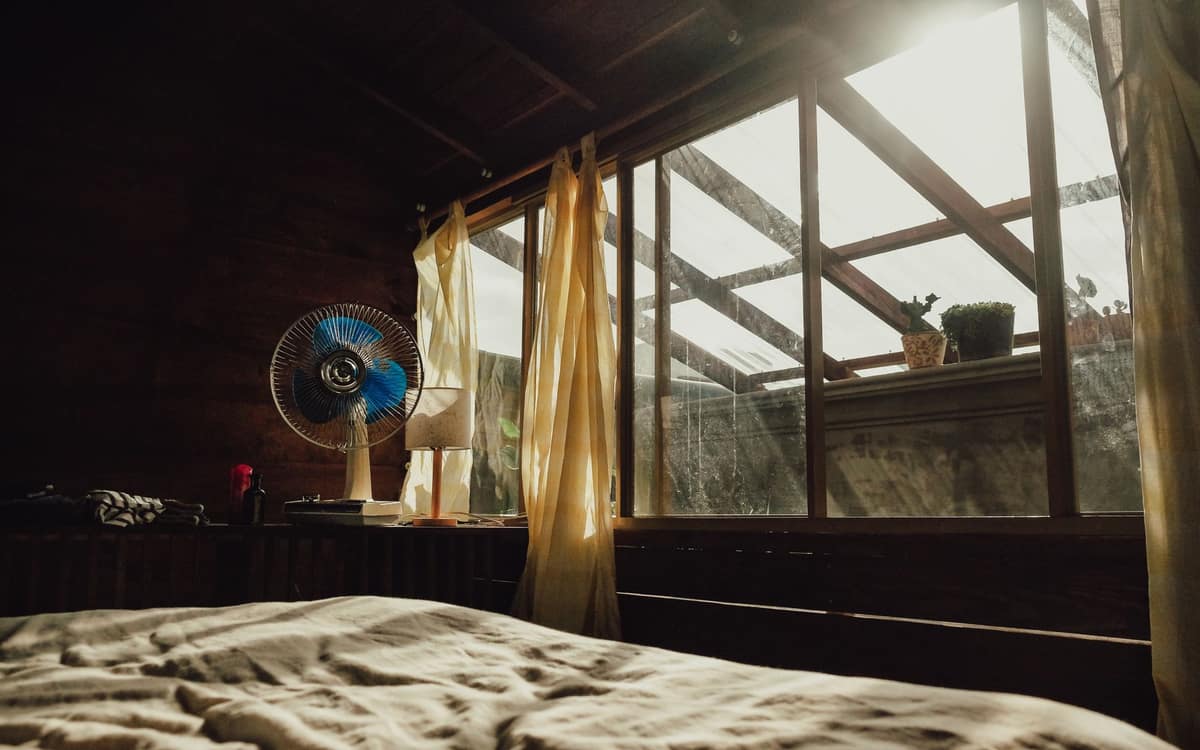
A bed fan is the cheap end and it is a special case, because it does not chill anything. It pushes room air into the space under your covers, which strips the warm, humid boundary layer off your skin and restarts evaporation. It has a motor, so it is active in the engineering sense, but it shares the passive ceiling exactly: it can only ever give you room air. In a cool, dry bedroom it is superb value. In a hot, sticky one it moves warm air over you.
A water-circulating pad is the real category break. A thin pad threaded with tubing sits under your fitted sheet and a bedside unit circulates temperature-controlled water through it. Because the water is actively chilled, the surface can sit below room temperature, which no fabric and no fan can do. You set a number and it holds it, humid or not. Most units control each side of the bed independently, which is the only clean answer to a mismatched couple.
The trade-offs are real and worth stating before anyone spends: several times the price, a pump you can hear, water top-ups and periodic cleaning, tubing in the bed, and waste heat that is dumped into the same bedroom the unit stands in. A pad is equipment you maintain, not a thing you buy once. The head-to-head between the two active options is on bed fans vs water cooling pads, and the specific picks are on bed cooling systems.
The two categories side by side
| Passive bedding | Bed fan | Water-circulating pad | |
|---|---|---|---|
| Can it beat room temperature? | No | No | Yes |
| Works in a humid room | Poorly | Poorly | Yes |
| Cost | Low to moderate | Low | High |
| Noise | None | Fan noise | Pump noise |
| Maintenance | Laundry | None | Water top-ups and cleaning |
| Per-side control | No | No | Usually |
| Fails gracefully | Yes — it is just bedding | Yes | No — a failed pump is a dead bed |
| Reversible if it does not help | Yes | Yes | Awkward and expensive |
How to tell which problem you have
Three checks, all free, and between them they resolve almost every case.
Measure the room, do not estimate it. Put a cheap thermometer beside the bed rather than reading the thermostat in the hallway, and read it at 3am rather than at bedtime. Bedrooms upstairs, over a garage, or behind a west-facing window routinely sit several degrees above the rest of the house at the worst possible hour. The target range and why it matters is on the best temperature for sleep.
Work out whether you wake hot or wake damp.Hot and dry is a conduction and airflow problem, and passive bedding is genuinely good at it. Damp is a moisture problem, and the binding constraint is how fast your room lets sweat evaporate — which is where passive runs out of road fastest. The fabric side of that is on cooling sheets for night sweats.
Run the cheap experiment before the expensive one. Open a window or run a box fan across the room for two nights. If that changes your night noticeably, your constraint is the air, not the bedding, and more passive spending will disappoint you. If it changes nothing, the bed itself is still worth working on.
The order we would spend in
- The room, if you can. Free to a few dollars, and it raises the ceiling everything else is working under.
- Sheets. The cheapest change with a real mechanism and the layer actually touching you all night. Start at cooling sheets.
- What is on top of you. A lighter, more open top layer beats a heavier one, and a mismatched couple should stop sharing a comforter before buying anything technical. See cooling blankets and comforters.
- The surface under you. A thin washable pad, not a thick topper. The reasoning is on cooling pad vs cooling topper and the picks by sleeping position are on cooling mattress pads by sleeper type.
- A bed fan. Cheap enough to be a test of whether airflow is your answer. If it helps a lot, you have learned something valuable for very little money.
- A water-circulating system. Only after the first five, and only if the fan helped but did not finish the job, or your room is humid enough that evaporation is off the table.
That order is not a sales funnel — it runs from cheapest to most expensive, which is the opposite of one. The full ladder, with what each rung costs and what it buys, is on what to fix first.
What neither category can do
Neither cools the bedroom. A passive product hands your heat to the room. A bed fan circulates the room’s own air. A water-circulating unit pulls heat out of the bed and releases it from the unit, which is standing in the same room — so in a small, closed bedroom you are relocating heat rather than removing it. Only air conditioning, ventilation or a heat pump removes heat from a room, and if the room is genuinely the problem, everything on this site is a workaround.
That is worth saying plainly because it sets a limit on what any of this can be expected to deliver. The options for a hot room without air conditioning — most of which cost nothing — are on how to sleep cool without air conditioning.
Common questions
What is the difference between active and passive cooling in bedding?
Passive products — sheets, pads, toppers, blankets, mattresses — lower the resistance between you and the room so your heat escapes more easily. They cannot make anything colder than the air around them. Active products use a pump or fan to move heat, and a water-circulating system can hold the bed surface below room temperature. Passive is cheaper, silent and maintenance-free; active is the only thing that beats the room.
Can cooling sheets or a cooling pad make the bed colder than the room?
No. Every passive product works by letting your body heat leave into the bedroom, so the bedroom temperature is a hard ceiling. In a cool room a good sheet feels dramatic; in a hot room the same sheet is barely detectable, because the constraint has moved from the bedding to the air.
How do I know when I have hit the limit of passive cooling?
Measure the room beside the bed at three in the morning rather than reading a hallway thermostat, and run a box fan across the room for two nights. If the fan changes your night noticeably, the air is your constraint and more spending on bedding will disappoint you. If it changes nothing, the bed itself is still worth improving.
Is a bed fan active or passive cooling?
Mechanically active, thermally passive. It has a motor and it moves air, which restarts evaporation off your skin and genuinely helps — but it can only ever supply room air, so it shares the same ceiling as a sheet. That is why it is cheap and why it disappoints in a hot, humid bedroom.
Is an active cooling system worth it?
Once cheaper fixes have failed, and especially in a humid room or for a couple who run at different temperatures, yes — it is the only product that holds a set surface temperature regardless of the weather. Weigh it against pump noise, water top-ups, periodic cleaning, tubing in the bed, and the fact that its waste heat goes into the same bedroom.
Sources
Read next
- Cooling MattressesThe most expensive fix, and the one most people should try last.
- Bed cooling systems: what actually removes heatPowered systems: the only category that removes heat instead of slowing it.
- Bed fans vs water cooling padsAirflow versus active chilling — cost, noise, and which cools more.
- How to stop sleeping hot: what to fix firstThe decision guide. Five steps in cost order, and how to know when to stop.
- The best bedroom temperature for sleepThe target bedroom temperature, and why the room comes before any bedding.
Try the cheap thing first
Work down this list in order. Each step costs more than the one above it, and most people stop before the bottom. Replacing a mattress to fix a problem your sheets were causing is the most expensive mistake in this category.
- 1Pillowcase, then pillowUnder $20 to start
- 2Sheets$25-$60
- 3Top layer$30-$90
- 4Topper or pad$30-$300
- 5The mattress$200-$900
Before any of it: work out which one is actually your problem. If your bedroom is 78°F, none of these will save you.