Washing a cooling blanket
Some cooling in this category is woven in and survives anything. Some is sprayed on and leaves with the first wash. Knowing which you own decides how to treat it.
By Stephen V. · Specs last verified · Prices live as of October 25, 2026
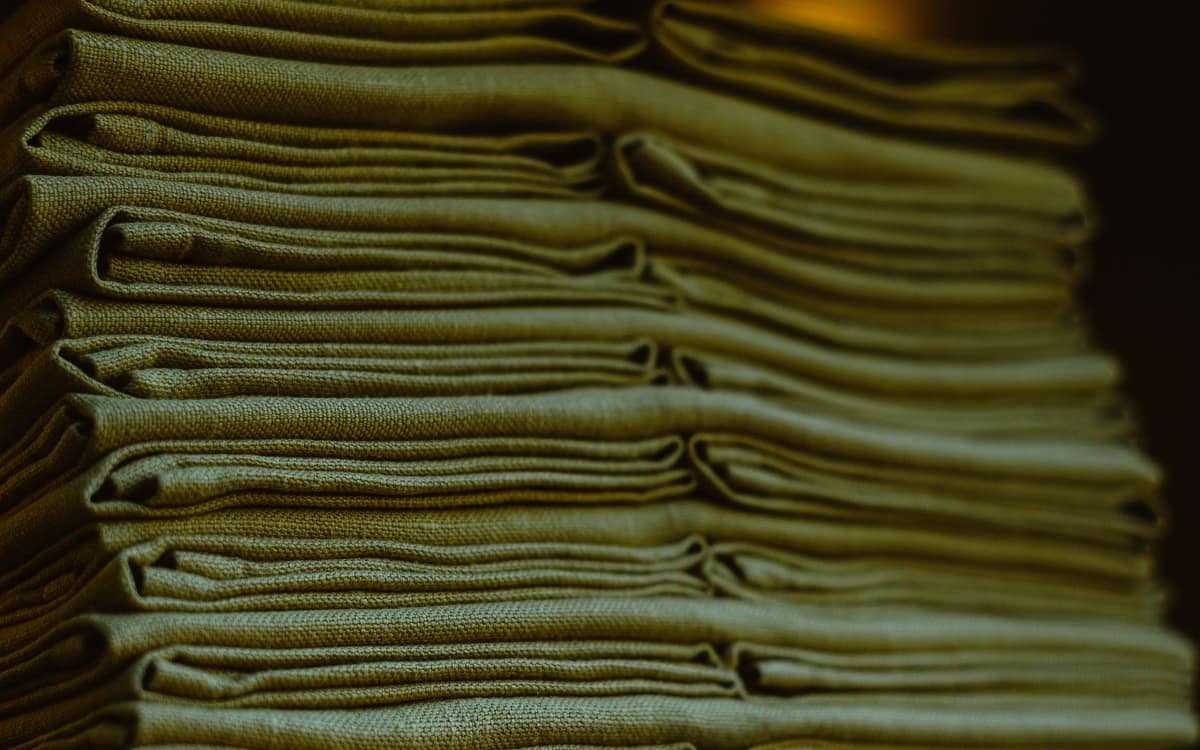
If the cooling comes from the weave and the fiber — cotton waffle, linen, viscose — normal cold washing will not harm it, and it will keep working for years. If it comes from a cold-touch surface finish, expect it to fade with washing. Never use fabric softener on either.
Woven in, or sprayed on
This is the only distinction that really matters, and you can usually work it out from the fiber content alone.
Structural cooling is a property of the material itself. An open waffle weave has gaps because of how the yarns are arranged; linen breathes because of what flax fiber is. Nothing in a washing machine changes either. These blankets get better with washing if anything, because cotton and linen soften and open up as the sizing comes out of them.
Applied cooling is a treatment sitting on the surface of a synthetic. The cold-touch and Q-Max finishes are, in many cases, a coating or a chemical treatment on nylon or polyester, and coatings are not permanent. They abrade, they dissolve, and they come off gradually in the wash. Sellers rarely say how many cycles the finish is rated for, and where that figure is not published we do not invent one — but a noticeable drop after a season of weekly washing is the common report.
This is a large part of why we treat cold-touch products with suspicion generally, and why our blanket roundups keep an explicit skip pick in that shape. You are buying a sensation, and it is a sensation with a service life. The mechanism is set out on cooling blanket materials.
Fabric softener is the universal mistake
Softener and dryer sheets work by depositing a thin waxy layer on the fibers. That is exactly what makes fabric feel plush, and it is exactly what you do not want on anything bought for temperature.
On a cotton or linen blanket, the coating fills the spaces between fibers and makes them repel water instead of absorbing it, which shuts down the evaporative route that does most of the cooling. On a waffle weave it gradually clogs the open structure. On a cold-touch synthetic it simply sits on top of the finish and dulls it. There is no material in this category that benefits.
If your motive is softness, wool dryer balls do the mechanical part — keeping fill lofted and reducing creasing — without coating anything. The same logic, applied to sheets, is on how to wash cooling sheets.
By blanket type
| Type | Wash | Dry | The thing that ruins it |
|---|---|---|---|
| Cotton or linen waffle | Cold or warm, normal | Low heat or line | Softener clogging the weave |
| Viscose from bamboo, lyocell | Cold, gentle | Low heat, remove damp | Hot water and agitation — viscose is weak when wet |
| Cold-touch or Q-Max synthetic | Cold, gentle, no softener | Air dry | Heat and repeated washing stripping the finish |
| Down or down-alternative comforter | Front loader only, gentle | Long, low, with dryer balls | Putting it away damp — clumped fill never fully recovers |
| Weighted blanket | Check the weight limit first | Air dry flat if heavy | Overloading a domestic machine drum |
The two that need real care
Comforters and duvet inserts. The problem is drying, not washing. A filled comforter holds a lot of water deep in the loft, and fill that dries in a clump stays in a clump — the blanket ends up with cold spots, thick spots, and less of the even loft it was sold for. Dry it far longer than seems necessary, on low heat, with a couple of dryer balls to break up the clumps, and check the middle before you call it done. A top-loading machine with a central agitator can tear baffles; use a front loader or a laundrette if that is what you have.
Weighted blankets. Read the care label before the blanket goes anywhere near your machine. A 15lb blanket becomes far heavier wet, and most domestic drums are not rated for it — the failure is the machine, not the blanket. Many weighted blankets are designed to be used with a removable cover for exactly this reason: wash the cover weekly, wash the weighted core rarely. If yours has a cover, use it. The temperature side of weighted blankets is on weighted blankets and heat.
A washing routine that keeps things working
- Wash cool. Cold or warm is enough for bedding, and heat is what degrades finishes, shrinks cotton and weakens viscose.
- Wash blankets alone, or with like items. Overloading means poor rinsing and detergent residue, which is its own kind of coating.
- Use less detergent than you think. Residue stiffens fibers and reduces absorbency; a second rinse is worth more than a second scoop.
- Dry low and finish fully. Damp storage is where the smell comes from and where fill clumps set.
- Use a cover on anything hard to wash. A washable layer over an unwashable one is the single best habit in bedding care, and it is the same principle behind keeping a washable pad over a foam topper.
The one item in this list that will not fit the routine above is a weighted blanket — a soaked 15 lb quilt outweighs what most domestic washers are rated for. The limits and the workaround are on how to wash a weighted blanket.
Common questions
Does washing ruin a cooling blanket?
It depends where the cooling comes from. Cotton, linen and viscose blankets cool because of the fiber and the weave, and washing does not change either — they often improve as the sizing comes out. Cold-touch and Q-Max finishes sit on the surface of a synthetic and do fade with repeated washing.
Can you put a weighted blanket in the washing machine?
Only if the machine is rated for the weight, and a 15lb blanket is considerably heavier wet. Check the care label first, since the thing that usually breaks is the machine rather than the blanket. Many weighted blankets come with a removable cover precisely so you can wash the cover often and the core rarely.
Why should you not use fabric softener on cooling bedding?
Softener coats fibers with a thin waxy film. That film makes them repel moisture instead of absorbing it, which shuts down evaporation — the mechanism doing most of the cooling — and on an open weave it gradually clogs the structure. Wool dryer balls give you the softness without the coating.
How do you dry a cooling comforter without ruining the loft?
Long, low and with dryer balls. Filled bedding holds water deep in the loft, and fill that dries clumped stays clumped, leaving thick spots and cold spots. Check the middle rather than the edges before you stop, and never store it even slightly damp.
How often should you wash a cooling blanket?
Every one to two months for a blanket that sits over a sheet, and more often in hot weather or if it is in direct contact with skin. Sheets take most of the sweat and should be weekly, which is what keeps the blanket above them clean for longer.
Read next
- Cooling BlanketsBlankets, comforters and duvet inserts. Loft is the variable, not the fabric.
- Cooling blanket materialsShell, fill and finish: the three material decisions, and which two actually matter.
- The best cooling weighted blanketsWeight without the heat penalty. Glass beads, shell fabric, and what to avoid.
- How to wash cooling sheets without ruining themThe wash routine that preserves wicking and airflow instead of destroying it.
- Cleaning a cooling topper or padWhat is washable, what is not, and why a damp layer sleeps hotter than a dry one.
Try the cheap thing first
Work down this list in order. Each step costs more than the one above it, and most people stop before the bottom. Replacing a mattress to fix a problem your sheets were causing is the most expensive mistake in this category.
- 1Pillowcase, then pillowUnder $20 to start
- 2Sheets$25-$60
- 3Top layer$30-$90
- 4Topper or pad$30-$300
- 5The mattress$200-$900
Before any of it: work out which one is actually your problem. If your bedroom is 78°F, none of these will save you.