Do cooling mattress pads really work?
They do the one job people rarely realize they are buying: they stop the mattress surface from being a heat store. That is a smaller claim than the packaging makes and a more useful one.
By Stephen V. · Specs last verified · Prices live as of October 25, 2026
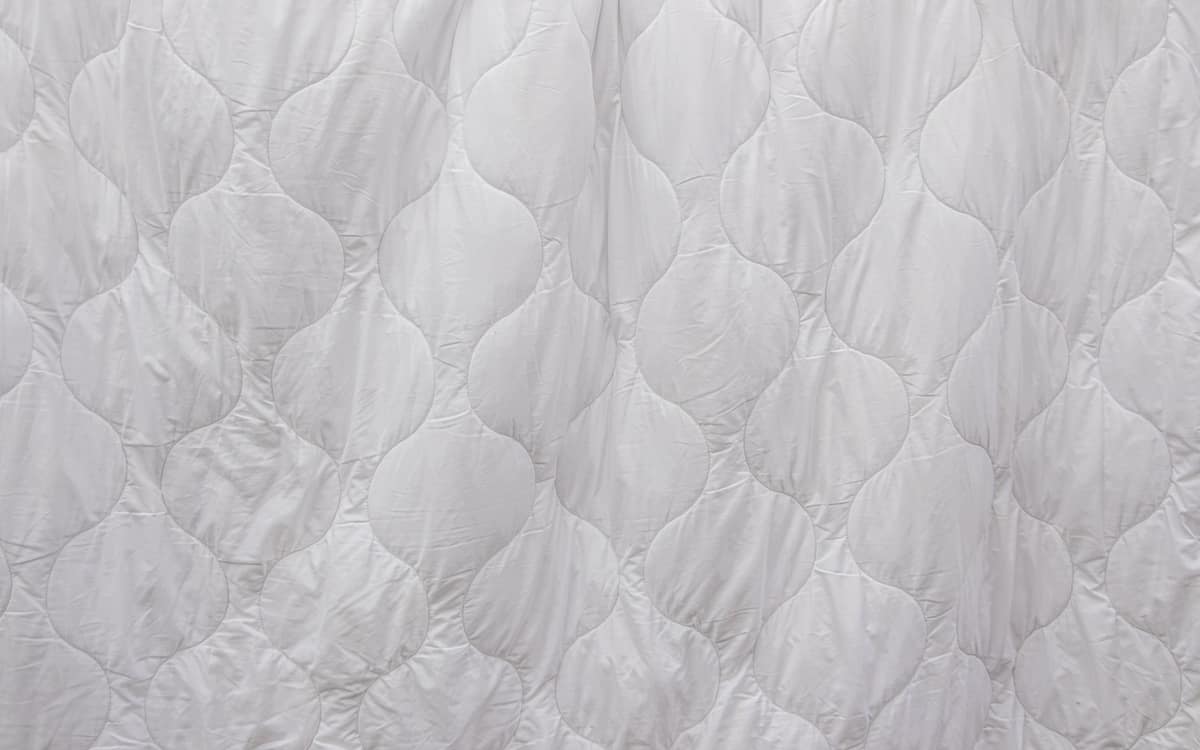
Yes, for one problem. A cooling mattress pad puts a thin, breathable, washable layer between you and a mattress surface that has been absorbing your body heat all night, so less heat is stored under you and more of it leaves. It cannot cool a warm room, and it cannot fix a mattress whose core is the problem.
What the pad is actually doing
Your mattress is a large object with a lot of thermal mass sitting directly under you for eight hours. Heat flows from you into it, warms the surface, and then has nowhere to go — foam in particular is a poor conductor, so the warmth stays in the hollow you are lying in rather than spreading out and dissipating. By the middle of the night you are lying on a surface that is close to your own skin temperature, which means it has stopped taking heat away from you at all.
A pad interrupts that. It is thin, it is usually a fiber fill rather than a solid slab, and it has far less mass to warm up. Air moves through it. Cotton and viscose fibers in it absorb moisture rather than letting it pool on a sealed surface. The net effect is that the layer you are in contact with stays further from your skin temperature for longer, so the heat gradient that carries warmth away from you survives further into the night.
That is the whole mechanism, and it is worth being precise about it, because it explains both the successes and the disappointments. People who say a pad transformed their sleep usually had a hot mattress surface. People who say it did nothing usually had a hot bedroom.
Why a thin pad often beats a thick topper
This runs against how the category is sold, so it is worth stating plainly: every layer you add to a bed is insulation. A three-inch foam topper is a substantial amount of insulation between you and the room. A half-inch quilted pad is very little. If what you want is a cooler surface rather than a softer bed, the pad delivers the benefit without the thermal cost.
The topper earns its place when the mattress is too firm, when it has developed a dip, or when you need real pressure relief. Those are comfort problems, not heat problems. Buying three inches of foam to solve a heat problem is how people end up hotter than when they started — the reason the site keeps toppers, pads and protectors in separate boxes.
There is a second, unglamorous advantage. A pad goes in the washing machine. A mattress does not, and a foam topper mostly does not either. On a bed where somebody sweats, the layer nearest you accumulates moisture and body oils, and a damp fiber layer both feels worse and insulates differently from a dry one. Being able to wash the top layer weekly is a real, ongoing thermal benefit that no spec sheet lists.
What a pad cannot do
| The problem | Can a pad fix it? | What actually fixes it |
|---|---|---|
| Mattress surface feels hot by 2am | Yes — this is the job | A thin, breathable, washable pad |
| Bedroom sits at 78F all night | No | Airflow, shading, or cooling the room first |
| Memory foam core wraps and traps heat | Partly | Helps the surface; the core is unchanged |
| You want the bed colder than the room | No | An active, water- or air-circulating system |
| Heavy night sweats soaking the bed | Helps | A washable pad plus absorbent sheets |
The second row is the one that generates most of the one-star reviews. Every passive product on this site works by moving heat from you into the room. If the room is already warm, there is nowhere for that heat to go, and no amount of fabric engineering changes it. Before buying anything, read the bedroom temperature that makes the rest of it work. That fix is usually free.
The cold-touch trap
Many pads are sold on how cold they feel when you first put your hand on them. That sensation is conduction: the fabric is drawing heat out of your palm quickly because it is denser or has a treated surface. It is real, it is measurable, and it lasts about as long as it takes the fabric to reach your skin temperature — minutes.
Phase-change materials extend that window by absorbing heat as they melt, but they hold a fixed amount and then they are done for the night. If falling asleep is your problem, a cold-touch or phase-change pad is genuinely useful. If waking at 3am is your problem, it is not the product you need. The distinction is set out in full on gel foam vs PCM.
How to tell before you buy
Three things on the listing predict whether a pad will do anything for temperature, and none of them is the word cooling:
- Fill and cover fiber. Cotton, viscose from bamboo and lyocell absorb moisture into the fiber. Polyester does not, so sweat sits on the surface. A polyester fill under a viscose cover is a common and mediocre compromise.
- Thickness. The thinner the better, for heat. A pillow-top pad marketed on plushness is adding loft, and loft is insulation.
- Whether it is waterproof. A membrane makes a pad warmer. If you do not need the waterproofing, do not buy it — see protectors and heat.
Thread count and GSM are almost never published on pads, and where a figure is absent we say so rather than estimating it. Our ranked picks, with every published spec sourced and dated, are on the best cooling mattress pads.
What we can verify, and what only your own bed can
This is the point where most pages on this question tell you they tested nine pads in a sleep lab. We did not, we do not have one, and we are not going to imply otherwise. What this site does instead is narrower and checkable: every product is resolved from a live retailer listing, the specifications that listing publishes are read and dated, and where a figure is absent we record the absence rather than estimating it. The full method is on how we pick.
That draws a hard line between two kinds of claim, and the line is worth making explicit before you spend anything, because it also tells you which questions a review can settle for you and which ones only a fortnight in your own bedroom can.
| Question | Settled by the listing | Settled only by your own bed |
|---|---|---|
| What is the face fabric made of? | Yes, when the listing states it | — |
| How much fill is in it? | Rarely — very few publish a weight | — |
| Is it washable, and to what depth does it fit? | Yes, almost always | — |
| Does it change how the surface feels at 3am? | No | Yes |
| Is your problem the bed or the room? | No | Yes — and this is the big one |
| Will it still work after ten washes? | No | Yes |
Everything in the right-hand column is why the return window matters more than any review, including this one. The mechanism is knowable in advance. Whether the mechanism is addressing your problem is not.
How to test a cooling pad in your own bed
There is a version of this that produces a real answer and a version that produces a shrug, and the difference is entirely in the method. If you are going to spend thirty to fifty dollars finding out, spend it well.
- Get a baseline first, for at least three nights. Put a cheap thermometer on the nightstand rather than trusting a hallway thermostat, and each morning write down three things: the room temperature you saw if you woke, whether you woke up hot, and whether you woke up damp. Three nights is the minimum that averages out a bad day at work.
- Change one thing.Add the pad and change nothing else — not the sheets, not the duvet, not the window. Two variables at once produce a result you cannot attribute, and people do this constantly because a new pad arrives at the same time as the seasonal bedding swap.
- Give it a week, not a night. The first night in changed bedding is unreliable in both directions: novelty makes some people sleep better and the smell of new textiles makes others sleep worse. A week also gets you a range of outdoor temperatures, which matters more than anything the pad does.
- Record the same three things.Hot, damp, and the room temperature. Two of the three are yes-or-no, which is deliberate — a remembered impression of “better” is worth much less than seven yes-or-no answers written down at the time.
- Then run the free control. Take the pad off for two nights and see whether the difference comes back. This is the step almost nobody does and it is the one that separates a pad that worked from a week of cooler weather.
- Wash it once before you decide to keep it. A pad that goes flat, clumps or comes out of the dryer with the fill migrated into ridges has told you something important, and it is better to learn it inside the return window.
Two notes on running this honestly. Do it in one season — a test that starts in early September and finishes in October is measuring autumn, not bedding. And if the answer comes back “no difference”, look at your baseline sheet before you buy something more expensive: if the room was above 75°F on the nights you woke, the pad was never the binding constraint and neither will a topper be.
What the published numbers actually mean
When a pad listing does give you a figure, it is usually one of five, and they are not equally informative. Knowing what each one is measuring is most of what separates a useful spec from a decorative one.
| Figure | What it measures | What it predicts |
|---|---|---|
| Q-Max | Peak rate of heat flow in the first instant of contact | How cold it feels for the first minute. Nothing after that |
| GSM (fabric weight) | Grams per square meter of the face cloth | Substance and durability; a heavier face is not a cooler one |
| Fill weight (oz) | How much fiber is inside the quilting | How much give you get and how much insulation it costs — the most useful number here |
| Thread count | Threads per square inch in a woven face | Little on its own; the fiber and weave matter far more |
| Pocket depth (in) | How deep a mattress the skirt will stretch over | Whether it stays on the bed, which is the top return driver in this category |
The pattern is worth internalizing: the two figures that actually predict how a pad sleeps are fill weight and face fiber, and those are the two that listings publish least often. Q-Max, which predicts the least, is the one most likely to appear in the product title. The same inversion runs through cooling bedding generally, and it is why our pads sorted by sleeping position ranks on published fill weight where a listing gives one.
One figure you will not see on a pad, and should not go looking for, is a temperature drop in degrees. No passive product can be assigned one, because how much it lowers your surface temperature depends entirely on the room it is in — the same pad performs differently at 65°F and at 78°F. A listing that claims a specific number of degrees is claiming something the physics does not support. What it can honestly claim is a mechanism, and that is what we grade on.
The verdict
A cooling mattress pad is one of the few genuinely good-value purchases in this category, as long as you buy it for the right reason. It is a surface fix. It is cheap, it is washable, it adds almost no insulation, and it addresses the single most common complaint people actually have — that the bed itself feels warm. Buy it after you have sorted the room and your sheets, and before you consider anything with a pump in it.
Common questions
Do cooling mattress pads really work, or is it marketing?
Both, depending on what you expect. The mechanism is real: a thin breathable layer keeps the surface you touch further from your skin temperature, so heat keeps leaving you for longer. The marketing overreaches when it implies the pad will cool the bed. It cannot make anything colder than the room it is in.
Is a cooling mattress pad better than a cooling topper?
For heat, usually yes. A pad is thin and adds almost no insulation, while a three-inch topper adds a lot. Choose the topper when the mattress is too firm or has a dip, because those are comfort problems. Choose the pad when the surface simply feels hot.
How long does the cooling effect of a mattress pad last?
The airflow and moisture-absorbing effect lasts all night and for the life of the pad. The cold-to-the-touch sensation lasts minutes, and phase-change materials add perhaps an hour or two before they saturate. If you need help falling asleep, the cold-touch effect is useful; if you wake at 3am, it is not the thing that will help.
Will a cooling mattress pad help with night sweats?
It helps, mainly because you can wash it. A pad with cotton or viscose content absorbs moisture into the fiber instead of leaving it on a sealed surface, and a weekly wash stops the layer nearest you from staying damp. It does not address why you are sweating, which is a question for a doctor rather than a bedding site.
Do cooling mattress pads work on memory foam mattresses?
Partly. The pad stops your body heat going straight into the foam surface and gives it somewhere to dissipate, which noticeably improves the surface. It does not change what the foam core does as it warms and softens around you. If the core is the problem, the pad buys comfort rather than solving it.
Read next
- Cooling Mattress ToppersToppers, pads and protectors — three different products people buy interchangeably.
- The best cooling mattress pads for hot sleepersThin, washable, barely insulating. Usually the right buy where a topper is not.
- Topper vs mattress pad vs protectorThree products, one shelf, three different jobs. The disambiguation page.
- Cooling mattress pad vs cooling topperThe thermal head-to-head: a pad changes the surface, a topper adds insulation.
- The best cooling mattress pads by sleeper typeYour sleeping position sets how much loft you can afford. The pads that fit each one.
- Are cooling mattress toppers worth it?The honest verdict: often no. When a topper helps, and when it is the cause.
- The best cooling mattress coversOne phrase, four products. What a cooling mattress cover actually is, and which to buy.
Try the cheap thing first
Work down this list in order. Each step costs more than the one above it, and most people stop before the bottom. Replacing a mattress to fix a problem your sheets were causing is the most expensive mistake in this category.
- 1Pillowcase, then pillowUnder $20 to start
- 2Sheets$25-$60
- 3Top layer$30-$90
- 4Topper or pad$30-$300
- 5The mattress$200-$900
Before any of it: work out which one is actually your problem. If your bedroom is 78°F, none of these will save you.