Buy linenif your bedroom is warm and humid, or if you want one set of sheets to last a decade — flax is the most open common bed fabric there is, and airflow is the mechanism that keeps working all night. Buy bamboo viscose if you wake up damp rather than hot, if you share the bed with someone who hates crisp sheets, or if you want the result for well under $90. Our linen pick is the Bedlifes 100% French linen set; our viscose pick is the Bedsure PureWoven. They are not competing on the same axis, which is why so many comparisons of the two read as incoherent.
The reason this question is hard to answer from the listings is that both fabrics are sold with the same word. “Cooling” on a linen set and “cooling” on a bamboo set describe two different physical processes with two different failure modes, and neither seller has any incentive to say which one they are selling you.
The two mechanisms, stated plainly
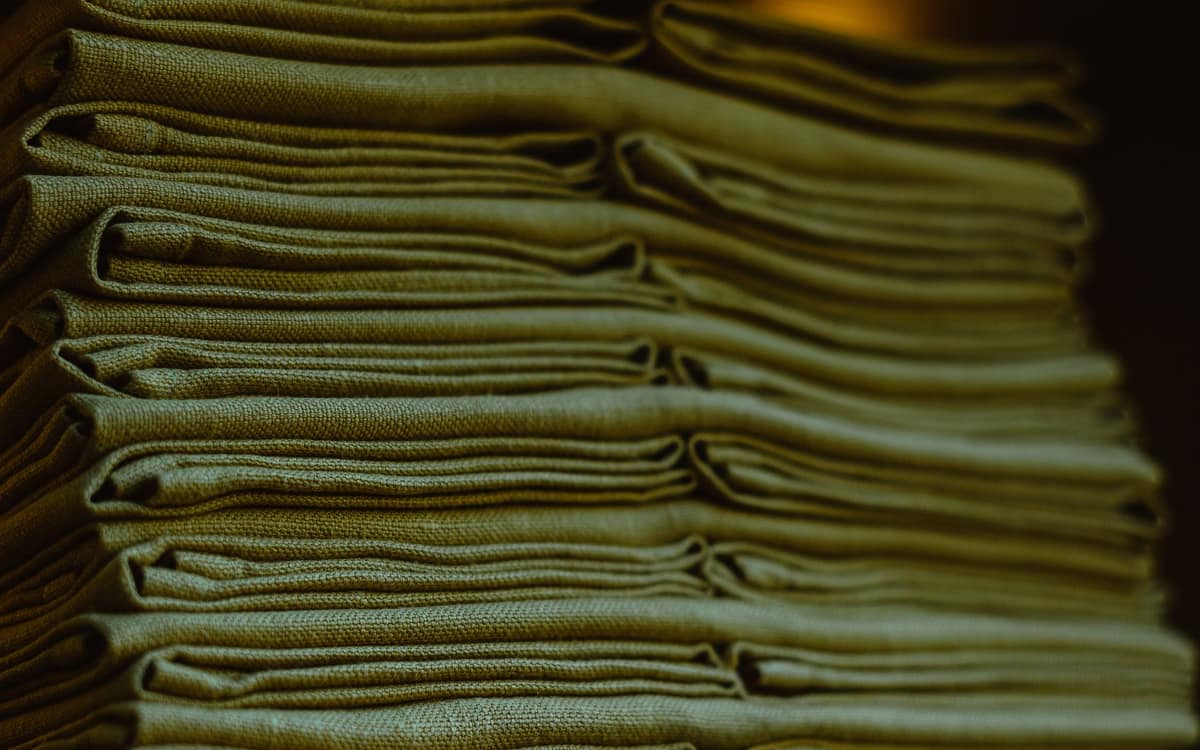
Linen cools by airflow.Flax fiber is thick, stiff and irregular, so a linen yarn cannot be spun smooth and a linen cloth cannot lie flat. The fabric holds itself off your skin in little arches, and the gaps between the yarns are large enough that room air moves through the cloth rather than around it. Heat leaves with the air. That process does not saturate and does not stop — as long as the room is cooler than you are, linen works at 4am exactly as it did at 11pm.
Bamboo viscose cools by moisture handling.Viscose is a regenerated cellulose fiber — the bamboo is the raw input, not the fabric, which is why the FTC requires the label to say “rayon” or “viscose derived from bamboo” rather than plain bamboo. The fiber absorbs water readily into its structure and releases it as it dries, so sweat is pulled off your skin instead of sitting on it. What viscose does not do well is move air: it is spun fine and woven smooth, it drapes, and it lies against you.
So the useful question is not “which is cooler.” It is: is your problem heat, or is it moisture? Those have different answers, and if you are not sure which one you have, the diagnostic is on what to fix first.
Linen against bamboo viscose on the attributes that actually differ. Specs as published on the listings in our registry; where a listing publishes no figure, we say so rather than estimating one. | Linen | Bamboo viscose |
|---|
| Cooling mechanism | Airflow through an open structure | Moisture absorption into the fiber |
| Feel | Crisp, textured, rumpled | Smooth, heavy drape, cool to the hand |
| In a humid room | Still works — moving air is the point | Degrades: the fiber saturates and stops drying |
| When you sweat | Absorbs a lot before feeling wet | Absorbs readily and dries fast |
| Wet strength | Very strong wet; linen was made for laundering | Weak wet — the one real durability problem |
| Lifespan | A decade, softening the whole time | Shorter; the yarn abrades and pills with hot washes |
| First-week experience | Genuinely scratchy until washed several times | Immediately pleasant |
| Published fabric weight | Not published on either of our linen picks | Not published on either of our viscose picks |
Where linen wins outright
A humid bedroom. This is the decisive case. Evaporation is your most powerful cooling route, and it slows to nothing as the air around your skin approaches saturation. A fabric that moves that air out and replaces it with room air keeps evaporation going; a fabric that absorbs moisture and then has nowhere to send it does not. In a Gulf-coast August, linen is not slightly better than viscose, it is a different outcome. The whole fabric ranking for that condition is on cooling sheets for humid weather.
You want to buy sheets once.Flax is strongest when wet, which is the opposite of viscose and the reason linen survives decades of laundering. A linen set that feels unpleasant in week one is usually the best set you own by year three, and the softening process is predictable rather than hopeful — we walk through it on how to soften linen sheets.
You already know percale works for you. Linen is the stronger version of the same idea. If the crisp, structured feel of percale is what fixed your bed, linen is the upgrade. If percale felt like sleeping in a shirt you had not ironed, it is not.
Where bamboo viscose wins outright
You wake up damp rather than hot. Night sweats are a moisture problem, and the fiber that absorbs the most, fastest, off your skin is the one that helps. Viscose does this better than cotton and far better than polyester. The full set of picks for that specific problem is on cooling sheets for night sweats.
Someone in the bed hates texture. This is a real and underrated reason to choose viscose. Sheets you dislike are sheets that get replaced, and the smooth, heavy drape of viscose is the closest cooling fabric to the sateen most people are switching away from.
Your budget is tight.There is competent viscose near $25 and there is no competent pure linen anywhere near it. A cotton-linen blend is the only way into the texture for less, and a blend is a compromise on both sides — more drape than linen, less airflow.
Two things both sides get wrong
“Bamboo” is not a fabric.A listing that says plain “bamboo sheets” with no mention of viscose or rayon is telling you it has not read the labeling rule, which is a reasonable signal about the rest of the listing. There is such a thing as mechanically processed bamboo linen, and it is rare, expensive and almost never what is being sold. The detail is on bamboo versus cotton.
Neither category publishes a fabric weight. Linen should be specified in GSM, because flax yarns are too irregular for a thread count to mean anything, and viscose should be specified in either GSM or thread count. Across the four sets we rank here, not one publishes a number. That is the state of the category rather than a gap in our research, and it is why we rank on fiber and construction instead of pretending to compare specs that do not exist. Why the one number listings do print is the least useful of them is on thread count and cooling.
The third answer: lyocell
If the honest reading of your situation is “I want the moisture handling of viscose without the wet-strength problem,” the fiber you actually want is lyocell — usually sold as Tencel. It is regenerated cellulose like viscose, but made in a closed-loop solvent process that produces a stronger fiber, so it survives laundering better while behaving similarly against skin. It costs more than commodity viscose and less than linen, and it is the single most common answer we give to people who cannot decide between the two fabrics on this page. The reasoning and the ranked picks are on the best lyocell sheets, and the direct fiber comparison is on Tencel versus bamboo.
How to decide in one minute
Put your hand flat on the sheet when you wake up. If it is warm and dry, you have a heat problem and you want airflow: linen, or percale if the budget says so. If it is damp, you have a moisture problem and you want absorption: viscose, lyocell, or an engineered wicking fiber if you sweat heavily. If it is both, start with the room rather than the sheets — how to stay cool at night sets out the order.